Kathmandu, 28 March (H.S.):
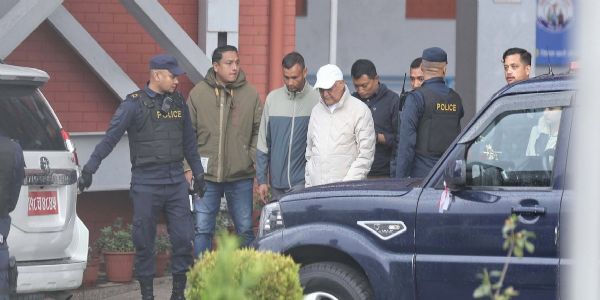
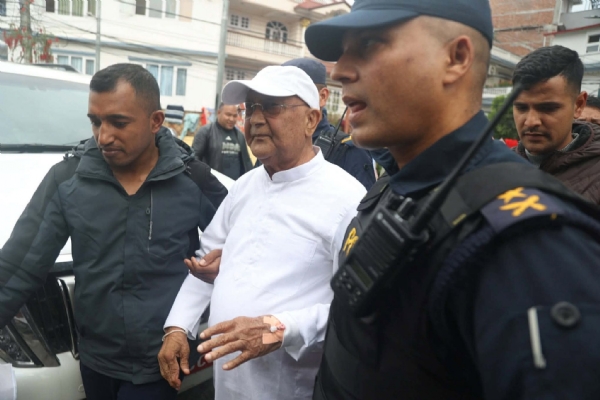
Former Nepali Prime Minister K.P. Sharma Oli has been admitted to Maharajgunj Teaching Hospital in Kathmandu after being placed in police custody on Friday morning. The 74‑year‑old politician is now occupying bed 501 in the Annex One building of the hospital, a facility typically reserved for kidney‑transplant patients, reflecting his long‑standing renal‑health issues.
Health check leads to hospital admission
Oli was initially taken to the hospital’s “Red Zone” area, where he was placed in bed 27 for a preliminary medical assessment. A nephrology team led by Dr Ravin Nepali conducted a detailed evaluation, accompanied by a cardiologist who also checked his heart condition.
The hospital’s statement said that after a series of tests, including blood work and a video X‑ray, doctors decided to admit Oli to bed 501 in Annex One for closer monitoring and continued care.
His vehicle was driven directly to the area housing the 501 bed, underscoring the seriousness with which authorities and hospital staff treated his condition. The move from the initial Red Zone bed to the kidney‑transplant ward underlines the sensitive medical profile of Oli, who has undergone two kidney‑transplant operations in the past and requires ongoing follow‑up treatment for related complications.
The admission comes just hours after Oli was formally arrested in connection with the 2025 Gen‑Z youth protests, where he and former home minister Ramesh Lekhak are accused of ordering security forces to open fire on unarmed student demonstrators. Police officials have told local media that Oli will remain in hospital custody under close watch, with the case expected to move to the Kathmandu District Court on Sunday when the weekend holiday ends.
Human‑rights groups and the public in the capital are watching the situation closely, as the case touches on both accountability for alleged state violence and the treatment of elderly, medically vulnerable former leaders. The hospital’s statement stressed that Oli’s admission is purely a medical decision, while the government has said it will respect judicial procedures and allow due process to take its course.
For many in Nepal, the image of a former prime minister receiving treatment in a kidney‑transplant ward while facing serious criminal charges has become a potent symbol of the country’s ongoing struggle to balance justice, health and political scrutiny.
---------------
Hindusthan Samachar / Jun Sarkar
28 Mar 2026