Kathmandu, 28 March (H.S.):
Nepal’s Home Minister Sudin Gurung has insisted that the arrest of former Prime Minister K.P. Sharma Oli and former Home Minister Ramesh Lekhak is not an act of political vengeance, but the beginning of a broader effort to hold top leaders accountable for alleged abuses during last year’s youth protests.
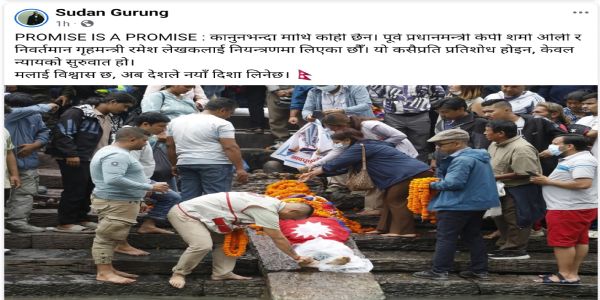
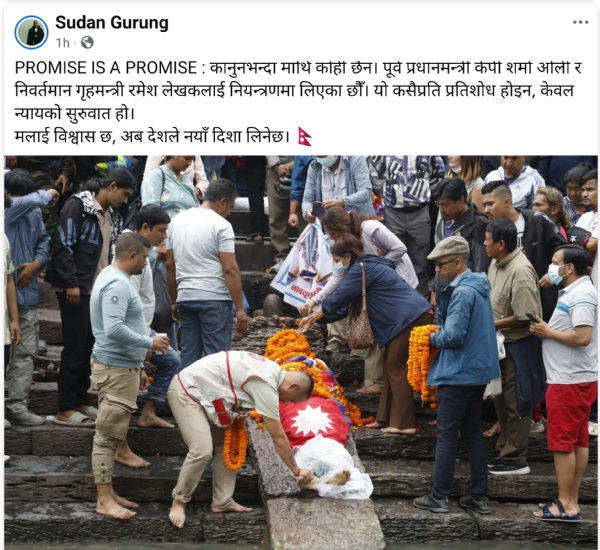
Speaking on Facebook late Friday, Gurung argued that no one in Nepal can place themselves above the law, even senior figures from the previous ruling party, and framed the detention as a symbolic step toward institutional justice.
Home Minister defends the arrests
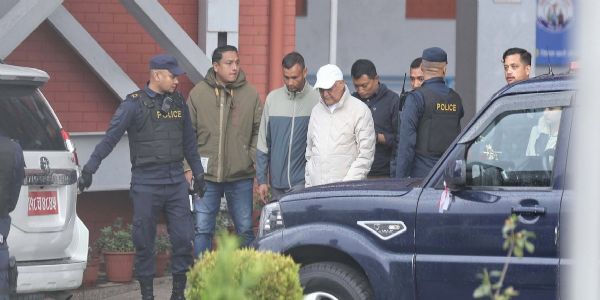
Gurung posted on Facebook that police had taken Oli and Lekhak into custody on Friday morning over allegations that the two had ordered security forces to open fire on unarmed student protesters during the Gen‑Z‑led demonstrations in 2025.
According to the minister, the move was aimed solely at upholding the rule of law and ensuring that those suspected of ordering lethal violence face formal investigation. “No one stands above the law,” he wrote, in a message that was widely shared by ruling‑party supporters and opposition activists alike.
“We have placed former Prime Minister K.P. Sharma Oli and former Home Minister Ramesh Lekhak in custody. This is not a vendetta against anyone, but the beginning of justice.”
Government officials have not yet disclosed the full list of charges or whether formal indictments will follow, but Nepali media report that the case centers on allegations of excessive use of force and conspiracy to issue orders that led to the shooting of civilian protesters.
The Home Ministry maintains that the detentions are being carried out in accordance with court procedures and that both Oli and Lekhak will be allowed due‑process safeguards, including legal representation and access to family members.
Backdrop of the Gen‑Z protests
The Gen‑Z protests, which began in 2025, were among the largest youth‑led demonstrations in Nepal’s recent history, drawing thousands of students and young professionals into the streets over issues ranging from job creation and economic stagnation to perceived political nepotism and institutional corruption. At several flashpoints, clashes erupted between protesters and security forces, with eyewitnesses and human‑rights groups accusing the police of firing live rounds into crowds.
The incident that has now drawn the most legal scrutiny occurred in the capital, Kathmandu, when a group of largely unarmed students was reportedly shot at after a sit‑in grew tense.
At the time, Oli’s government dismissed calls for an independent inquiry, arguing that security forces had acted to prevent public disorder and protect state property. Opposition parties and civil‑society groups disputed that narrative, holding mass rallies demanding accountability and resignations from top officials.
The present‑day arrests appear to have been triggered by newly filed or revived legal complaints, as well as mounting pressure on the current administration to reopen older cases linked to the protest‑related deaths.
Political implications and public reaction
If the legal process moves forward, the Oli‑Lekhak case could set a precedent for how Nepal handles allegations of excessive force ordered at the highest levels of government. Nepal has long struggled with weak accountability mechanisms for security abuses, and the current Home Minister’s emphasis on the principle that “no one is above the law” suggests that the ruling camp is trying to use the case to signal a firmer stance on rights‑based policing.
Critics, however, warn that the timing of the arrests could also be read as a political maneuver, coming at a time when the former ruling party is seeking to regroup and challenge the governing coalition.
Demonstrators and youth activists in Kathmandu have welcomed the arrests, with some calling them long overdue. Protest leaders told local reporters that they see the detentions as a symbolic admission that the state can no longer shield top politicians from scrutiny over last year’s bloodshed. The ruling coalition has urged the courts to conduct the proceedings transparently and said it will not interfere with the investigation, but opposition figures have questioned whether the judiciary has the independence and resources to deliver a fully impartial verdict in such a high‑profile case.
As the investigation unfolds, the episode is likely to shape how Nepal’s younger generation views the country’s democratic institutions. For many in the capital, the image of Oli and Lekhak being taken into custody represents a turning point in a broader debate over accountability, security reform and the limits of political immunity. Whether the process is seen as genuine justice or as selective retribution will depend heavily on the manner in which the courts handle the case in the weeks and months ahead.
---------------
Hindusthan Samachar / Jun Sarkar
28 Mar 2026