Kathmandu, 28 March (H.S.):
Nepal’s police have moved to deepen the legal process against former Prime Minister K.P. Sharma Oli and ex‑Home Minister Ramesh Lekhak, with both now set to appear before a district court in Kathmandu on Sunday. After their early‑morning detention on Friday, authorities took the two men to Mahraganj Teaching Hospital in the capital for health checks, part of a procedure that underscores the seriousness with which the government is treating the charges connected to the Gen‑Z youth protests.
From arrest to medical examination
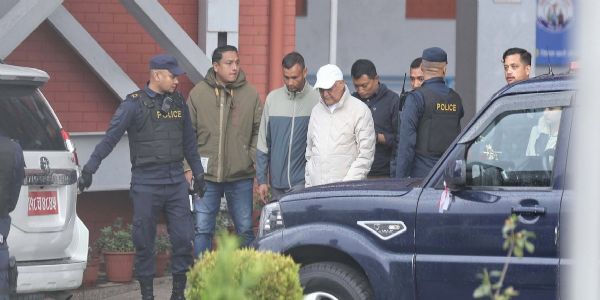
Oli was taken into custody from his residence in Bhaktapur, then brought to the Kathmandu District Police Office, where Deputy Superintendent of Police Ramesh Thapa was already present. Lekhak, for his part, was detained from his home in Kathmandu itself. After both were formally held in custody, police transferred them to Mahraganj Teaching Hospital for a medical screening, a step that Nepali officials say is standard before any major court appearance. The health checks were completed without any reported complications, and both individuals remain in police custody pending their court presentation.
Authorities have confirmed that, because Saturday is a public holiday, the pair will be brought before the Kathmandu District Court on Sunday. Police say they are preparing the case files and witness statements that will be presented as part of the preliminary hearing, which is expected to address whether there is sufficient evidence to hold Oli and Lekhak in formal judicial custody. The move to the court stage marks a transition from political‑security detention to a more formal legal framework, with the judiciary now poised to decide the next steps in the case.
Government’s decision to push the case
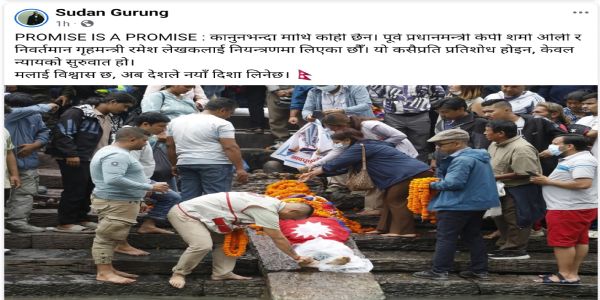
The arrests follow a decision taken Friday by the first cabinet led by Prime Minister Balendra Shah, which chose to act on recommendations from an official commission that had earlier called for criminal proceedings against Oli. The cabinet resolved to implement the commission’s suggestions, clearing the way for the Home Ministry, under Minister Sudin Gurung, to issue the arrest orders. Gurung has publicly stated that the action is not personal or vengeful, but a step toward enforcing the principle that no individual in Nepal, however senior, stands above the law. The Home Minister has said the government will not interfere with the judicial process and that the case must be decided on its merits.
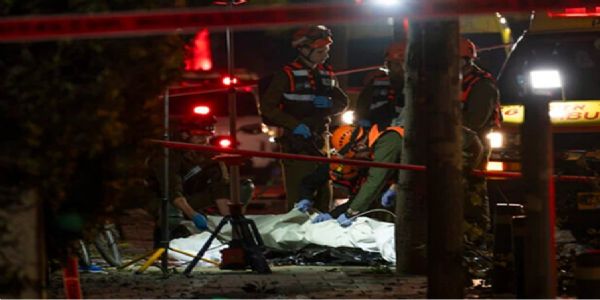
The charges against Oli and Lekhak stem from the deadly clashes that marked the Gen‑Z protest movement, when security forces opened fire on largely unarmed student demonstrators, leading to several deaths and injuries. The commission had earlier accused the former ruling leadership of authorizing or at least condoning the use of lethal force, and recommended that criminal cases be filed against those responsible.
The Friday cabinet decision formalized that recommendation, and the subsequent arrests signal that the current government is willing to test the accountability of a former prime minister in a court of law.
Political and public significance
If the case advances, the court appearance in Kathmandu could set a precedent for how Nepal handles alleged abuses ordered at the highest levels of the previous administration. Opposition parties and youth activists have welcomed the move as a long‑overdue step toward justice for the slain protesters, while critics have warned that the timing and framing of the arrests risk turning the legal process into a political spectacle. The judiciary will now have to weigh the evidence and decide whether the allegations meet the threshold for serious criminal charges, including potential charges related to unlawful use of force or criminal conspiracy.
As the clock ticks toward Sunday’s hearing, the episode is being watched closely by both domestic watchdog groups and foreign diplomats in Kathmandu. For many young Nepalis, seeing Oli and Lekhak escorted through the corridors of a district court would be a powerful symbol of a state that is finally willing to scrutinize its own leaders. Whether the process is seen as genuine accountability or as selective justice will depend on the transparency and consistency of the courts as they move from arrest to trial.
---------------
Hindusthan Samachar / Jun Sarkar
28 Mar 2026