Kathmandu, 28 March (H.S.):
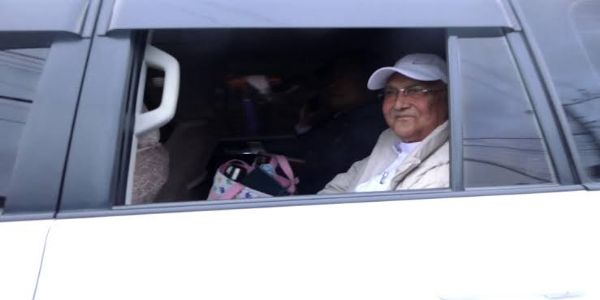
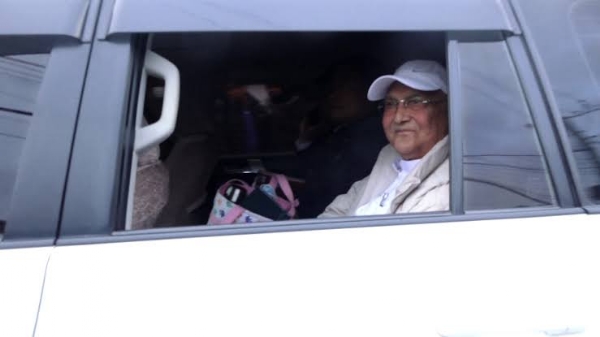
Former Prime Minister KP Sharma Oli has been arrested in connection with the deadly anti‑corruption “Gen Z protests” of September 2025, police confirmed on Saturday, marking a dramatic legal turn for the four‑time prime minister and a key moment for Nepal’s new government under Prime Minister Balendra Shah.
Oli, a veteran Marxist leader who led Nepal through much of 2024–2025, was taken into custody from his residence in Gundu, Bhaktapur, after a heavy security deployment across the area early on March 28.
His arrest comes less than 24 hours after Shah, the 35‑year‑old rapper‑turned‑engineer, was sworn in as the country’s youngest prime minister in recent history.
Alongside Oli, former Home Minister Ramesh Lekhak was also arrested over alleged criminal negligence in handling the protests that left at least 70 people dead across two days of unrest in September 2025.
Police described the move as part of a formal investigation triggered by a complaint filed by the Home Ministry and backed by court‑issued arrest warrants.
Commission report and political fallout
The detentions follow a high‑level commission report that recommended prosecution and prison terms of up to 10 years for Oli and Lekhak, among other senior officials, for failure to prevent mass casualties during the youth‑led uprising. The protests began over a brief social‑media blackout but quickly morphed into a broader anti‑corruption and anti‑poverty movement that forced Oli’s cabinet to resign.
The commission also recommended action against several top security and administrative figures, including then Inspector General of Police Chandra Kuber Khapung, accusing the state machinery of excessive force and poor crowd‑control planning.
Nepal’s new Home Affairs Minister, Sudan Gurung, welcomed the arrests, saying “no one is above the law” and that the move signals the start of a “new direction” for the country.
Oli’s defiance and legal battle
Oli, however, has hit back publicly, calling the arrest “vindictive” and vowing a full legal fight. In remarks to local media, he insisted that the incident is being weaponised against him for political reasons, a line consistent with his past criticism of what he has described as undue interference in Nepal’s affairs by external actors, including India.
Analysts say Oli’s arrest could deepen the already sharp divide between Nepal’s communist old guard and the younger, more urban‑centric political forces that propelled Shah and the Gen‑Z movement to prominence.
The case also raises questions about accountability for past security crackdowns while the country grapples with a fragile economic recovery and ongoing youth‑rights reforms.
Broader implications for Nepal
The unfolding legal drama places Nepal at a crossroads between transitional justice and political stability, as the new government seeks to consolidate its mandate after a landslide election win.
With Shah’s cabinet already outlining plans to implement the commission’s findings swiftly, observers warn that the handling of Oli and Lekhak’s cases could set a precedent for how future leaders face scrutiny over public‑order decisions.
For now, Oli and Lekhak remain in custody as prosecutors prepare to file formal charges linked to culpable homicide and negligence, while their supporters stage small‑scale protests outside police facilities in Kathmandu.
In a country where street politics and youth activism have repeatedly reshaped power structures, the arrest of a former prime minister over the Gen Z protests stands as one of the most consequential legal and political developments in recent memory.
---------------
Hindusthan Samachar / Jun Sarkar