Tehran, 28 March (H.S.):
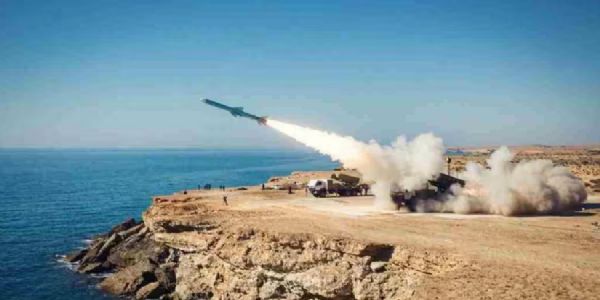
Iran has launched a new wave of ballistic‑missile strikes at Israeli cities, including Tel Aviv and the Dimona nuclear complex, hours after reports emerged that US‑Israeli forces had hit key Iranian nuclear and civilian facilities inside Iran. The escalation has turned the skies over the Middle East into a live battlefield, with one person killed and several others wounded in Israel, even as Iranian state media insist that their nuclear sites have suffered no radiation leaks or major casualties.
Iran strikes back at Tel Aviv and Dimona
Iranian state media and the paramilitary Islamic Revolutionary Guard Corps (IRGC) say that the missile barrage on Friday was a direct response to an early‑morning strike by US‑Israeli forces on Iranian nuclear installations. According to the official Iranian news agency IRNA, targets included the Yaran‑Yazd nuclear enrichment facility in Ardekan, Yazd province, and the heavy‑water complex at Shahid Khondab in Arak. Iran’s Atomic Energy Organization has insisted that there was no radioactive contamination and no deaths at those sites, though unnamed security officials in Tehran have privately acknowledged “significant structural damage” to parts of the facilities.
In retaliation, the IRGC fired a fresh salvo of ballistic missiles toward central Israel, with warheads landing in and around Tel Aviv and other mid‑country hubs. A report from Al Jazeera and The Times of Israel says six separate impact points were recorded in central Israel, with some debris striking buildings and cracking façades.
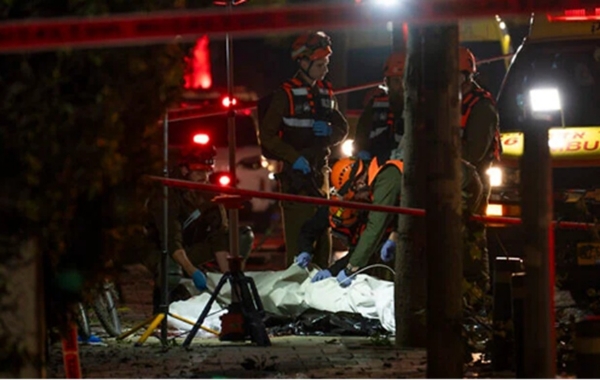
Israeli emergency services say one person was killed and multiple others were injured, at least two of them lightly wounded by falling shrapnel from intercepted missiles. Local authorities have described the damage as “localized” but acknowledged that the repeated barrages are fraying civil‑defense systems and public nerves.
Cluster‑warhead attacks and rising casualties
Earlier in the week, Iran had already shown a willingness to use cluster‑warhead designs against Israeli territory. On Friday it reportedly fired another missile fitted with a cluster warhead, which broke apart mid‑air over a wide area and sent smaller bomblets raining down. This caused scattered fires and shattered glass over several city blocks, prompting firefighters and paramedics to race to multiple locations simultaneously.
Israeli media outlets have described the attack as one of the most complex and dangerous in the current escalation, because the dispersed bomblets make evacuation and post‑strike assessment more difficult.
Despite the sophistication of Israel’s missile‑defense network, the sheer number and timing of Iranian salvos have forced Israeli air defenses to operate at the edge of their capacity.
Officials from the Israeli military and homeland‑security apparatus have said they successfully intercepted more than 90 percent of incoming projectiles in recent barrages, but even a small percentage of missiles penetrating the shield is enough to cause casualties and damage in densely populated areas like Tel Aviv.
The Israeli government has warned the public that further rounds should be expected, and has urged civilians to remain within quick‑reach of safe rooms and shelters.
Iran broadens target list to US forces
Beyond Israel, Iran has also turned its fire toward US military assets in the region. The IRGC has claimed that 84 separate missile and drone operations have been carried out under what it calls “Operation True Promise 4,” with the latest round targeting US strategic vessels and support units.
According to an IRGC public‑relations statement released late Friday night, Iranian forces launched both ballistic missiles and Kadr‑380 cruise missiles at six US Landing Craft, Utility (LCU) ships stationed near the port of Al‑Shuwaikh in Kuwait. Iranian sources say three of the vessels sank outright after being hit, and the remaining three were left burning and partially submerged.
The same statement claims that a US‑operated drone unit stationed at a hotel and beachfront area in Dubai was also hit by Iranian drones. IRGC‑linked Tasnim News Agency says that several US personnel were killed or wounded in the strikes, and that American surveillance and combat‑drone equipment was destroyed. US defense officials have not yet confirmed Iranian casualty claims, but they have acknowledged that six US‑naval vessels were hit in the Gulf and that at least 10 American troops were injured in a related attack on a refueling node in the region. Washington has described the incidents as “a serious escalation” and warned of “appropriate and proportionate” responses.
Strategic crosshairs: nuclear sites and regional hubs
Both sides are now openly targeting one another’s strategic heart.
The US‑Israeli strikes on the Yaran‑Yazd enrichment site and the Shahid Khondab heavy‑water complex represent a direct challenge to Iran’s nuclear program, which has long been the core of its deterrence posture. Israeli media have described the damage as a “major set‑back” to Iran’s ability to produce enriched uranium and heavy‑water reactor fuel, although Iranian officials continue to insist that the facilities will be repaired and that their nuclear ambitions remain intact.
Conversely, Iran’s choice of Tel Aviv and Dimona as targets sends a clear message that it will not confine its retaliation to military or border‑area installations. Dimona, in the Negev desert, houses Israel’s main nuclear‑research facility, and its selection as a target underlines the symbolic and strategic stakes of this confrontation.
Iranian statements say they are striking “centers of enemy power” and “strategic decision‑making nodes,” language that suggests future rounds may again aim at critical infrastructure, energy facilities, or top‑level government centers.
Regional alarm and uncertain next moves
The combined effect of Friday’s attacks has pushed Middle Eastern allies and outside powers into a state of heightened alarm. Oil and gas markets have already spiked this week, and the renewed missile‑exchange over Tel Aviv and Gulf ports is likely to deepen volatility. The European Union, the United Kingdom and several Arab states have called for an immediate ceasefire and a return to negotiations, warning that the war could boil over into a broader regional conflict that would destabilize global energy supplies and migration routes.
For now, both Washington and Tehran appear locked into a cycle of retaliatory strikes. The US and Israel argue that their attacks are designed to diminish Iran’s ballistic‑missile and nuclear capabilities, while Iranian leaders frame their missile barrages as “legitimate responses” to what they call “aggressive invasion” of their territory. As the thirtieth day of continuous missile launches, interceptions and drone sorties passes, the region is left with no clear off‑ramp—and with the skies above Tel Aviv, Tehran and the Gulf littorals still alive with the sound of air‑raid sirens and missile engines.
---------------
Hindusthan Samachar / Jun Sarkar
28 Mar 2026