London/Tehran, 26 March (H.S.):
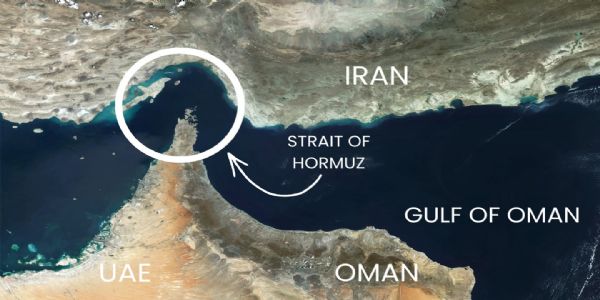
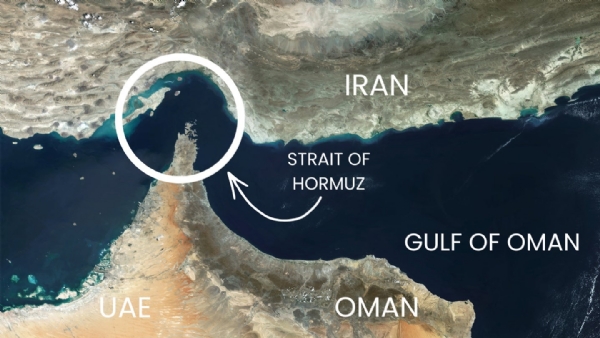
The Strait of Hormuz is currently paralysing global trade with nearly 1,900 commercial vessels stranded in the Persian Gulf area as the West Asia war enters its 27th day. The closure of this critical waterway by Iran, in response to sustained US‑Israel strikes, has brought normal maritime traffic to a near standstill and trapped a massive part of the world’s tanker and cargo fleet just outside the Gulf.
Under ordinary circumstances around 30 per cent of global seaborne oil exports, 4 per cent of dry bulk cargo and 3 per cent of containerised goods pass through the Strait of Hormuz. But since the conflict escalated at the end of February, vessels that would normally transit the strait have been forced to anchor in the open sea.
According to real‑time tracking data from MarineTraffic and analytics firm Vortexa, about 5.5 per cent of the world’s tanker fleet and 1.5 per cent of the container and dry‑cargo fleet are now stuck in or around the northern Persian Gulf.
Of the stranded ships some 324 are bulk carriers, 315 oil and chemical product carriers, 267 petroleum product carriers and 211 crude oil tankers. The tankers alone are carrying roughly 190 million barrels of crude and refined petroleum products, far exceeding the storage capacity of onshore terminals.
In addition 177 general cargo ships, 174 container vessels, 98 liquefied petroleum gas (LPG) carriers, 42 asphalt/bitumen carriers, 37 heavy‑lift cargo ships and 34 LPG or chemical tankers are also anchored in the region.
German shipping firm Hapag‑Lloyd has reported that six of its vessels are effectively unable to operate in the Persian Gulf due to the heightened security risk. Baltic and International Maritime Council director Philip Gangweiyah warned that freight rates could spike sharply depending on how long the strait remains shut, how high fuel prices climb and how selectively Iran allows vessels to transit. Dirty tanker freight indices have already jumped by 49 per cent since February 27 and clean tanker indices by 78 per cent as of March 20 with container‑ship freight rates also rising fast.
Iran has stated that, apart from US and Israeli‑linked ships, other vessels can pass through the Strait of Hormuz as long as they do not participate in or support any aggression against Iran and strictly comply with the country’s safety and security rules. The effective blockade, however, is already disrupting supply chains and raising the risk of shortages, higher commodity prices and longer delivery times worldwide.
---------------
Hindusthan Samachar / Jun Sarkar