Kolkata, 25 February (H.S.) : The Chandannagar Assembly constituency in West Bengal’s Hooghly district has once again emerged as a focal point of political discussion ahead of the 2026 Assembly elections. With its distinctive colonial legacy, shifting voter demographics and evolving political alignments over the past decade, the historic urban seat is poised for a closely fought contest.
Once a French colony, Chandannagar formally integrated into the Indian Union in 1952 after a 1949 referendum and transfer of de facto control in 1950. The city continues to reflect its colonial past through landmarks such as the Strand, the Dupleix Museum and the Sacred Heart Church, while its famed Jagaddhatri Puja and riverfront promenade add to its cultural identity. Geographically located on the western bank of the Hooghly river and part of the Kolkata Metropolitan Area, the constituency is entirely urban in character, comprising the Chandannagar Municipal Corporation and Bhadreswar Municipality. It is one of seven Assembly segments under the Hooghly Lok Sabha constituency.
From Left Bastion to Trinamool Stronghold
Established in 1957, Chandannagar was for decades a stronghold of the Left parties. The undivided Communist Party and later the Communist Party of India (Marxist) dominated the seat, with CPI(M) leader Bhavani Mukherjee representing the constituency continuously from 1962 to 1991. Out of 16 Assembly elections, Left parties won 10 times, while the Trinamool Congress secured three victories, the Congress two, and one independent candidate won the first election.
The political landscape shifted significantly after 2011. The Trinamool Congress consolidated its position, defeating the Left by over 43,000 votes in 2011. In 2016, Indranil Sen narrowly retained the seat for the party, and in 2021 he was re-elected with a margin exceeding 31,000 votes against the Bharatiya Janata Party candidate.
In the 2021 Assembly polls, Sen secured 86,778 votes (47.63 per cent), while BJP candidate Deepanjan Kumar Guha polled 55,749 votes (30.60 per cent). CPI(M)’s Gautam Sarkar received 33,702 votes (18.50 per cent). Although Trinamool’s margin was comfortable, the BJP’s sharp rise in vote share, from single digits in 2016 to over 30 per cent in 2021, signalled a significant shift in urban voter preferences.
Lok Sabha 2024: Narrowing Gaps
Chandannagar forms part of the Hooghly parliamentary constituency. In the 2024 Lok Sabha election, the contest between the Trinamool Congress and the BJP in Hooghly was closely fought, with Trinamool’s margin reportedly around 6,464 votes. While this was higher than the roughly 2,875-vote gap in 2019, it was substantially lower than the 31,000-plus margin seen in the 2021 Assembly election within Chandannagar.
Comparative analysis suggests two key trends. First, Assembly elections tend to be influenced more strongly by local candidates and grassroots organisation, which benefited Trinamool in 2021. Second, parliamentary elections reflect broader political polarisation, where the BJP’s vote base expanded significantly. In 2024, the BJP’s vote share reportedly rose to around 39 per cent in the parliamentary segment, while Trinamool’s stood near 46 per cent, indicating a tightening contest, particularly in urban and semi-urban pockets like Chandannagar.
If this trajectory continues into 2026, political observers believe the contest could be far more competitive than in the previous Assembly election. Additionally, any effective coordination between the Left and Congress could alter the arithmetic, given that the Left candidate secured over 33,000 votes in 2021.
Voter Base and Demographic Profile
Following the December 2025 special revision, the draft electoral roll for 2026 lists 207,932 voters, a noticeable decline from 234,688 in 2024. This reduction could influence turnout patterns and margins.
Scheduled Caste voters constitute approximately 12.73 per cent of the electorate, while Muslim voters account for around 9.50 per cent. The constituency has consistently recorded high voter turnout: 79.20 per cent in 2011, 78.96 per cent in 2016, 77.02 per cent in 2019, and 79.40 per cent in 2021—reflecting a politically engaged electorate.
Economically, Chandannagar has a mixed profile, supported by small industries, services, trade establishments and educational institutions. Many residents commute to Kolkata and nearby industrial hubs. The constituency benefits from road connectivity via Grand Trunk Road and Delhi Road, as well as rail access on the Howrah–Bardhaman line.
2026 Outlook: Competitive Terrain Ahead
While the Trinamool Congress has maintained an edge in recent Assembly elections, analysts believe the 2026 battle will depend more on evolving ground realities than historical dominance. With margins narrowing at the parliamentary level and urban voter sentiment in flux, every vote could prove decisive.
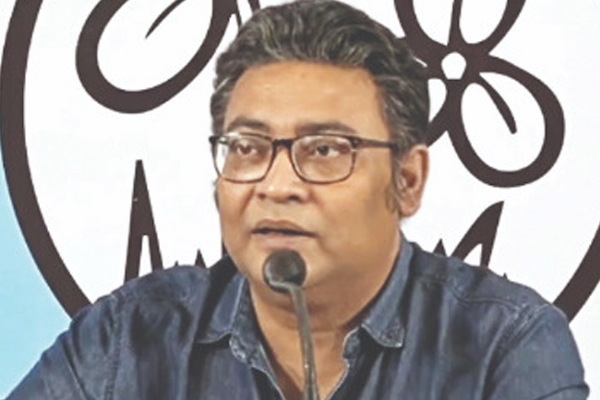
Incumbent MLA Indranil Sen, who is also a minister in the Mamata Banerjee cabinet, is widely expected to be re-nominated by the Trinamool Congress. Repeated attempts to seek his response for this report were unsuccessful.
BJP’s Prospective Candidates
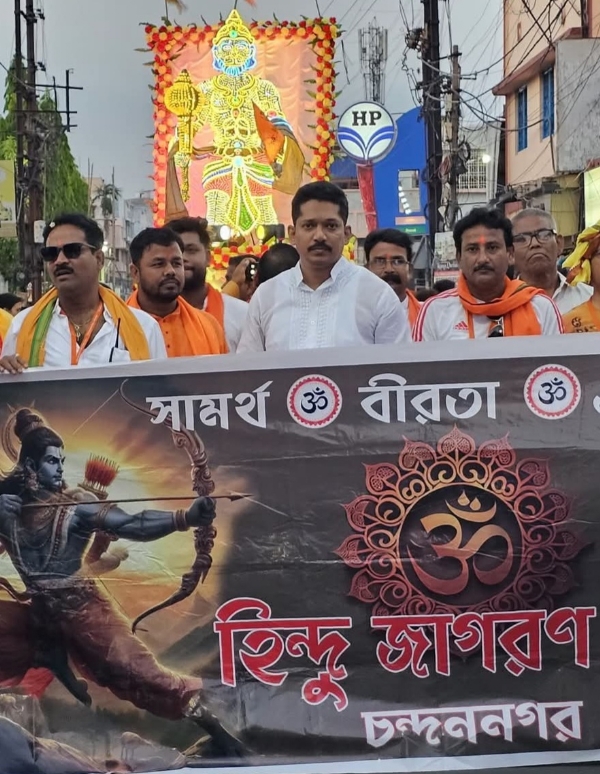
Sources within the BJP’s district unit indicate multiple contenders are under consideration. Former 2021 candidate Deepanjan Guha remains in the fray. Additionally, Sarnath Ghosh, an active functionary associated with the Hindu Jagran Manch, is being discussed as a potential nominee.
Ghosh, a practising advocate, comes from a family with a long local legacy, including involvement in public life and social initiatives in Chandannagar. He has been associated with organisational activities for over a decade and is known for mobilising large-scale participation in religious processions such as Ram Navami rallies in the area.
In a conversation, Ghosh said that if given the party ticket, the contest would be “interesting,” alleging anti-incumbency and asserting that voters are seeking change. He maintained that the BJP is confident of strengthening its base in the constituency in the coming election.
As Chandannagar prepares for 2026, the historic seat appears set for a high-stakes contest shaped by demographic shifts, evolving alliances and intensified grassroots mobilisation.
Hindusthan Samachar / Satya Prakash Singh