Jammu, 07 November (H.S.): Jammu and Kashmir, once widely known for its challenging geographical terrain and difficult connectivity, is witnessing a remarkable transformation. From railway networks and highways to tunnels, aviation, healthcare and urban infrastructure, development is progressing on multiple fronts. The changing landscape reflects a growing emphasis on connectivity, accessibility and economic growth, with several ambitious projects taking shape on the ground.
The transformation is not merely about building infrastructure; it is about bringing remote areas closer to the mainstream, improving the lives of people and creating new opportunities for future generations.
Railways: A New Chapter in Kashmir’s Connectivity
One of the most significant milestones in Jammu and Kashmir’s development journey is the Udhampur-Srinagar-Baramulla Rail Link (USBRL). Inaugurated in June 2025, the 272-kilometre-long project, built at a cost of Rs 43,780 crore, has emerged as a landmark achievement in railway engineering.
The project comprises 36 tunnels spanning 119 kilometres and 943 bridges, overcoming some of the most difficult geographical challenges in the Himalayan region.
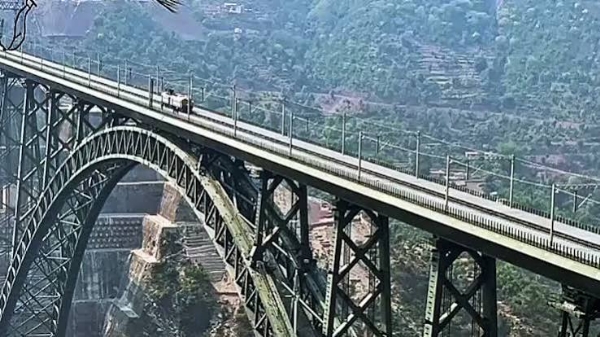
A major highlight of this historic railway network is the Chenab Rail Bridge in Reasi district, recognised as the world’s highest railway arch bridge. The bridge stands as a symbol of engineering excellence and has placed Jammu and Kashmir prominently on the global infrastructure map.
The introduction of Vande Bharat Express services between Katra and Srinagar in June 2025, followed by their extension to Jammu Tawi in April 2026, has further strengthened rail connectivity. The journey between Jammu and Srinagar can now be completed in less than five hours, significantly reducing travel time and making transportation more convenient for residents, tourists and pilgrims.
Tunnels: Ending Seasonal Isolation and Opening New Routes
The construction of strategic tunnels is bringing a major change to road connectivity in Jammu and Kashmir and the adjoining Ladakh region.
The 6.4-kilometre Z-Morh Tunnel has provided all-weather connectivity to Sonamarg, transforming the popular tourist destination into a more accessible year-round location.
Another ambitious project, the 13.15-kilometre Zojila Tunnel, achieved its main tunnel breakthrough in June 2026. Once completed, it is expected to provide all-weather connectivity between Kashmir and Ladakh, reducing the journey between Sonamarg and Minamarg from nearly two hours to around 30 minutes.
These tunnels are not just infrastructure projects; they are lifelines for people living in remote and mountainous areas. They are expected to facilitate tourism, improve access to essential services and strengthen strategic connectivity.
Meanwhile, major sections of the Delhi-Amritsar-Katra Expressway were inaugurated in July 2026, further enhancing road connectivity for pilgrims and travellers.
Rural connectivity has also received a major boost. In August 2026, the foundation stones were laid for 110 rural road projects covering 598.45 kilometres under PMGSY-IV, with an investment of more than Rs 1,500 crore. These projects are expected to improve access to villages and provide better links to markets, educational institutions and healthcare facilities.
Aviation and Logistics: Expanding the Gateway to Jammu and Kashmir
The aviation sector is also witnessing significant expansion, with a focus on improving passenger capacity and strengthening regional connectivity.
In February 2026, Rs 1,677 crore was approved for the expansion of the civil enclave at Srinagar International Airport. The proposed terminal, spread over 71,500 square metres, is designed to handle up to one crore passengers annually, reflecting the growing importance of air connectivity in the region.
Regional aviation facilities at Udhampur and Kishtwar have also been proposed under the UDAN scheme, with the objective of improving access to remote areas.
The commencement of a multi-modal cargo terminal at Samba is another important step towards strengthening logistics infrastructure. Such facilities can help improve the movement of goods, support local businesses and enhance the region’s economic potential.
Urban Transformation: From the Tawi Riverfront to Srinagar’s Lakeside
The urban landscape of Jammu and Kashmir is also undergoing a significant transformation.
In September 2026, three major urban development projects for Jammu, Srinagar and Katra were approved at a combined cost of Rs 2,692.58 crore.
The projects include TARANG, centred on the Tawi Riverfront in Jammu; the Walled City and Nigeen Lakefront initiatives in Srinagar; and the KRIPA project in Katra.
These initiatives are expected to improve urban infrastructure, enhance public spaces, promote tourism and give the region’s major cities a more modern and organised appearance.
Jammu and Srinagar have already undertaken 277 Smart City projects, while the introduction of 200 new electric buses is expected to strengthen public transportation and promote cleaner mobility.
The focus on urban development is gradually shifting towards more sustainable, accessible and citizen-friendly cities.
Healthcare, Power and Water: Strengthening the Foundations of Development
Infrastructure development is also extending to essential services, particularly healthcare, electricity and drinking water.
The construction of AIIMS Kashmir at Awantipora has reached around 75 per cent completion, while AIIMS Jammu has already become operational. These institutions are expected to significantly strengthen healthcare infrastructure and reduce the need for patients to travel outside the region for advanced medical treatment.
Under the Jal Jeevan Mission, the coverage of rural households with tap water has reportedly increased from 31 per cent to 81 per cent, marking substantial progress towards improving access to safe drinking water.
The power sector is another area witnessing major investment. Hydropower projects with a combined capacity of 3,014 MW are being developed with an investment of Rs 22,207 crore. These projects are expected to strengthen electricity generation, support economic activities and contribute to the region’s long-term energy security.
A New Identity Beyond Tourism and Headlines
Jammu and Kashmir is gradually building a new identity—one increasingly defined by infrastructure, connectivity, investment and development.
The expansion of railway networks, construction of strategic tunnels, modernisation of airports, improvement of rural roads and development of urban infrastructure are collectively reshaping the region.
For a territory where difficult terrain and seasonal isolation have long posed challenges, these projects represent a significant step towards greater accessibility and economic integration.
However, the real measure of development will lie in how effectively these projects translate into improved living standards, employment opportunities, better public services and sustainable growth for the people.
If the present pace of development continues, Jammu and Kashmir could emerge as a prominent model of infrastructure-led transformation in the coming years.
The journey is still underway, but the direction is clear: Jammu and Kashmir is moving towards a future where connectivity becomes the foundation of progress and development reaches every corner of the region.
---------------
Hindusthan Samachar / Krishan Kumar
18 Aug 2026