New Delhi, 07 November (H.S.): Congress Parliamentary Party Chairperson Sonia Gandhi has alleged that India's democratic framework, constitutional institutions and social fabric have suffered considerable damage over the past 12 years under the Narendra Modi-led government. She cautioned that restoring the country's institutions and strengthening democratic processes would require sustained efforts and considerable time, even after the present government leaves office.
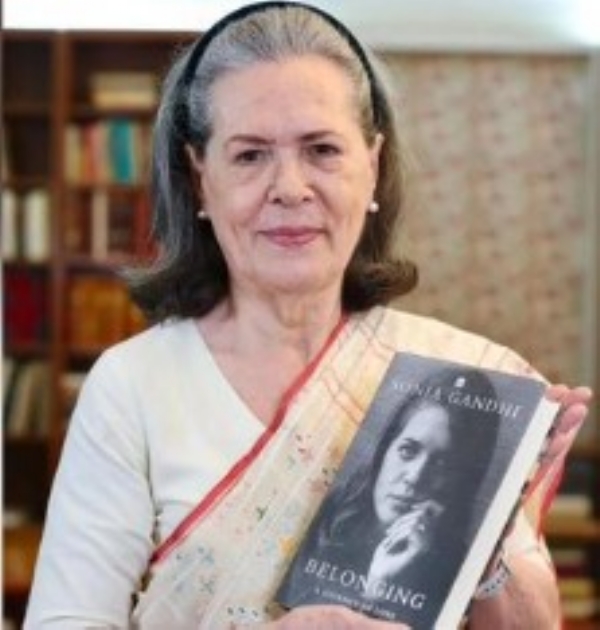
In an interview ahead of the release of her forthcoming memoir, Belonging: A Journey of Love, Sonia Gandhi expressed concern over the state of democratic institutions while maintaining that she remained optimistic about India's future. She emphasised that political parties would need to make collective and determined efforts to rebuild public institutions and restore their credibility.
The memoir, published by HarperCollins India, is scheduled to be released on November 10, with its official launch planned for November 16. In the book,Sonia Gandhi reflects on her personal journey, her relationship with India, her political career, the Congress party's role in the country's political history and the prevailing political climate.
Discussing the Congress party's current position and electoral prospects, Sonia Gandhi said she was not pessimistic about its future. She alleged that the Congress and other Opposition parties had not been operating on a level playing field since the present government came to power.
She accused the ruling establishment of exercising considerable influence over key institutions, particularly the Election Commission, and alleged that mainstream media, financial resources and the use of religion were also influencing the political contest. Despite these challenges, she said Congress leaders and workers continued to defend constitutional values across villages and districts.
Sonia Gandhi also alleged that recent electoral developments had raised serious concerns about electoral fairness, adding that people were becoming increasingly aware of such issues. She said the Congress was working with like-minded political parties and believed that the Opposition's prospects were improving.
Sonia Gandhi also revisited the 1999 controversy surrounding questions raised about her foreign origin by senior Congress leaders Sharad Pawar, P.A. Sangma and Tariq Anwar. Asked whether the episode had strengthened her resolve not to accept the post of Prime Minister, she recalled feeling deeply hurt by the stance taken by her colleagues.
She said she had believed that the leaders trusted her, but was shocked to discover that they continued to regard her as an outsider. Recalling the emotional impact of the incident, Gandhi said she had tears in her eyes and left the meeting. She clarified that her distress was not over being denied a political position or an opportunity to hold power, but over having her loyalty and commitment to India questioned.
On the possibility of a political understanding with the Bharatiya Janata Party (BJP) and the Rashtriya Swayamsevak Sangh (RSS), Gandhi categorically ruled out any such arrangement, saying the Congress had never compromised with these organisations and would not do so in the future. She acknowledged that political circumstances sometimes necessitated alliances with parties holding different ideological positions, but maintained that an understanding with the BJP or RSS was not possible.
She reiterated that the Congress's fundamental political philosophy was rooted in the constitutional guarantee that every citizen should be free to practise and follow their religion and beliefs without fear or discrimination.
Asked whether the Congress could learn from Prime Minister Narendra Modi's political rise, Gandhi acknowledged that he came from a distinctly different ideological background. However, she pointed out that the Congress itself had produced several successful political leaders, citing former Prime Minister Manmohan Singh and current party president Mallikarjun Kharge as examples. She added that she did not believe the Congress had much to learn from the RSS.
Sonia Gandhi also reflected on the Emergency imposed between 1975 and 1977, describing it as a dark chapter in independent India's history. She acknowledged that democratic rights had been curtailed during the period and that the right to seek habeas corpus had been suspended.
Looking back at the circumstances, she said former Prime Minister Indira Gandhi eventually recognised the gravity of the situation and decided to hold general elections in March 1977. She also recalled that Indira Gandhi had expressed regret and apologised for the excesses committed during the Emergency.
Through her forthcoming memoir and the accompanying interview, Sonia Gandhi has revisited several defining moments of her personal and political life, offering her perspective on India's democratic journey, the Congress party's challenges and the country's evolving political landscape.
Hindusthan Samachar / Jun Sarkar
18 Aug 2026