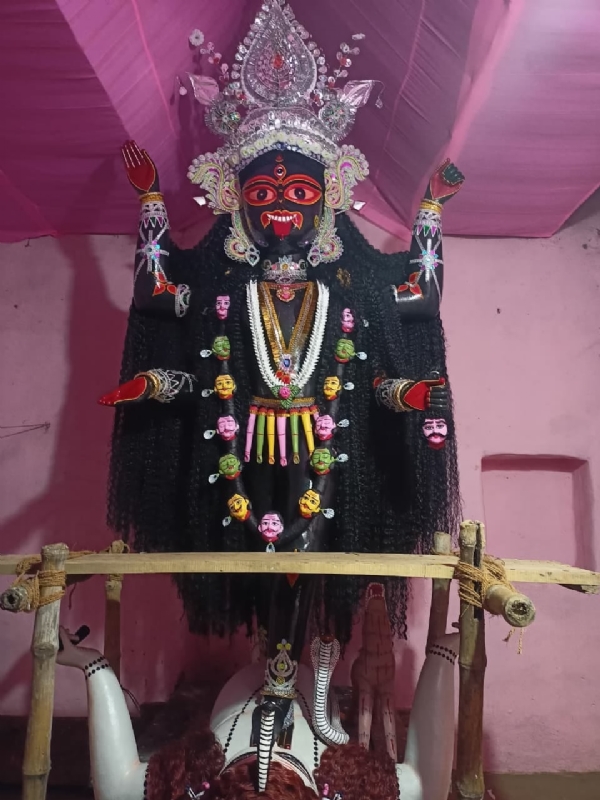
Hooghly, 07 November (H.S.): Nearly 500-year-old Kali Puja at Baidyabari in Sripur, Kamarpukur, Hooghly district, continues to attract attention because of its distinctive rituals, family traditions and mysterious folklore. Here, Goddess Kali is worshipped in her Chamunda form, following customs passed down through generations.
According to family members, the puja was started more than 500 years ago by Ram Tarak Gupta. It is traditionally believed that he was a physician to Sri Ramakrishna Paramahamsa. Since then, the puja has continued as a family tradition, retaining its distinctive rituals and practices.
One of the most striking features of the idol is that chains are tied around the goddess's waist and feet. Blood marks are also visible at the corners of her lips. A centuries-old family legend is associated with this unusual appearance.
According to local folklore, several hundred years ago, a daughter-in-law of the family used to attend the goddess's evening worship wearing a red-bordered saree, with alta on her feet and anklets. However, one day, after going to the temple, she never returned home. When family members went looking for her, they allegedly found a red-bordered cloth stained with blood near the face of the deity. Following this incident, several restrictions were introduced in the family's worship traditions.
According to the family's belief, women are prohibited from offering prayers while wearing red-bordered sarees, applying alta or wearing anklets. The family believes that violating these customs could displease the goddess.
There are several other restrictions associated with the puja. Women from the family are not permitted to perform the evening aarti. According to family beliefs, the goddess prefers solitude. Consequently, the temple does not have elaborate lighting arrangements, loudspeakers or loud music. Worship is performed under the light of lamps and candles, accompanied only by the traditional beats of dhak drums.
The timing and rituals of the puja are equally distinctive. The worship begins at night and continues until daybreak. The priest is required to complete the entire ritual while remaining seated in one position. After the puja concludes, he can leave his seat only after cutting a thread in accordance with the prescribed ritual. Offerings involving the sacrifice of a goat, sugarcane or ash gourd are also part of the tradition.
The immersion ceremony follows another special family custom. According to family beliefs and a dream-related divine instruction, the idol must be immersed in a particular pond. After immersion, the wooden framework of the idol is brought back. The next year's idol is prepared by the family using its traditional techniques, without relying on any fixed mould.
The nearly five-century-old Kali Puja at Baidyabari in Sripur, Kamarpukur, is therefore much more than a religious celebration. It represents a unique blend of ancestral traditions, folklore and distinctive rituals. The family maintains that despite changing times, the age-old customs of the puja have remained unchanged.
Why are chains tied around the goddess's waist and feet? What is the significance of the blood marks at the corners of her lips? These questions continue to intrigue devotees and visitors, making this mysterious Kali Puja one of the distinctive attractions of Kamarpukur.
---------------
Hindusthan Samachar / Priyanka Pandey
18 Aug 2026
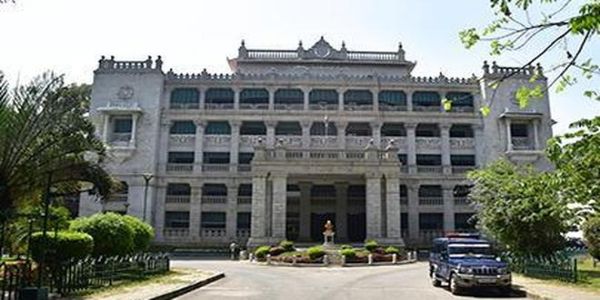
ED raids KPSC office, 20 other locations over Karnatak veterinary recruitment scam
ED raids KPSC office, 20 other locations over Karnatak veterinary recruitment scam..