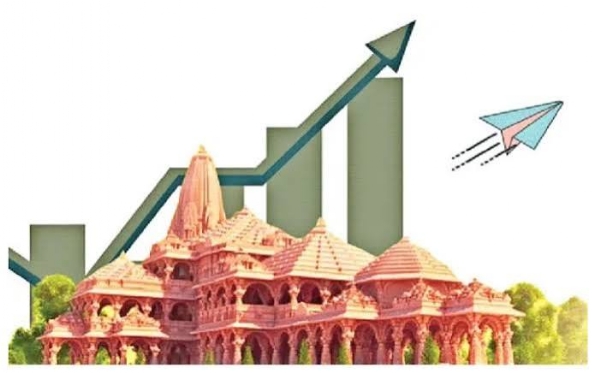
Jitendra, who once supported his family by driving a
battery-operated rickshaw, now earns Rs. 600 to Rs. 700 daily by selling
magnetic photographs after the construction of Ram Mandir
Lala Mahto, a garland and nail seller who came from Bihar,
earns Rs. 700 to Rs. 800 daily, with devotees' faith becoming the foundation of
his economic stability
Ayodhya, Nov 06 (HS): Amid preparations for Deepotsav-2026
in Ayodhya, vibrancy of the city of Lord Ram is not limited to its roads,
temples and ghats. Behind this vibrancy, hopes of small traders are also being
illuminated, as the construction of Ram Mandir and expansion of religious
tourism have created new opportunities in their lives.
The campaign to develop Ayodhya as a global religious
tourism destination under CM Yogi Adityanath's leadership is beginning to show
its impact on the ground. From local people who once struggled to find
employment to small traders who have arrived from other states such as Bihar,
this marketplace of faith is becoming a strong foundation for their
livelihoods.
The most striking picture of this transformation is
Jitendra. Once earning a living for his family by driving a battery-operated
rickshaw, Jitendra is now selling magnetic photographs and showpieces that
reflect Ayodhya's identity. The growing flow of devotees and tourists after the
construction of Ram Mandir showed him a new business path. Now, tourists from
across the country buy magnetic photographs and souvenirs from him to take back
memories of Ayodhya. For Jitendra, this transformation is not merely about
changing his profession, but also about gaining respect for his work and
developing new hope for the future.
Jitendra stated, Earlier, I used to drive a
battery-operated rickshaw. At that time, earning even Rs. 100 to Rs. 200 was
sometimes difficult. The increasing crowds and traffic on the roads made
driving a rickshaw difficult. With the responsibility of looking after my
family and young children, safety concerns also remained. At times, people's
behavior towards rickshaw drivers was also unpleasant. With increased activity
in Ayodhya after the temple's construction, I decided to change my work. Now, I
sell magnets and showpieces. Through this work, I earn Rs. 600 to Rs. 700
daily. The best part is that tourists speak to me with respect. I would
describe the transformation in Ayodhya as not 100%, but 200% progress.
The expansion of religious tourism in Ayodhya is creating
employment opportunities not only for local traders but also for people
arriving from other states. Lala Mahto, a garland and nail seller from Bihar,
is one example. He earns around Rs. 700 to Rs. 800 daily through his business
in the city of Lord Ram.
Poojan, who has also arrived from Sitamarhi in Bihar, is
running his business here. The demand for religious symbols and puja items
among devotees forms the basis of their livelihood. A locket of Mata Sita is
available in the market for Rs. 100, while a Sita Haar costs Rs. 80. Besides
these, devotees are also purchasing garlands, nails and other religious items.
Local traders such as Ramnaresh of Ayodhya are also associated with these
activities. After visiting the temple, devotees want to take back memories of
the city of Lord Ram and items associated with their faith. This demand is
becoming a source of income for small shopkeepers.
CM Yogi has set the goal of developing Ayodhya not merely as
a religious city but as a world-class tourism destination. Following the
temple's construction, the expansion of basic infrastructure, better roads,
beautification, development of ghats, and grand events such as Deepotsav have
taken Ayodhya's identity to new heights.
Hindusthan Samachar / Abhishek Awasthi
18 Aug 2026
ED raids KPSC office, 20 other locations over Karnatak veterinary recruitment scam
ED raids KPSC office, 20 other locations over Karnatak veterinary recruitment scam..