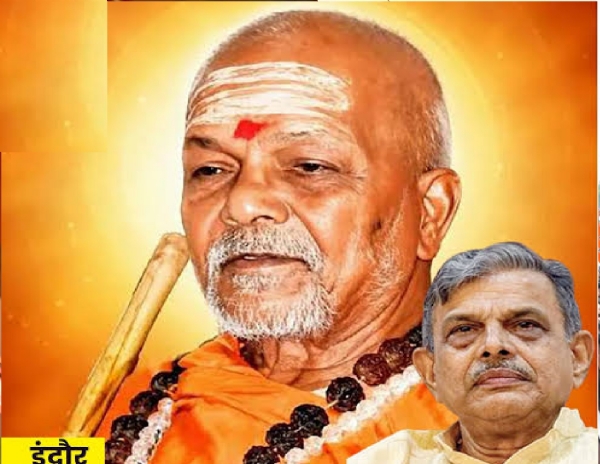
Indore , 04 November (H.S.) : The three-day meeting of the Sangh’s Akhil Bharatiya Karyakari Mandal, held at the Daly College campus in Indore from 2 to 4 November, concluded on Wednesday. About 400 pratinidhis from across the country participated in the meeting. After its conclusion, Sarkaryavah Dattatreya Hosabale gave journalists a detailed account of the achievements of the Shatabdi Varsh, sangathanatmak vistar, samajik samarasata, aarakshan, challenges facing yuva, aapda rahat and the Sangh’s future plans.
On this occasion, on the 100th year of the birth of Swami Laxmanananda Saraswati, who dedicated his life to awakening swabhiman, swavalamban and swadharma in the Janajati region of Kandhamal in Odisha, he also made a special statement prominently on his life and contribution.
In this special statement, he said that in Odisha, the sacred land of Bhagwan Jagannath, many vibhutis have contributed to giving direction to society. In this series, Swami Laxmanananda Saraswati ji, born on 15 August 1926 in Gurujang village of Angul district, was a vilakshan sant who attained veergati while fighting anti-Hindu forces. In his youth, Swamiji joined the Praja Mandal and plunged into the freedom movement. After marriage, he took diksha and embraced sanyas, and made a meticulous study of Hindu shastras and Sanskrit grammar.
In order to stand against the anti-national elements active in the local society in Kandhamal, Odisha, he set up his kendra at Chakapad in the same region and began living there. On the foundation of adhyatmikta, Swamiji made extensive efforts for the material progress of the Janajati samaj and to awaken in them swabhiman towards their own sanskriti. By inspiring the people of the Janajati area towards Sanskrit education, Mahila Bhajan Kendras, agriculture, gopalan and jal sanrakshan, Swamiji showed them the path of swabhiman and swavalamban. By organising Shuddhi Yajnas, he used to have the Janajati samaj take a pratigya of sadachar.
By presenting the pooja of “Dharanipenu”, a symbol of the samaj’s shraddha, in contemporary contexts, Swamiji strengthened the roots of the samaj. Through Bhagwan Jagannath’s yatras and the organisation of yajnas and other rituals, he reawakened in the samaj there the dridhikaran of their religious beliefs and a sense of gaurav towards their traditions. For this purpose, using Bhagwan Jagannath’s nirmalya, the mitti and leaves of the Tulsi plant, and Ganga jal, he made the process of Ghar Wapasi simple and accessible.
Because of these efforts of Swamiji, the asamajik and anti-national elements active there began to feel uncomfortable. They made several attempts at a direct attack on Swamiji, but Swamiji kept on doing his work anavarat, standing his ground even more firmly.
Finally, intolerant kattarpanthi forces, on the pavitra day of Janmashtami, attacked the Jaleshpatta Ashram and brutally murdered Swamiji along with four other shishyas. The life of the mahan balidani sant Swami Laxmanananda Saraswati was devoted to the raksha of Matribhumi and Dharma. This parampavitra karya was the very uddeshya of his life. His vyaktitva and his krititva were inseparable from each other, reflecting the unbroken ekroopta of his vichar and aacharan.
Today, many karyakartas, holding the prerana of his balidan in their hearts, are engaged in work for the dridhikaran of dharmik aasthas and the sanrakshan of paramparas. On the Janmashati of Vedanta Kesari Swami Laxmanananda Saraswati ji, the Rashtriya Swayamsevak Sangh offers its shraddhasuman.
---------------
Hindusthan Samachar / Mayank Chaturvedi

18 Aug 2026