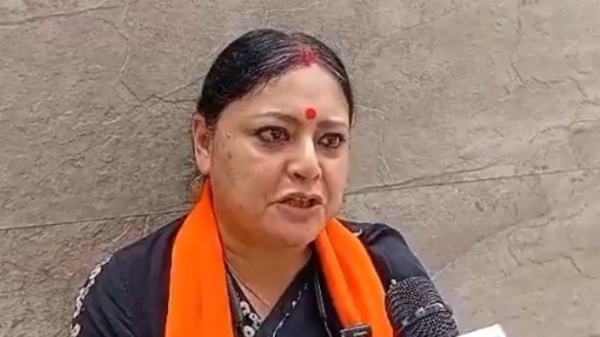
Kolkata, 03 November (H.S.) : The West Bengal government on Tuesday unveiled an ambitious urban transformation plan encompassing the redevelopment of Kolkata’s historic College Street and Tangra, slum rehabilitation, organized hawker zones, and the construction of riverfronts along both banks of the Ganga. State Urban Development and Municipal Affairs Minister Agnimitra Paul stated that the government aims to adopt successful international practices without entirely replicating foreign cities. She emphasized the vision to integrate the best elements from London, France, Bangkok, and Singapore tailored to local requirements, explicitly clarifying that the goal is not to blindly transform Kolkata into Singapore.
To facilitate project management and execution, the state government has signed nine Memorandums of Understanding (MoUs) with the National Buildings Construction Corporation (NBCC). The agreements were formalized at Nagarayan, the headquarters of the Urban Development and Municipal Affairs (UDMA) Department, appointing NBCC as the Project Management Consultant. The first MoU focuses on the redevelopment of College Street, aiming to modernize the area while strictly preserving its unique identity as India's premier book district. The second agreement covers the revitalization of Tangra’s Chinatown, seeking to retain its authentic Chinese character by enlisting internationally renowned consultants and architects. The third MoU involves riverfront development in Chandannagar, while the fourth pertains to a feasibility study and the redevelopment of government housing in the Bidhannagar area.
Detailing further agreements, the fifth MoU paves the way for the construction of public toilets at various locations across the state. The sixth agreement aims to establish planned hawker and vending zones inspired by the Bangkok model. The minister highlighted that instead of restricting vendors to pavements, the government is considering dedicated food streets, food courts, mobile food vehicles, and temporary markets equipped with QR code-based digital rental and payment systems. The seventh MoU focuses on slum redevelopment in Kolkata to provide permanent housing to residents. A major highlight is the eighth MoU, an extensive riverfront project envisioning the development of both banks of the Ganga along the lines of Mumbai’s Marine Drive, complete with a four-lane highway, pedestrian pathways, cycle tracks, hotels, and commercial offices.
The minister further disclosed that the state government has shared a comprehensive vision with the Prime Minister's Office, which could potentially include a Metro connection from Diamond Harbour to Esplanade alongside the proposed riverfront and highway.
Executing this massive endeavor will require seamless coordination among multiple stakeholders, including the Kolkata Port authorities, Railways, UDMA, Public Works Department, and the Transport Department. Additionally, discussions regarding cycling infrastructure have been initiated with a Netherlands-based company. The ninth MoU encompasses the development of river ghats in Nabadwip. Emphasizing that the ultimate objective of these projects is to create sustainable, international-standard infrastructure, the minister lauded NBCC’s extensive expertise in successfully executing major national projects like the Bharat Mandapam.
---------------
Hindusthan Samachar / Satya Prakash Singh
18 Aug 2026
ED raids KPSC office, 20 other locations over Karnatak veterinary recruitment scam
ED raids KPSC office, 20 other locations over Karnatak veterinary recruitment scam..