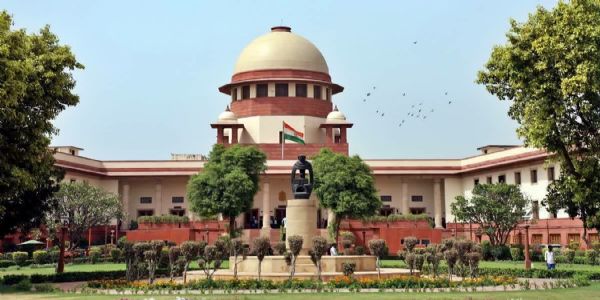
New Delhi, 03 November (H.S.): The Supreme Court has postponed until January 21 next year the hearing on petitions challenging the constitutional validity of the Waqf (Amendment) Act, 2025. A Bench headed by Justice M.M. Sundresh on Monday directed all parties involved in the case to submit their written submissions and supporting documents by December 31 to ensure that the legal formalities are completed within the stipulated timeframe.
During the hearing, the nodal counsel informed the court that five principal petitions had initially been selected as the lead cases, while the remaining 135 petitions had been converted into interim applications. However, lawyers representing some of the petitioners argued that the five lead petitions did not adequately cover all the legal grounds on which the amended law had been challenged.
Taking note of their submissions, the Supreme Court permitted applicants who had filed interim applications to independently file fresh writ petitions within two weeks, enabling all their legal arguments to be considered in detail.
The Waqf (Amendment) Act, 2025, came into force after being passed by Parliament and receiving the assent of President Droupadi Murmu. More than 100 petitions were subsequently filed across the country challenging its constitutional validity and alleging that the legislation undermined the fundamental framework governing Waqf properties.
In September 2025, the Supreme Court had declined to stay the entire Act but had imposed an interim stay on certain provisions, prima facie finding grounds for intervention. These included the requirement that a person must have practised Islam for at least five years to create a Waqf, pending the framing of rules; the special powers granted to designated officers under Section 3C; and the provisions concerning the representation of non-Muslims in the Central Waqf Council and State Waqf Boards, including restrictions on their numbers.
The court has also directed the nodal counsel to compile all the judgments and submissions cited by the petitioners. The Additional Solicitor General will file the Centre's response to the compilation on behalf of the Union government.
---------------
Hindusthan Samachar / Jun Sarkar
18 Aug 2026