New Delhi, 21 November (H.S.): Multilingual artificial intelligence (AI) technology is being deployed in hospitals across India to overcome language barriers between doctors and patients. The technology enables doctors to communicate with patients in their preferred languages and prepare medical records, prescriptions and discharge instructions through voice-based inputs. The All India Institute of Medical Sciences (AIIMS), the Jawaharlal Institute of Postgraduate Medical Education and Research (JIPMER), Puducherry, and the Directorate General of Medical Services (Army) have demonstrated its practical applications in healthcare.
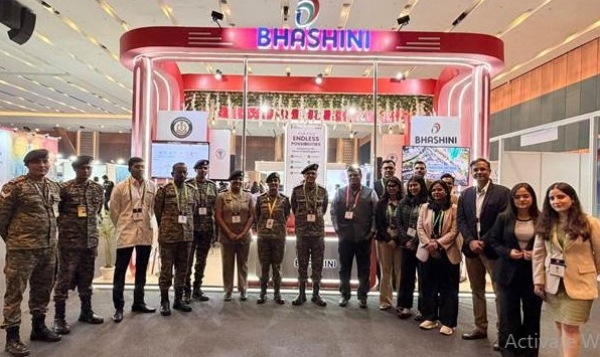
According to the Ministry of Electronics and Information Technology, the Digital India BHASHINI Division showcased its multilingual AI technologies at the Global Digital Health Summit 2026, held at Bharat Mandapam in New Delhi on November 20 and 21. The summit was organised around the theme ‘Implementing Artificial Intelligence – AI in Action’. BHASHINI, along with its institutional partners, demonstrated the application of language technologies in the healthcare sector.
At JIPMER, e-BHASHINI has been integrated with the e-Sushrut Hospital Management Information System (HMIS), enabling doctors to record patients’ medical histories, inpatient department (IPD) notes and discharge instructions through voice inputs. At AIIMS, speech technologies developed by BHASHINI were demonstrated to facilitate communication between doctors and patients speaking different languages.
The Directorate General of Medical Services (Army) showcased the technology’s integration with the Dhanwantri system, through which doctors’ spoken clinical notes are converted into typed text. The technology is expected to reduce the time spent on medical documentation and facilitate communication with patients in their preferred languages.
BHASHINI’s Shrutlekh speech-to-text facility was also demonstrated during the summit, enabling real-time transcription and translation of spoken content across languages. Other applications showcased included the BHASHINI mobile app, Data Daan and the Granthika platform. Data Daan promotes community participation in collecting linguistic data for Indian languages, while Granthika facilitates the collection and digitisation of written and oral language resources.
Prof. Dr. Vivek Tandon, Professor-in-Charge of the Computer Facility at AIIMS New Delhi, said the institute had integrated BHASHINI’s speech-to-text facility with the prescription module of the National Informatics Centre’s (NIC) e-Hospital system, allowing doctors to dictate prescriptions. The facility received positive feedback during its pilot deployment in the Neurology and Neurosurgery departments and is now being extended to other departments across the institute.
Dr. Anand A, Deputy Officer-in-Charge of the IT Wing and DMS at JIPMER, said the facility enables doctors to dictate patients’ case histories, notes on hospitalised patients and discharge instructions in English or supported Indian languages. The technology is expected to ease the burden of clinical documentation on healthcare professionals.
Major General Sandeep Bhalla, ADGMS (IS, H and PS) at the Directorate General of Medical Services (Army), said it was essential to provide healthcare in the languages understood by patients and their families, who come from different parts of the country to military hospitals. BHASHINI’s speech-to-text technology would save doctors’ time while enabling patients to explain their health concerns in their preferred languages.
Amitabh Nag, Chief Executive Officer of the Digital India BHASHINI Division, said language should not become a barrier to healthcare delivery. He said collaboration with AIIMS, JIPMER and the Directorate General of Medical Services (Army) had demonstrated how multilingual AI technologies could be integrated into clinical documentation and healthcare workflows.
According to the ministry, BHASHINI supports 36 Indian written languages, 23 Indian speech languages and 35 international languages. Its platform has recorded more than 11 billion inferences, processing approximately 24 million inferences daily. Its technology ecosystem includes translation, speech recognition, speech synthesis and transliteration, among other language services.
---------------
Hindusthan Samachar / Jun Sarkar
18 Aug 2026