New Delhi, 20 November (H.S.): The National Investigation Agency (NIA) has stepped up its efforts to dismantle the nexus between terrorism and organised crime, strengthening its investigative capabilities, technological infrastructure and prosecution mechanisms. The agency has registered 82 cases so far in 2026, while its conviction rate has risen to 93 per cent, based on judgments delivered by various courts. It currently has 25 dedicated special courts, with 14 more in the process of being established. The agency has also launched the ‘Pushti’ portal to help citizens verify official notices and protect themselves from fraud involving forged notices and so-called digital arrests.
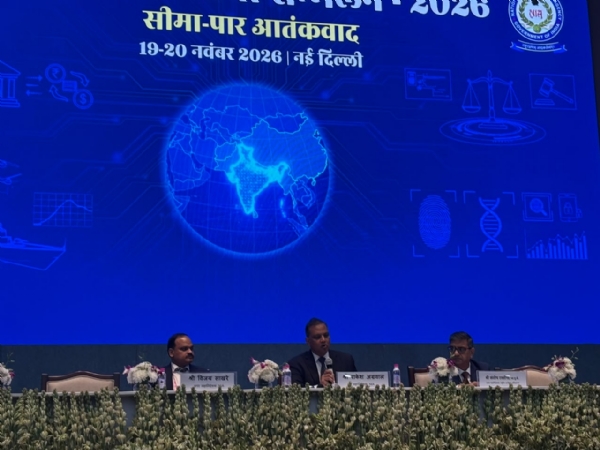
Addressing a press conference after the annual anti-terrorism conference held on Friday at the Dr D.S. Kothari Auditorium in the DRDO Bhawan on Rajaji Marg in New Delhi, NIA Director General Rakesh Aggarwal outlined the agency’s performance, registered cases, conviction record, training initiatives, technological capabilities and investigations relating to the country’s internal and border security.
Aggarwal said the NIA had registered 80 cases in 2025, compared with 82 so far in 2026. These include 12 cases relating to post-poll violence in West Bengal, which the Supreme Court had transferred to the agency for investigation by exercising its extraordinary constitutional powers. The violence had also involved obstruction of judicial officers in the discharge of their duties. The NIA chief clarified that these 12 cases did not fall strictly within the category of terrorism. Excluding them, the agency has registered 70 cases in 2026 under its core mandate relating to terrorism.
On the agency’s conviction rate, Aggarwal said its cumulative rate stood at 92 per cent until last year. So far this year, courts have delivered final judgments in 29 NIA cases, convicting the accused in 27 of them. This has taken the agency’s conviction rate to 93 per cent in 2026. He noted that the rate had consistently remained above 90 per cent in previous years as well. In these cases, courts have awarded the death penalty to 10 convicts and life imprisonment to 14 others.
The NIA Director General said 25 dedicated special NIA courts had been established across the country to ensure the speedy disposal of cases. These courts exclusively hear matters investigated by the agency. Earlier, NIA cases were heard alongside those involving the Central Bureau of Investigation (CBI), the Enforcement Directorate (ED) and state police agencies, often resulting in delays in the examination of witnesses.
Following the establishment of dedicated courts, the pace of trial proceedings has increased two to three times, he said. Earlier, a court could examine only about two witnesses a week, whereas the special courts are now hearing NIA cases from Monday to Friday and examining 10 or more witnesses during that period. The process of setting up 14 additional special courts is also underway. Once these become operational over the next six months, the total number of dedicated NIA courts in the country will rise to 39.
On the issue of forged notices and digital arrest scams, Aggarwal said Union Home Minister Amit Shah had launched the citizen-centric online portal ‘Pushti’ during the inaugural session of the conference. The agency had found that fraudsters were using fake NIA notices and summons to intimidate people with threats of digital arrest and extort money from them. Under the new system, every official notice issued by the NIA will carry a unique identification number, and all such notices will be issued through the portal, enabling recipients to verify their authenticity.
On the investigation into the Red Fort blast case, Aggarwal said the probe was almost complete and the process of framing charges in court had begun. The agency has completed presenting its arguments against the arrested accused, while lawyers representing the defence are currently putting forward their submissions. He said that, apart from one accused, no other key accused in the case was absconding. The agency had information that the remaining accused was in Afghanistan.
Responding to questions about the role of a co-pilot in a major aviation-related case and the NIA’s jurisdiction to investigate it, Aggarwal said the agency had not exceeded its legal authority either in registering the FIR or conducting the investigation. He said a Mutual Legal Assistance Treaty (MLAT) request had been sent to the United Arab Emirates (UAE), seeking copies of certain important documents and permission to question some individuals there.
The investigation is also examining whom the suspected co-pilot had been in contact with while studying in Australia and the United Kingdom, and whether any of his friends or other associates in India had played an active role in the matter. Further steps in the investigation will be taken after the agency receives the UAE’s response and the requested documents, he said.
On efforts to dismantle local modules of the Lashkar-e-Taiba in Jammu and Kashmir, the NIA chief said terrorism was rarely the work of an individual acting alone. It was sustained by an entire network comprising arms suppliers, financiers and individuals who provide shelter and logistical support to terrorists.
To prevent local youth from being drawn into terrorist activities in the future, the agency is identifying and arresting those who assist terrorists and their sympathisers, including overground workers (OGWs), he said. The objective of the investigation, Aggarwal emphasised, was to dismantle the entire support network that enables terrorist activities.
On the case involving foreign national Matthew VanDyke, Aggarwal said VanDyke and his associates had entered India on valid visas but subsequently crossed the Myanmar border illegally, where they allegedly trained members of Indian insurgent groups. They later returned to India illegally and were arrested.
He said the investigation into the offences relating to illegal border crossing and re-entry into India had been completed, and a chargesheet had been filed in that part of the case. In the second phase of the investigation, the agency is analysing a large volume of seized digital data to identify the Indian insurgents who had allegedly received training. Once their identities are confirmed, a supplementary chargesheet will be filed under the Unlawful Activities (Prevention) Act (UAPA), he added.
Asked about VanDyke travelling abroad after securing bail and allegedly issuing threats on social media, the NIA chief said he had returned to India at least once after being released on bail. Aggarwal also said that during his judicial custody at Tihar Jail and on the six or seven occasions when he appeared before the court, VanDyke had not levelled any allegations against the NIA. The law would take its course, he said, adding that if VanDyke failed to appear before the court after the chargesheet was filed, appropriate legal action would be initiated against him.
On the smuggling of weapons and narcotics across the border using drones, Aggarwal said low-cost drones had emerged as a serious and asymmetric security challenge. Such devices were being used to drop narcotics, weapons, cash and explosives into Indian territory from across the border. These consignments could be delivered separately or together, he said.
According to available data, Punjab has reported the highest number of drone-infiltration incidents. Aggarwal said the activity was primarily being carried out from across the border, rather than being a case of drone misuse originating within the country. He added that, just as physical fencing was used to prevent infiltration across land borders, effective technological solutions and security mechanisms were being developed to detect and intercept unauthorised drones.
On the extradition and deportation of gangsters and terrorists hiding abroad, the NIA chief said every country was a sovereign state and that bringing a fugitive back to India through judicial extradition proceedings required the submission of strong evidence. Authorities also had to address questions concerning human rights and prison conditions in India.
Alongside the lengthy judicial extradition process, the agency was increasingly pursuing deportation through bilateral diplomatic cooperation, he said. Under this route, the government of the country concerned may decide to send a foreign national accused of criminal activity back to India through its own administrative process. Aggarwal said this approach had helped accelerate efforts to bring fugitives hiding overseas back to the country.
Asked about wanted individuals hiding abroad, including Happy Passia, Arsh Dalla, Shahzad Bhatti and Goldy Brar, Aggarwal expressed confidence that several more fugitives would be brought within the reach of Indian law by the time the next annual anti-terrorism conference is held next year.
He said 102 cases had so far been registered across the country against the network of Shahzad Bhatti. The agency was continuously identifying his associates and taking preventive action against them. Commenting on Canada including Goldy Brar in its list of the country’s 25 most-wanted criminals, Aggarwal said the move was positive, as declaring him a wanted individual by another country could help curb his activities.
Responding to a question about Lawrence Bishnoi in the context of foreign claims that he was operating a criminal network from a jail in Gujarat, the NIA chief said no information regarding the alleged foreign operation had been shared through any official channel. However, the NIA already had cases registered against Bishnoi, who remains in judicial custody, he added.
---------------
Hindusthan Samachar / Jun Sarkar
18 Aug 2026