New Delhi, 20 November (H.S.): India has presented a new concept of Citizen-Determined Contributions (CDCs) at the 31st Conference of the Parties (COP31) to the United Nations Framework Convention on Climate Change, calling for voluntary environmental commitments made by citizens to receive global recognition and encouragement alongside Nationally Determined Contributions (NDCs).
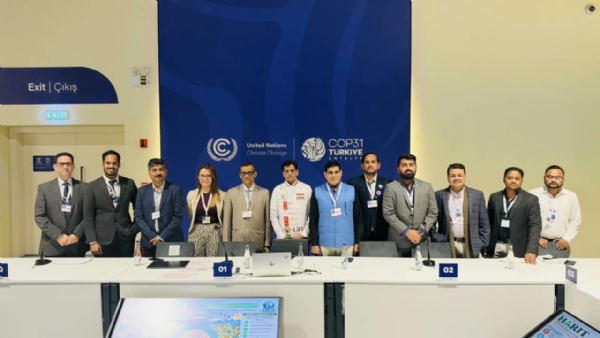
The proposal was put forward by the Green India team of Paryavaran Sanrakshan Gatividhi during an international dialogue titled ‘Green Pathways for Climate Peace: Just Transition through Citizen-Determined Contributions’, held at the COP Exhibition Centre in Antalya, Türkiye. The conference took place from November 9 to 20.
The dialogue emphasised that Prime Minister Narendra Modi’s Mission LiFE (Lifestyle for Environment) could be adopted globally to transform climate action into a people’s movement.
Dr Anil Mehta of Vidya Bhawan Society, Udaipur, and Paryavaran Sanrakshan Gatividhi said climate change was not merely an environmental or technological challenge but was also closely linked to lifestyles and consumption patterns. He stressed that national climate targets could be achieved only when citizens and communities actively participated in the process.
Mehta noted that India had achieved, in June 2025, the milestone of deriving 50 per cent of its total installed electricity capacity from non-fossil fuel-based sources, five years ahead of the target deadline.
Sandeep Baliyan of Paryavaran Sanrakshan Gatividhi highlighted the role of India’s traditional knowledge systems and community-led initiatives in environmental conservation. Referring to the organisation’s three-P approach and its HARIT Ghar Abhiyan, he said the message of environmental protection must reach every household and become an integral part of everyday life.
Dr Shiva Nagendra of the Indian Institute of Technology Madras (IIT Madras) underscored the importance of technological innovation and international academic collaboration. Santosh Gupta, meanwhile, highlighted the significance of traditional water conservation systems, including johads, stepwells and community forests.
Seon Clark stressed the need for individual and spiritual transformation to strengthen climate action, while Rajvardhan Joshi called for greater youth participation in policymaking and grassroots initiatives.
The dialogue concluded that tackling climate change requires lifestyle changes alongside government policies. It also called on countries across the world to promote Citizen-Determined Contributions alongside their Nationally Determined Contributions and to turn Mission LiFE into a global movement.
---------------
Hindusthan Samachar / Jun Sarkar
18 Aug 2026