




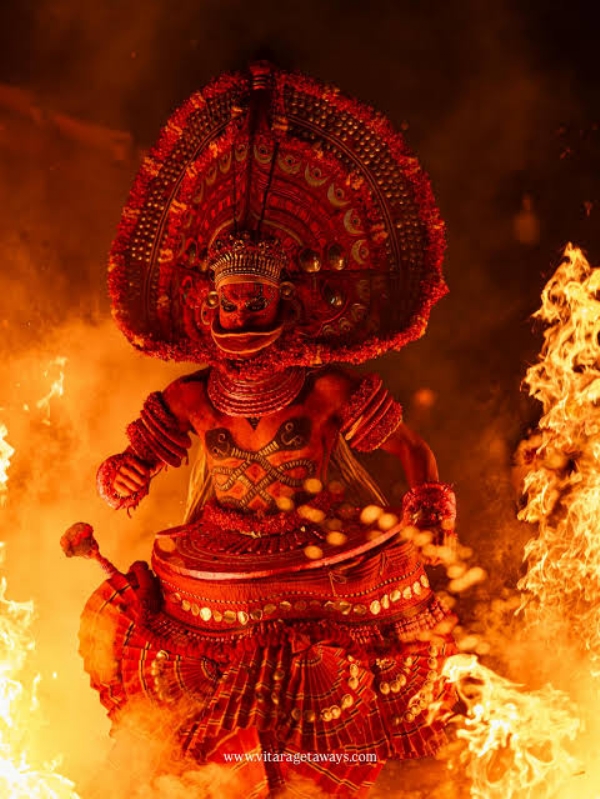
Kannur, 02 Nov (H.S.): As drums reverberate through sacred groves and ancestral courtyards, North Kerala is entering the season when faith acquires a painted face, a towering crown and a human voice. Theyyam has returned to the ritual calendar, renewing an intimate relationship between communities and the deities they believe walk among them.
Across Kannur and Kasaragod, the heartland of this living tradition, annual observances bring families back to village shrines. The season traditionally opens with the tenth day of the Malayalam month of Thulam and extends broadly into May, although individual shrines follow their own calendars and some observances fall outside this period.
For devotees, Theyyam is a direct encounter with the divine. The performer, transformed through ritual preparation, costume, music and movement, is believed to embody a deity. Worshippers approach with folded hands, seeking blessings, consolation and answers to anxieties that accompany everyday life.
The setting gives the experience its distinctive intimacy. Sacred groves, known as kavus, and ancestral homes become places where inherited stories are retold before the very communities that have preserved them. The divine presence is accessible, listening and responding within a shared space.
Preparation demands discipline and craftsmanship. Elaborate facial designs, ornaments and imposing headgear distinguish one manifestation from another. Coconut fronds, bamboo and other materials become elements of sacred costume. Behind the striking appearance lie inherited skills in painting, music, movement and ritual knowledge.
Invocatory songs, commonly called thottam, recount the deity’s story and prepare the ground for the transformation. Percussion gathers force as the performance unfolds. Certain forms involve fire and demanding physical movements, but each has its own ritual vocabulary; no single dramatic image can represent the entire tradition.
Theyyam’s pantheon embraces goddesses, guardian spirits, ancestors and local heroes. Muchilottu Bhagavathy, Kathivannur Veeran, Vishnumoorthy, Gulikan and Pottan are among its familiar manifestations. Their narratives preserve memories of courage, devotion, suffering and resistance, offering a community archive carried through song and embodied performance.
Its social significance is equally compelling. Performers traditionally come from communities including Vannan and Malayan, alongside several others. During worship, people across caste divisions bow before the embodied deity. Pottan Theyyam, particularly, carries a powerful challenge to caste hierarchy, giving spiritual expression to questions of human equality.
This cultural world also accommodates memories that cross religious boundaries. Figures such as Bappiriyan reveal the breadth of North Malabar’s inherited traditions, where local histories and encounters between communities find a place within worship.
For audiences elsewhere, the Kannada film Kantara opened a cinematic window onto a comparable spiritual landscape. Written, directed by and starring Rishab Shetty, the 2022 film draws specifically on Bhoota Kola, or Daivaradhane, associated with the Tulu cultural region of coastal Karnataka and adjoining areas.
The distinction matters: Kantara is not directly based on Kerala’s Theyyam. Bhoota Kola and Theyyam are distinct traditions with their own ritual systems and community histories. They nevertheless share striking features, including elaborate adornment, percussion, spirit embodiment and the belief that divine guardians intervene in human affairs.
Kantara builds its narrative around land, belonging and the obligations connecting people with protective spirits. Panjurli occupies a central place in that sacred relationship. Its dramatic ritual sequences make visible a worldview in which forests and community life carry moral and spiritual meanings beyond ownership.
That offers a useful bridge for understanding Theyyam, provided cinematic familiarity does not flatten local differences. A shrine ceremony belongs to its custodians, performers and worshippers, whose knowledge gives every gesture its significance.
As another season unfolds, North Kerala’s invitation is therefore to witness with patience and respect. Beyond the brilliant colours lies a continuing conversation between memory and belief, between inherited injustice and imagined justice. In the courtyard of a kavu, divinity remains close enough to hear a whispered prayer. The enduring power of Theyyam rests in that closeness: a community recognising its history, its fears and its hopes in a sacred presence renewed before its eyes, season after season, through generations of devotion.
---------------
Hindusthan Samachar / Arun Lakshman