





New Delhi, 18 November (HS): India's effort to convert its domestic coal resources into industrial gas and chemical feedstock is moving beyond conventional mining and surface-based processing, with underground coal gasification entering the development stage through newly allocated commercial coal blocks. The approach is intended to convert coal within deep underground seams into gas, potentially opening up deposits that are difficult to extract through conventional mining. Its commercial application, however, will depend on geological assessments, pilot results, environmental safeguards and regulatory clearances.
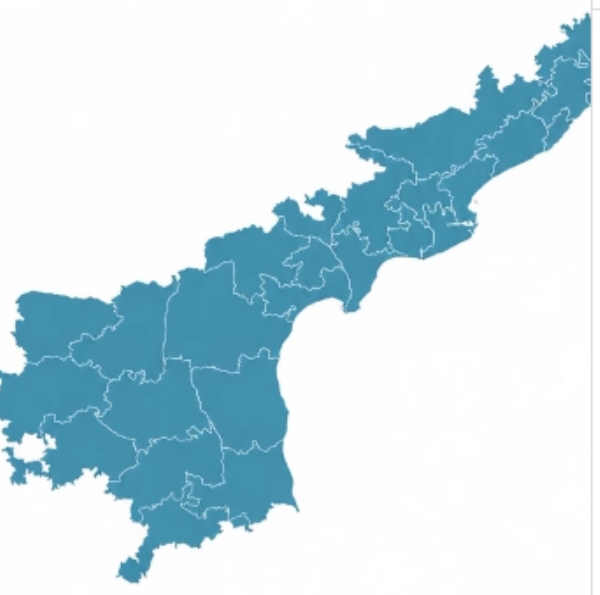
The development in Andhra Pradesh is among the first steps in this direction. In April 2026, the Ministry of Coal signed development agreements for four commercial coal blocks carrying provisions for underground coal gasification. Reliance Industries secured the Recherla and Chintalapudi Sector A1 blocks in Eluru district, while Axis Energy Ventures India was awarded the Dip Extension of Belpahar and Tangardihi East blocks.
The Andhra Pradesh project moved to the next stage on November 12, when an agreement with the state government set out an initial investment proposal of ₹43,000 crore over two years for an integrated underground coal gasification complex. The proposal envisages an initial phase of exploration, geological evaluation, pilot demonstration and feasibility assessment, followed by commercial development subject to the results and regulatory approvals.
The first phase is estimated to require ₹3,000 crore. It is intended to assess the technical performance of the process, safety requirements, environmental safeguards and commercial viability. A second phase, with an initial proposed investment of around ₹40,000 crore, would depend on successful completion of the first phase, submission of a mining plan and detailed project report, and the necessary clearances.
The project's estimated long-term investment potential of around ₹2.7 lakh crore is spread over its proposed development. It is not current expenditure or an approved commitment for the entire amount. Employment projections of 5,000 direct and 35,000 indirect jobs are similarly estimates, not jobs already created.
A different approach to coal utilisation
Underground coal gasification, or UCG, converts coal into gas within an underground coal seam. Wells are drilled into a suitable deposit, allowing an oxidising agent, generally air or oxygen, to be introduced. The resulting chemical reactions convert part of the coal into a gas that is brought to the surface through production wells.
The gas, commonly called synthesis gas or syngas, contains varying proportions of hydrogen, carbon monoxide, methane and carbon dioxide. After processing, it can be used as an industrial fuel or as a feedstock for products such as hydrogen, methanol, ammonia and synthetic natural gas.
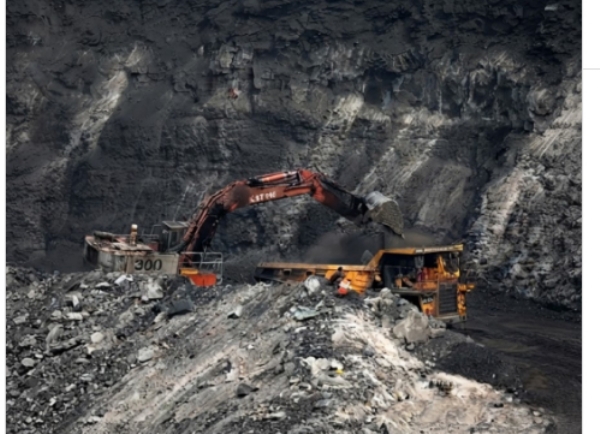
Unlike conventional coal gasification, which involves extracting coal and processing it at a surface facility, UCG seeks to carry out the conversion underground. The method could provide access to deposits that are difficult to mine, but it is not suitable for every coal seam. Depth, thickness, continuity, permeability and the geological formations surrounding a deposit all influence whether the process can be used.
National capacity and policy support
The Andhra Pradesh development comes against the backdrop of India's broader coal-gasification programme. The National Coal Gasification Mission has set a target of achieving 100 million tonnes of annual coal-gasification capacity by 2030.
In a July 2026 statement, the Ministry of Coal reported that around 22.6 million tonnes per annum of capacity was operational or under implementation. This included approximately 8 MTPA at Jindal Steel Limited as operational capacity, while the remaining capacity was associated with projects under implementation. The figure indicates progress in the wider coal-gasification programme, but it does not represent completed capacity across all projects.
In May 2026, the Union Cabinet approved a separate ₹37,500-crore incentive scheme to promote surface coal and lignite gasification projects. The scheme provides financial support for eligible plant and machinery costs, subject to prescribed conditions. It is distinct from the proposed underground gasification project in Andhra Pradesh.
The Ministry of Coal announced on November 10 that the second round of the incentive scheme had received two applications from NTPC, one for a proposed urea project and another for methanol and dimethyl ether production. The third round was also opened in November, with a pre-application conference scheduled for November 20 and applications due by January 11, 2027, under the ministry's published tentative schedule.
Coal gasification is being pursued for its potential industrial applications beyond electricity generation. Syngas can serve as a feedstock for fertilisers, chemicals and other industrial products. Domestic production could add to the country's sources of industrial inputs and reduce dependence on imported supplies, although the extent of any reduction will depend on costs, production volumes, product quality and the ability of projects to operate consistently.
The test of technology and environmental safeguards
UCG presents technical and environmental requirements that differ from those associated with conventional mining and surface gasification. Since the conversion takes place underground, the movement of gas, pressure changes and the condition of surrounding geological formations require continuous assessment.
Potential risks include groundwater contamination, gas migration through underground fractures, land subsidence and emissions. Establishing baseline groundwater conditions, mapping geological formations, monitoring the reaction zone and providing for post-operation site management are therefore important to any project assessment.
For the Andhra Pradesh blocks, exploration and pilot demonstrations will be central to establishing whether the deposits are suitable for the process. The findings will also determine the safeguards, infrastructure and investment required for any commercial stage. The available project announcement does not establish that commercial production has begun or that the technology has already been demonstrated at these blocks.
India's move towards underground coal gasification adds a new dimension to the country's effort to use domestic coal for industrial purposes. The immediate challenge is to establish whether the technology can be applied safely and economically under Indian geological conditions. The results of the exploration and pilot stage will be important in determining whether UCG can become a viable part of the country's wider coal-gasification programme.
---------------
Hindusthan Samachar / Indrani Sarkar