40
biogas plants operational in state, plans to establish 78 more plants in future
Biogas
being produced from 150 tonnes of stubble daily at CBG plant
Lucknow,
Nov 10 (HS): The Yogi government is making continuous efforts to transform
stubble management into an economic opportunity for farmers in the state. Chief
Minister Yogi Adityanath is emphasizing the scientific and commercial
utilization of crop residue instead of burning it. Under this initiative,
stubble is being linked to biogas production to provide farmers with additional
income, organic manure for fields, and relief from environmental pollution.
Through
this system, stubble is no longer a problem for farmers but is becoming a new
source of income. Currently, 40 biogas plants are operational in the state, and
78 more are to be established in the near future.
Yogesh,
a resident of Karamatkheda village in Harkh block of Barabanki, is an example
of this. He grows three crops a year: wheat, paddy and potato. Earlier, the
stubble left in the fields after harvesting a crop posed a major problem.
Burning it meant the risk of a penalty, while leaving it in the field raised
concerns about delays in sowing the next crop. However, stubble is now removed
as soon as the crop is harvested, allowing him to start preparing for the next
crop on time.
Balram,
a farmer from Tikra village, says transporting stubble to the biogas plant
saves him disposal costs. Earlier, removing stubble from one acre of land used
to cost approximately Rs 2,500 to Rs 3,000. Many times, under pressure to clear
their fields on time, farmers were compelled to burn stubble. This damaged not only
the environment but also soil health and its beneficial microorganisms. Now,
stubble is being used to produce biogas, while the organic residue left after
processing is being used as manure.
The
experiences of farmers like Yogesh and Balram show that the new
stubble-management system can transform the rural agricultural landscape. Under
Chief Minister Yogi Adityanath's government, the system being developed to
utilize crop residue is not only discouraging farmers from burning stubble but
also establishing a new economic link between the agriculture and energy
sectors.
Under
the Agriculture Department's guidance, the Gates Foundation's Technical Support
Unit (TSU) developed this stubble management model. To build an effective
commercial cycle, the team coordinated with all supply-chain stakeholders.
Farmer Producer Organizations (FPOs) were specifically involved in this
initiative and encouraged to participate in the pilot project.
The
objective of this model is to ensure timely stubble collection from fields,
safe transportation, and utilization in biogas plants. This relieves farmers of
the stubble disposal problem while utilizing crop residue for energy
production.
The
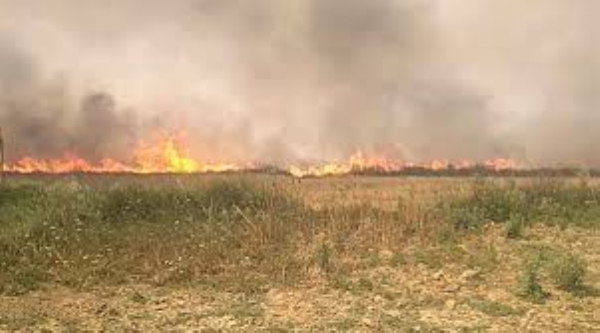
smoke released from burning stubble increases air pollution. This affects not
only the environment but also people's health. In addition, the intense heat
damages beneficial soil microorganisms and harms the soil's natural fertility.
In
contrast, proper stubble management and organic decomposition increase the
soil's organic matter content. This improves soil structure, moisture-retention
capacity, and the nutrient cycle. Using organic residue from biogas plants as
manure in fields also creates more opportunities to improve soil health.
The
stubble management system not only provides economic benefits to farmers but
also creates new employment opportunities in rural areas. Local people are
getting work in activities such as stubble cutting, collection, baling,
transportation, and processing.
In
areas where arrangements for purchasing and supplying stubble have been made,
farmers also have the opportunity to earn additional income from crop residue.
According
to Barabanki Deputy Director of Agriculture Umesh Kumar Sah, the establishment
of Compressed Biogas (CBG) plants at Deva Road and Haidergarh in the district
has enabled the initiative to be expanded in Harkh, Haidergarh, Fatehpur and
Ramnagar blocks. Stubble collected from these areas is being used to produce
biogas. Stubble is being removed from farmers' fields on time, and the organic
residue generated after processing is being made available as manure.
He
stated that employment opportunities have also been created in activities
related to stubble collection and transportation. At least 10 to 12 people are
engaged in stubble collection work in the fields, while approximately 2,000
people are employed at the plant.
The
Agriculture Department of the Yogi government provides subsidy assistance to
Farmer Producer Organizations and individual beneficiaries for purchasing CRM
machines for crop residue management.
To
link machinery availability with stubble demand, the Technical Support Unit has
facilitated Memorandums of Understanding (MoUs) between FPOs and aggregators
and super aggregators. These super aggregators already have agreements with CBG
plants.
Under
this arrangement, FPOs and aggregators are connected to the plants through
super aggregators. They have also been trained to operate and maintain
machinery, collect stubble, and maintain its quality. These organizations help
connect farmers to the system, map fields, and prepare collection plans
according to crop harvesting schedules.
Machines
such as slashers, rakers, and balers cut stubble. Balers make bundles of
stubble. Vehicles and hydraulic machines then collect these at collection
centers and transport them to biogas plants.
The
objective of this system is to remove stubble immediately after harvesting so
farmers do not face difficulties sowing the next crop.
According
to information from the CBG plant on Deva Road, it processes about 150 tonnes
of stubble daily to produce biogas. This produces approximately 15,000 to
19,000 kilograms of biogas daily. The plant uses paddy and maize stubble.
Because these crop residues contain high levels of silica, their use as animal
fodder is limited.
Meanwhile,
farmers generally use wheat stubble as animal fodder. In this context, linking
paddy and maize stubble to biogas production is emerging as an alternative
avenue for utilization.
According
to Agriculture Department Director T.M. Tripathi, in accordance with the
expectations of the Supreme Court and the National Green Tribunal, farmers'
approach towards stubble management in the state has changed. The emphasis is
now on the scientific utilization of stubble instead of burning it. With the
establishment of CBG plants, stubble, which earlier posed a problem for
farmers, is now becoming a source of income.
He
said 40 biogas plants are currently operational in the state, and 78 more will
be established soon. These plants will use stubble to produce energy in the
form of compressed biogas. In addition, the organic by-products from processing
will be available as manure, which can help improve soil fertility and increase
soil carbon content.
Hindusthan Samachar / Abhishek Awasthi

18 Aug 2026
ED raids KPSC office, 20 other locations over Karnatak veterinary recruitment scam
ED raids KPSC office, 20 other locations over Karnatak veterinary recruitment scam..