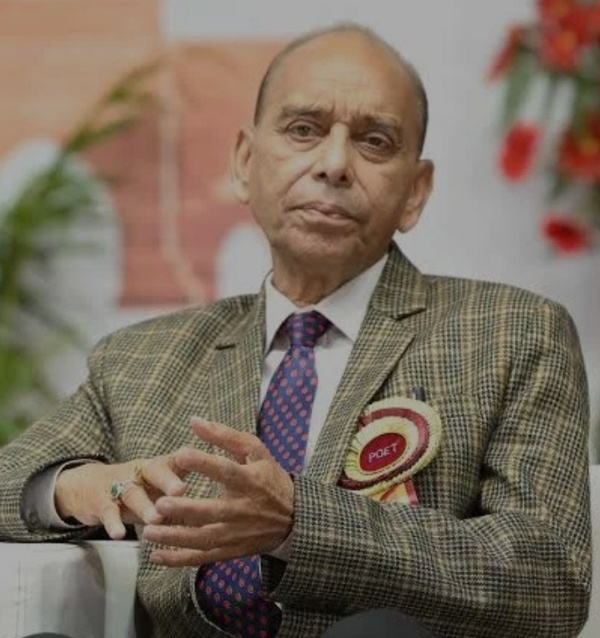
Lucknow,
Nov 10 (HS): If I were to mention my literary encounters with Tashna Kanpuri
Sahib and forget this encounter in Firozpur, my memories would be incomplete.
There was an occasion in Firozpur when I had the opportunity to share a room
with Tashna Sahib. This wasn't just a one-night or a few hours-long encounter,
but a memorable experience of observing his personality closely and
understanding his temperament.
In
Mushairas, we generally know a poet by his poetry, style of recitation and his
presence on stage, but when we get a chance to spend time in a room with the
same poet, many such aspects of his personality come to the fore which are not
visible in the lights of the stage.
Tashna
Kanpuri Sahib was a deeply sincere, loving, and welcoming person. He possessed warmth
that transformed even formal interactions into a casual one. Spending time with
him made one feel that he was not just a poet, but also a person who truly
valued relationships.
In
my view, a person's true greatness is also measured by how they treat others,
despite their fame and literary reputation. Being a great poet is one thing,
but being a great human being is even more important. Tashna Sahib's
open-mindedness and loving attitude created a special place for him in my
heart.
After
this visit to Firozpur, whenever I met him, I felt a sense of humanity and familiarity
in our relationship. Over time, our literary closeness remained intact, and his
memories became ever more cherished in my mind.
A
poet who is always in search of new lands and new subjects: One of Tashna
Kanpuri's qualities was that he constantly sought new avenues for poetry. He
would compose poetry in new terrains, contemplate new topics, and strive to
continue his creative journey. Creating freshness in poetry is no easy task. On
the one hand, a poet must maintain a connection with his language and literary
traditions, while on the other, he must also understand the changing feelings
and experiences of his era. A good poet doesn't simply repeat past successful
traditions, but also adds his own personal touch to them through his
observation and creative ability.
Look
at these verses from Tashna Sahab's ghazal: These strange shadows were fooled
like this, how long will my loneliness cry clinging to me? This couplet
resonates with the voice of someone who has experienced loneliness and is now
questioning their own loneliness. The imagery of strange shadows evokes a state
of inner being in which a person possesses memories, but lacks the solace
associated with them. Loneliness comes in many forms. Sometimes, a person feels
lonely when they are away from others, and sometimes, even when surrounded by
people, they feel a void within. Sometimes, instead of providing support,
memories of the past deepen their loneliness. Tashna Sahib has summed up this
situation in two lines. The word how long in the couplet is not
just a question, but also an expression of the restlessness arising from a
continuous situation.
There
is another couplet from the same ghazal: Every day there is a new problem in
every village of mine. Friends, for how long will you continue to be kind to
me? In this couplet, along with the difficulties of life, there is also the
feeling of a person who expects love and support from his friends, but is also
aware of the fact that ultimately a person has to decide the journey of life
himself. The help of friends, their prayers, and their love are certainly the
treasures of life, but a person's own courage and self-confidence are also
essential. The poet's lamentable nature brings him closer to human experience.
The speciality of Tashna Sahab's poetry is that he brings forward such topics
with which even a common man can feel connected.
Truth,
face and human essence: This couplet from his ghazal also seems particularly
significant to me: One day the reflection of the heart will emerge on the face,
how long will your eyes hide the truth. In life, humans try to hide many
things. Sometimes they hide their sorrow behind a smile, sometimes they turn
their troubles into silence, and sometimes they refrain from expressing their
heart's feelings in words. But feelings have their own expressions. Eyes,
facial expressions, and changes in tone often convey what the tongue tries to
conceal.
Tashna
Sahib has expressed this expression of truth through the reflection of the
heart and the eyes. The basic idea of this couplet is that it is not possible
to keep reality hidden forever. At some stage, a person's inner self
establishes a relationship with their outer self. Reading this couplet, one
realizes that poetry is about understanding the stories hidden behind human
faces. Through observation, the poet recognizes those qualities that the
ordinary eye often overlooks.
Question
of weather's ravages and queens: Tashna Kapuri Sahib has said in this ghazal:
The
glow on the face vanishes due to the ravages of the weather. How long can the
queens remain in their attire? The vagaries of the weather are particularly
striking here. Seasons change, circumstances shift, and the attitudes of
characters on the stage of life also change. These changes impact a person's
personality. By referring to the glow of the face and the elegance of the
dress, the poet has raised the question that how long can the outward charm
remain intact when the circumstances of life are constantly changing?
The
elegance of clothes and the glow of the face can be considered as signs of
external beauty, but the passage of time also reminds a person that the real
value of life lies not merely in appearance, but in character, feelings and
humanity. The connection established in this couplet between the changing
seasons and external beauty points to the changes in life. Time leaves its
impact on every person, and perhaps that is why one must seek one's true
identity beyond external splendor.
The
intensity of past feelings and the shadows of memories: The last couplet of the
ghazal also helps in understanding the current state of Tishna Sahib: My past
torments me in my imagination, how long will the winds of intensity of feeling
continue to blow? In this couplet, memories of the past emerge as a state that
cannot be easily forgotten. Some memories bring joy, some bring sadness, and
some bring a person back to those moments that they cannot forget even if they
wanted to.
The
past isn't just about past events, it's also about the feelings that
accompanied them. Sometimes the memory of a meeting brings a smile to the face
even years later, and sometimes the feeling of separation lingers in the heart
despite the passage of time.
Tashna
Sahib has combined the intensity of feeling with the ambiance of the east. This
technique creates a sense of warmth, a constant presence of memories and the
influence of the past.
Reading
this couplet, I recall many scenes from my own literary life. In this journey
spanning more than half a century, I've attended so many mushairas, met so many
poets, traveled with so many friends, and met so many personalities who, over
time, have become a part of my memories. Today, when some of them are no longer
among us, the moments spent with them seem even more precious. The memory of
staying in the same room with Tashna Kanpuri Sahib in Firozpur is also included
in those precious moments.
Request
for phone calls and prayers in the last days: There is one aspect of my
relationship with Tashna Kanpuri Sahib which even today creates a strange
feeling in my heart when I remember it. In his final days, he was in touch with
me frequently. We would talk on the phone, inquire about my well-being, and at
the end of our conversation, he would ask for prayers. This style of his will
always be memorable to me. This conversation over the phone may seem like a
simple everyday thing, but when a person leaves this world, these simple things
turn into the most precious memories of life.
At
the time, we may not realize how great a blessing it is to hear someone's
voice, to inquire about their well-being, and to pray for them. But after
separation, these moments remain treasured in the heart. Tashna Sahib's
repeated requests for prayers remind me of his humanity, openness, and
appreciation for mutual connections. I don't view my association with him
merely as a relationship between one poet and another, but rather as a memory
of a sincere person who earned a place in my heart with his love and affection.
Today he is not among us, but the memories of his voice, his poetry and his
loving conversations are with me.
It's
the custom of life that a person departs, but the feelings they left behind
linger: Sometimes through a couplet, sometimes through an old photograph, and
sometimes through a memory that suddenly knocks at the heart's door. When I
read Tashna Sahib's poetry, I recall many facets of her personality. His poems
about loneliness reveal his feelings, his poems about human nature remind me of
life's experiences, and poems expressing self-respect reveal a brave person.
Much more could be written about his literary life and his poetry, but for me
his most important memory is his sincere nature and loving attitude.
One
prayer, one remembrance and one tribute of faith: Tishna Kanpuri Sahib passed
away on December 12, 2025, but the memories associated with him remain vivid for
me. Our first meeting at a mushaira in Chandigarh, a series of meetings at
various literary gatherings through Faiyaz Farooqui Sahib, sharing a room in
Firozpur, and phone contact until the last days—these are all such memories of
this literary journey of my life that I cannot forget. I
saw in him a sincere, loving, and constantly engaged person with poetry. He was
constantly exploring new poetic possibilities, and his work reflects life's
varied experiences.
Today,
while taking up the pen in his memory, my only wish is to preserve those
aspects of his poetry and his personality which are a part of my own
observation and connection. There
are many ways to remember a person in the world of literature, but in my
opinion the most beautiful way is to remember his humanity along with his art.
Tishna
Kanpuri Sahab's poetry is one thing, but his love, sincerity and the way he
asks for blessings are also an unforgettable part of his personality for me.
May Allah Ta'ala grant complete forgiveness to Tashna Kanpuri Sahab, fill his
grave with light, grant him a high place in Jannatul-Firdaus and grant complete
patience to his family, friends and all his admirers.
Hindusthan Samachar / Abhishek Awasthi

18 Aug 2026
ED raids KPSC office, 20 other locations over Karnatak veterinary recruitment scam
ED raids KPSC office, 20 other locations over Karnatak veterinary recruitment scam..