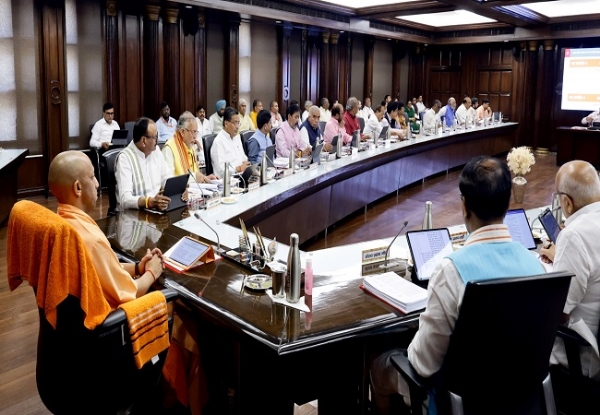
Lucknow, 9 Oct (HS): A cabinet meeting chaired by Chief
Minister Yogi Adityanath on Friday made a significant decision to strengthen
the state's urban transport system. Under this plan, 1,725 air-conditioned
electric buses will be operated in 18 cities of Uttar Pradesh on a Gross Cost
Contract (GCC) model. The objective of this plan is to streamline public
transport in urban areas and provide better amenities to passengers.
Under the plan, buses will be operated in Agra, Aligarh,
Ayodhya, Bareilly, Firozabad, Ghaziabad, Gorakhpur, Jhansi, Kanpur, Lucknow,
Mathura-Vrindavan, Meerut, Moradabad, Prayagraj, Shahjahanpur, Saharanpur,
Varanasi, and Noida (including Jewar). These buses will include air-conditioned
electric buses ranging in length from nine meters to 12 meters. The contract
period is set for 12 years from the date of commercial operation.
After the cabinet meeting, Urban Development Minister Arvind
Kumar Sharma told reporters that 1,725 additional electric buses will soon be
operational in 18 cities of the state. These include 100 in Agra, 50 in
Mathura-Vrindavan, 25 in Aligarh, 25 in Firozabad, 100 in Ghaziabad, 100 in
Meerut, 25 in Shahjahanpur, 25 in Bareilly, 25 in Moradabad, 25 in Saharanpur,
100 in Noida (including Jewar), 250 in Varanasi, 50 in Ayodhya, 300 in Lucknow,
150 in Gorakhpur, 300 in Kanpur, 50 in Prayagraj and 25 in Jhansi.
Under the GCC model, private operators will be responsible
for purchasing buses, arranging the necessary chargers for charging stations,
deploying bus drivers and technical staff, and operating and maintaining the
buses. Operators will be paid an operation and maintenance fee (O&M fee)
based on set performance standards. Tariffs/user fees will be determined by the
government.
Under the project, a grant of Rs. 40 lakh has been approved
for each 12-meter-long electric bus and Rs. 35 lakh for a nine-meter-long bus.
The respective municipal corporations and the Noida Authority will provide free
land as needed for the construction of depots for the buses.
According to the government, private investment will reduce
government expenditure on bus operations and improve the quality of services.
Private operators will focus on efficiency, punctuality, and customer
satisfaction. Private operators will be encouraged to compete, which will lead
to the introduction of the latest technology and service improvements. Private
operators will be selected through a tender process and contracted, with direct
benefits to consumers.
Under the scheme, it is proposed to prioritize the purchase
of buses manufactured in Uttar Pradesh at L-1 rates, in accordance with the
Transport Department's policy regarding the purchase of new electric buses.
This is expected to encourage industries involved in bus manufacturing and
supply in the state and create new employment opportunities locally.
Hindusthan Samachar / Abhishek Awasthi
18 Aug 2026
ED raids KPSC office, 20 other locations over Karnatak veterinary recruitment scam
ED raids KPSC office, 20 other locations over Karnatak veterinary recruitment scam..