New Delhi, 09 October (H.S.): Union Communications Minister Jyotiraditya Scindia said on Friday that India would not permit monopolies in any sector, adding that three companies had already secured licences to provide satellite communication services. He said the companies could commence operations after fulfilling the prescribed security requirements and meeting the stipulated regulatory standards.
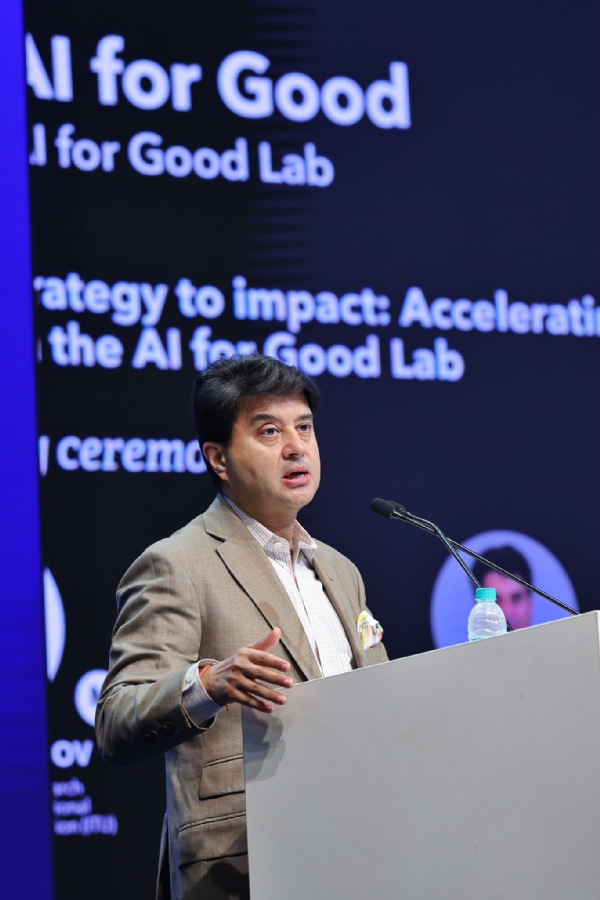
Scindia made the remarks during a press conference at the 10th edition of the India Mobile Congress (IMC) 2026, held at Yashobhoomi in New Delhi. Responding to a question about the services of Starlink, the satellite communications company owned by American entrepreneur Elon Musk, he said that although considerable attention was being focused on one particular company, three operators had already obtained satellite communications (satcom) licences.
He clarified that the companies could begin operations only after separately fulfilling the applicable security conditions and other prescribed requirements.
Scindia said the three licensed operators were Starlink, Reliance Jio’s satellite communications arm, Jio Satellite Communications, and Eutelsat OneWeb, backed by Bharti Enterprises. He added that Amazon’s Project Kuiper had also expressed interest in entering the sector and would have to undergo the prescribed regulatory process.
“Our position is absolutely clear. Three companies have received licences. Once the government finalises the revenue-sharing fee framework, spectrum will be allocated to them. They can commence operations after fulfilling the respective security requirements,” Scindia said.
The Communications Minister further stated that the Telecom Regulatory Authority of India (TRAI) and the Department of Telecommunications (DoT) were nearing a final decision on the pricing framework for satellite communication spectrum.
Taking aim at the Congress over the exchange between Rahul Gandhi and Elon Musk on social media platform X, Scindia alleged that the party had initially objected to a particular individual receiving a licence and was now questioning why that same individual was not being allowed to proceed. He questioned whether the Congress had clarity about its own position and political direction, adding that such inconsistency was characteristic of the party.
The controversy follows Musk’s allegations that certain influential business groups were preventing Starlink from launching its satellite communication services in India. Musk had claimed that these groups wanted to maintain a monopoly over the Indian market.
Responding to the allegations, Scindia said the government maintained a technology-neutral approach and was committed to providing consumers with a broad range of service options. He emphasised that, in an open market, customers should be free to decide which service and provider best suited their needs.
The issue also triggered a sharp exchange of remarks between the Indian government and Musk on Thursday. The Department of Telecommunications rejected allegations that domestic business interests were responsible for delaying the launch of Starlink’s satellite internet services. Following the government’s response, Musk, the billionaire technology entrepreneur, questioned whether “Ambani is the real boss of India”.
---------------
Hindusthan Samachar / Jun Sarkar
18 Aug 2026