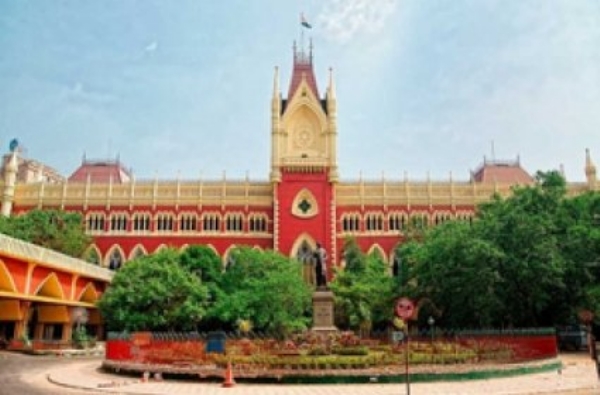
Kolkata, 08 October (H.S.): Hearing a petition challenging the detention and deportation order of a man alleged to be a Bangladeshi national, the Calcutta High Court on Thursday posed pointed questions to the state government, asking how many people crossed the India-Bangladesh border during the 1970s and whether it was practically feasible to deport everyone.
Justice Saugata Bhattacharyya raised the query with Additional Advocate General (AAG) Rajdeep Majumdar during the proceedings, observing that one must visit border districts to understand the ground reality. The bench was hearing a petition filed by Sahidul Shekh challenging orders issued by the Foreigners Regional Registration Office (FRRO) for his detention and deportation.
During the hearing, the court questioned the state authorities on the specific grounds for categorising Shekh as a Bangladeshi national and asked why he had been detained for more than two months without following due legal process. The court also questioned how he could be treated as a foreign national when he was in possession of an Aadhaar card and a voter identity card. In response, the state's counsel submitted that the documents were allegedly procured on the basis of forged certificates issued by a local panchayat.
According to the state, the FRRO issued the detention order based on a report submitted by the officer-in-charge of Raninagar police station in Murshidabad district. Shekh was initially detained on August 8 on suspicion of being an illegal immigrant, which was subsequently affirmed by the FRRO on August 10. The state counsel submitted that the Central Government had issued guidelines on May 2, 2026, to identify and facilitate the deportation of illegally staying Bangladeshi nationals and Rohingyas, pursuant to which a special identification drive was being carried out.
The state further submitted that obtaining an Aadhaar card, voter identity card, and PAN card through allegedly forged credentials generated suspicion and constituted valid grounds for deportation. Additionally, authorities noted that individuals identified by Shekh as his relatives told officials that they did not recognise him.
The court, however, observed that the alleged failure of relatives to identify Shekh does not automatically establish that he is a Bangladeshi national, noting that the petitioner must be afforded a fair opportunity to explain his position.
Shekh’s counsel informed the bench that his client was being held at a holding centre and had not yet been deported because his petition remained pending before the High Court. Meanwhile, the state's counsel submitted that the matter ought to be heard by another bench vested with the appropriate jurisdiction. Justice Bhattacharyya subsequently released the petition from his court, directing that it be placed before the appropriate bench on October 14, and ordered that the deportation order against Shekh remain in abeyance until that bench hears the matter.
---------------
Hindusthan Samachar / Satya Prakash Singh
18 Aug 2026
ED raids KPSC office, 20 other locations over Karnatak veterinary recruitment scam
ED raids KPSC office, 20 other locations over Karnatak veterinary recruitment scam..