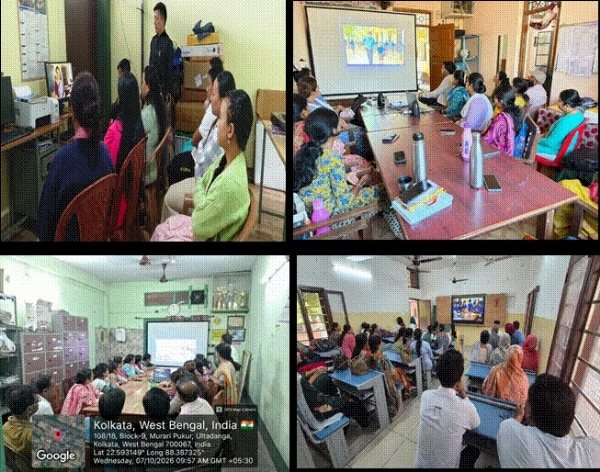
New Delhi, 08 October (H.S.): The Department of School Education and Literacy under the Union Ministry of Education organised a nationwide screening of a 30-minute ‘Sensitisation and Orientation Module’ through the PRASHAST (Pre-Assessment Holistic Screening Tool) to promote inclusive education for children with special needs in schools across the country. More than 60,000 schools participated in the initiative nationwide, and the government expects participation to increase further in the coming period.
According to the Ministry, the campaign seeks to strengthen a ‘whole-school approach’ to inclusive education, enabling teachers, special educators and non-teaching staff to better understand the needs of children with special needs and play their respective roles in creating a safe, accessible and supportive environment for them.
Through practical examples and interactive activities, the module sensitises school personnel to appropriate and sensitive ways of interacting with children. The module is available in 12 Indian languages and covers not only school heads, teachers and special educators, but also non-teaching personnel such as attendants, drivers, clerical staff, receptionists, deans and wardens.
The Department of School Education and Literacy has been conducting a three-month sensitisation campaign through PRASHAST to familiarise general teachers with the principles of inclusive education. Under the initiative, more than 7.2 million teachers have so far been sensitised.
PRASHAST is a school-based digital tool designed for the early identification of children who may have disabilities covered under the Rights of Persons with Disabilities Act, 2016. Using its two-part checklist, teachers screen children on the basis of observable indicators. Special educators subsequently verify the cases and, where required, facilitate referrals for medical assessment.
According to the Ministry, inclusive education is not a responsibility confined to the classroom; rather, it is a shared responsibility of the entire school. Every interaction a child experiences in the classroom, office, transport system and other common areas of the school contributes to the child’s overall experience of inclusion.
The initiative is part of the Ministry of Education’s continuing efforts, in line with the National Education Policy (NEP) 2020 and the Rights of Persons with Disabilities Act, 2016, to strengthen an equitable, accessible and inclusive education system across the country.
---------------
Hindusthan Samachar / Jun Sarkar

18 Aug 2026