Indoor (IPD) treatment will be provided through 'Sachis' at
Ayushman Bharat rates in private hospitals affiliated with government hospitals
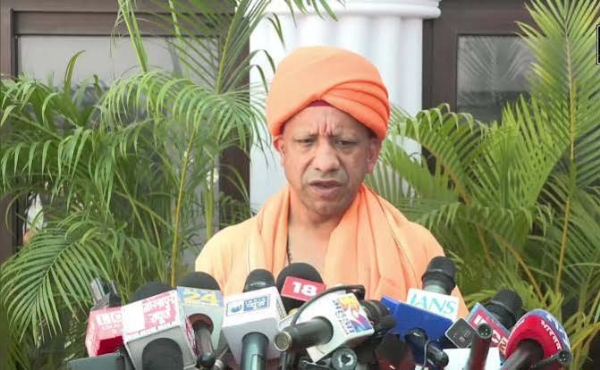
Chief Minister Yogi Adityanath fulfilled the pledge of
respect and social security of employees
Lucknow, Oct 31 (HS): In
compliance with the decision of the Council of Ministers to provide cashless
medical facilities to the non-teaching staff and their dependent family members
working under the Basic and Secondary Education Department of Uttar Pradesh,
the government has issued a detailed government order. Additional Chief
Secretary Basic and Secondary Education Partha Sarathi Sen Sharma has issued
separate government orders for both the departments in this regard and has
given instructions for the timely implementation of the scheme.
With this decision of the Yogi government, the non-teaching
staff and their dependent family members working in the Basic Education
Council, non-government aided junior high schools, unaided schools, non-government
aided secondary schools, unaided secondary schools, non-government aided
Sanskrit secondary schools, Sanskrit colleges and the Samagra Shiksha Project
will no longer have to spend from their own pockets for indoor (IPD) treatment
in case of serious illness.
Expressing gratitude to Chief Minister Yogi Adityanath for
the issuance of the government order, Sandeep Singh, Minister of State for
Basic Education (Independent Charge), said that under the leadership of Chief
Minister Yogi Adityanath, the Uttar Pradesh government is working with utmost
sensitivity for the welfare of every employee associated with the primary
education system. Non-teaching staff of Basic Education Council schools,
non-government-aided junior high schools, unaided schools, and the Samagra
Shiksha Pariyojana (Samagra Shiksha Pariyojana) (including contract, service
provider, and daily workers serving in state and district project offices)
contribute significantly to the smooth functioning of the school system. Due to
the lack of medical reimbursement, they faced severe financial hardship in the
event of sudden illness. The government has understood their plight and has
granted them the right to cashless medical treatment, bearing the entire
financial burden of the Rs. 3,000 annual premium per employee. This decision
will ensure health security and self-reliance in the lives of employees.
Minister of State for Secondary Education (Independent
Charge) Gulab Devi said that previously, teachers in the Secondary Education
Department were covered by cashless medical care. Now, under the inspiration of
Chief Minister Yogi Adityanath, this security cover has also been extended to
non-teaching staff working in non-government-aided secondary schools, unaided
secondary schools, non-government-aided Sanskrit secondary schools, Sanskrit
colleges, girls' hostels, and service providers in the Samagra Shiksha Abhiyan.
These employees, who form the backbone of the school system, and their
dependent families are now guaranteed cashless treatment in both private and
government hospitals. The Yogi government is implementing the motto of
Sabka Saath, Sabka Vikas, Sabka Vishwas on the ground.
Under the key points of the government order and the
implementation mechanism, this facility will be available only for inpatient
treatment in all government hospitals and private hospitals affiliated with the
State Healthcare Providers (SACHIS). The scheme will be implemented through the
State Agency for Comprehensive Health and Integrated Services, with treatment
and package rates in line with the rates set by the Pradhan Mantri Ayushman
Bharat Jan Arogya Yojana (PMAY) and the National Health Authority (NHA).
The annual premium per employee under the scheme is
estimated to be approximately Rs. 3,000, the entire actual cost of which will
be borne by the respective administrative department. The designated nodal
officers from both departments will provide updated details of eligible
beneficiaries and their family members to the Chief Executive Officer of the
SACHIS by June 30th of each year to ensure smooth process of adding new
eligible employees and removing ineligible ones. Due to the lack of authorized
data on non-teaching staff from unaided schools, a separate executive order
will be issued for their identification in consultation with the Finance
Department and after the approval of the Chief Minister. Further, such
personnel or their families who are already covered under any other health
scheme funded by the Central or State Government such as Ayushman Bharat or
Mukhyamantri Jan Arogya Abhiyan will not be eligible for re-advantage under
this scheme.
Hindusthan Samachar / Abhishek Awasthi
18 Aug 2026
ED raids KPSC office, 20 other locations over Karnatak veterinary recruitment scam
ED raids KPSC office, 20 other locations over Karnatak veterinary recruitment scam..