Narmada, 31 October (H.S.): Prime Minister Narendra Modi on Saturday morning visited the unique ‘Vaman Vriksha Vatika’, developed near Ekta Nursery in Ekta Nagar, on the occasion of National Unity Day. Gujarat Chief Minister Bhupendra Patel and Deputy Chief Minister Harsh Sanghavi accompanied him during the visit.
The garden showcases 1,147 miniature trees belonging to 65 different species, cultivated using traditional techniques. The Prime Minister explored the garden in an e-cart and visited Samatva Vatika, the Zen Garden and various bonsai displays.
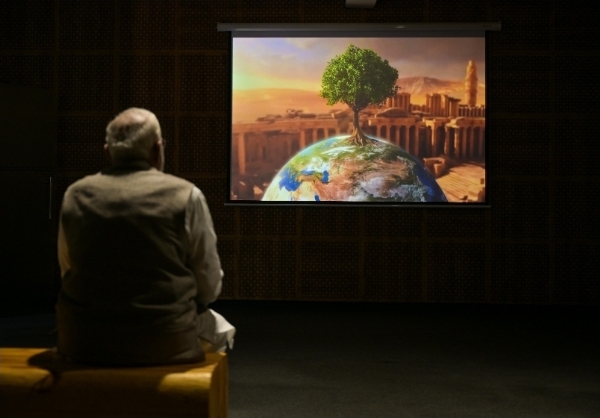
During the visit, the Prime Minister watched an audiovisual presentation at the garden’s interpretation centre, highlighting the journey of miniature tree art from India to the rest of the world, traditional cultivation techniques and a virtual tour. He subsequently visited a bonsai training workshop, where he observed local women artisans demonstrating the process of cultivating miniature trees and interacted with them.
The Prime Minister also reviewed the visitor amenities developed at the garden. These include waterfalls, fountains, ponds, viewing decks, gazebos, a souvenir shop and a dedicated children's play area, offering visitors opportunities to experience nature, art and spirituality.
It may be recalled that the Prime Minister inaugurated the garden on the occasion of National Unity Day last year. Developed across an area of 13,885 square metres at a cost of Rs. 18.68 crore, the garden draws inspiration from India's ancient art of cultivating miniature trees and the Vamana incarnation of Lord Vishnu.
According to accounts of the tradition, this art form, which is believed to have evolved in India around 2000 BC, finds mention in ancient texts such as the ‘Vishnu Purana’ and ‘Vrikshayurveda’. Over time, the art travelled to China, where it became known as ‘Pun Tsai’, and to Japan, where it came to be widely recognised as ‘Bonsai’.
---------------
Hindusthan Samachar / Jun Sarkar

18 Aug 2026