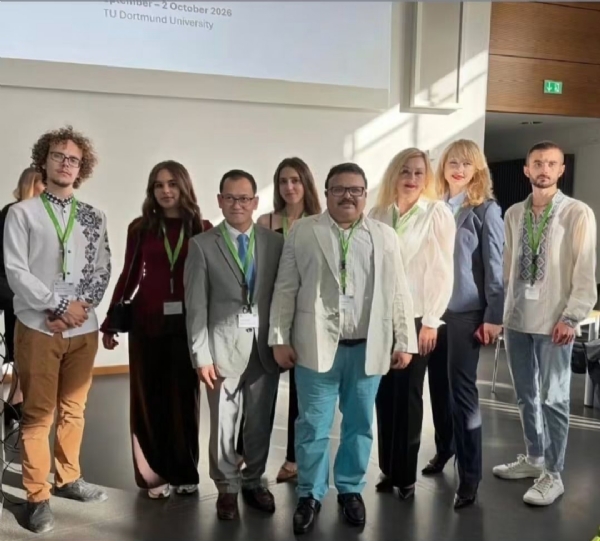
New Delhi, 03 October (H.S.): Professor Kumar Ashutosh, Head of the Department of Lifelong Learning and Extension at the University of Delhi (DU), represented India at the International UNESCO Chair Conference 2026 held at TU Dortmund University in Germany. He was the only invited speaker from India at the conference. At the international forum, which focused on education, skills development and the Sustainable Development Goals (SDGs), he presented Indian academic perspectives and research.
The theme of the conference was “International Cooperation in Higher Education and Technical and Vocational Education and Training: Bridging the Gap Between Theory and Practice of the Sustainable Development Goals.” Academics, researchers, policymakers and experts from various countries participated in the conference. Discussions primarily focused on ways to effectively translate the Sustainable Development Goals into action at the grassroots level through higher education and vocational training.
Professor Ashutosh presented his research paper, “Addressing the Digital Skills Gap among Tourism Sector Employees: Evidence from the European Union and India.” Based on a comparative study of the European Union and India, the research highlighted the growing need for digital skills in the tourism sector. He said that in an era of rapid technological transformation, a skilled workforce was essential for strengthening the competitiveness of the tourism sector and addressing emerging challenges.
During the conference, Professor Ashutosh also interacted with representatives of various international universities and institutions. The discussions covered prospects for collaboration in higher education, skills development, sustainable tourism, joint research, faculty and student exchanges, and academic partnerships.
During his stay in Germany, he also visited a vocational training institute as part of an industrial study tour. He gained an insight into Germany’s vocational education system, which places particular emphasis on practical training and industry requirements alongside classroom-based learning. Students at the institute receive training in areas including automotive technology, dental technology, electrical systems and heating technology.
According to Professor Ashutosh, this “learning by doing” approach plays an important role in establishing better coordination between knowledge, skills and employment. He said the experience of the German vocational education model could prove useful in promoting experiential and industry-oriented education in India.
Faculty members, staff and students of the Department of Lifelong Learning and Extension at the University of Delhi expressed their appreciation for Professor Ashutosh’s international participation. According to the department, his participation reflects the department’s growing engagement in global academic collaboration, research and sustainable development.
---------------
Hindusthan Samachar / Jun Sarkar
18 Aug 2026
ED raids KPSC office, 20 other locations over Karnatak veterinary recruitment scam
ED raids KPSC office, 20 other locations over Karnatak veterinary recruitment scam..