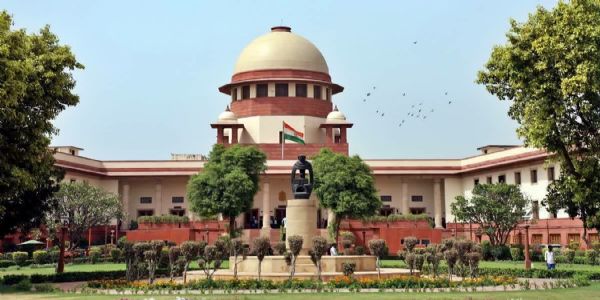
New Delhi, 28 October (H.S.): The Supreme Court on Wednesday raised pointed questions before the Election Commission of India (ECI) over the Special Intensive Revision (SIR) of electoral rolls in Delhi, questioning why individuals already registered as voters but omitted from the new draft electoral roll were being required to submit Form 6, which is intended for first-time voter registration. The Bench, headed by Chief Justice of India Surya Kant, directed that the matter be taken up again in November.
During the hearing, senior advocate G. Rajagopalan, appearing for the Election Commission, argued that, from an administrative perspective, individuals whose names did not appear on the new draft electoral roll were being treated as fresh entrants under the SIR process and, therefore, placed in the category of first-time voters. The Court strongly questioned this reasoning, observing that these citizens had already been verified voters on the 2026 electoral roll.
Senior advocate Prashant Bhushan, appearing for the petitioners, drew the Court’s attention to what he described as a serious legal predicament. Form 6 requires applicants to make an oath-backed declaration that they have never previously been registered as voters. Compelling individuals who are already registered to sign such a declaration could effectively force them to make a false statement. Under Section 31 of the Representation of the People Act, 1950, making a false declaration in this context is an offence that can attract imprisonment.
The Court underscored that “the right to vote is an extremely important right” and said the matter required careful consideration. It suggested that existing voters whose names had been omitted should be allowed to use the regular enumeration form or Form 8, which is meant for correcting particulars or changing an address, rather than being required to submit Form 6.
The Court also indicated that the Election Commission should make public a list of voters whose names had been deleted from the draft electoral roll. This would enable affected individuals to check their status and approach their respective Booth Level Officers (BLOs) to seek corrections or restoration of their names.
The Bench observed that voters could not be deprived of their rights merely because they were unavailable when officials conducted the initial door-to-door verification. It suggested that a separate category be created for such voters, giving them an opportunity to submit the required documents and have their names restored to the electoral roll.
The Supreme Court further advised the Election Commission against rushing the process, noting that no election was scheduled to be held in Delhi in the immediate future. In response, the Commission agreed to extend the deadline for filing claims and objections and said it would hold internal discussions on providing alternative forms for affected voters.
The Court granted the Election Commission two weeks to consider these alternatives. The matter is scheduled to be heard again in November.
---------------
Hindusthan Samachar / Jun Sarkar
18 Aug 2026