Lucknow, Oct 28 (HS): The state's Additional Chief Secretary
for Basic and Secondary Education, Partha Sarathi Sen Sharma, on Wednesday
interacted directly with teachers, principals, mentors, education officers,
students and parents from across the state through a special 'YouTube Live
Guidance Session' organised from the State Institute of Educational Technology
(SIET), Nishantganj, Lucknow. The session was conducted by Dr. Jyotsna Singh,
teacher of GGIC Gomti Nagar, Lucknow and Sadhna Dixit, teacher of Sitapur Basic
Education Department. During the interaction, the Additional Chief Secretary
gave detailed strategic guidelines regarding timely preparation for the
upcoming board examinations, improvement in the learning outcome of students,
Nipun Bharat Mission and departmental priorities for the academic session
2026-27.
The Additional Chief Secretary said that this year, due to
the Assembly elections, census and various administrative engagements, it is
natural that the actual instructional time will be affected. In such a
situation, it is the collective responsibility of all teachers, officials and
parents to make 100% use of the remaining time. He said that the schedule of
board examinations has been released by the Secondary Education Council and the
examinations are starting from February 5, along with the home examinations are
also to be completed in February. In view of this, all teachers should work by
making a 'reverse timetable', so that by completing the entire syllabus within
the stipulated time limit, students can get ample opportunity for revision.
Parth Sarathi Sen Sharma taught students practical tips for
achieving excellent performance in exams while remaining stress-free. Regarding
effective answer writing, he explained that examiners evaluate based on the
content in the answer sheet. Therefore, students should write point-by-point
answers instead of paragraphs, underline important points, use charts, graphs,
and diagrams as needed, and pay special attention to the word limit.
Furthermore, model question papers are available on the Board's official
website, allowing students and teachers to sit for two and a half to three
hours and take continuous mock tests based on previous years' question papers,
as if they were the actual exam. Finally, emphasizing stress management and
sports, he said that marks aren't everything in life, and board exams aren't
the final test of life. Therefore, parents should avoid putting unnecessary
pressure on children. The simplest way to relieve stress is sports. Therefore,
students should take 15 to 20 minutes daily to play team games. If necessary,
students and parents can also avail themselves of tele-counseling services.
Uttar Pradesh has become the first state in the country to
expand the Nipun Bharat Mission to Class 5. The Additional Chief Secretary
stated that Uttar Pradesh is the first state to expand foundational literacy
and numeracy beyond kindergarten and classes 1 and 2 to Class 5, setting simple
and understandable educational goals for which the Nipun Talika and
Nipun App Plus have been developed. This year's Nipun assessment
will be conducted in two phases, with the first phase taking place between
December 20th and 30th, and the second between January 20th and 30th. This
assessment will be conducted impartially by D.El.Ed. and B.T.C. trainees, for
which DIET principals have been instructed to train the trainees for
transparent and error-free assessment. Finally, he clarified that the primary
purpose of this Nipun assessment is not to punish or glorify any school, but to
identify deficiencies and take necessary steps to improve them.
Special emphasis has been placed on improving the learning
levels of weak students, with instructions to bring lagging students into the
mainstream rather than focusing solely on meritorious students. To this end,
under a 22-point catch-up plan issued by the department, teachers have been
instructed to allocate 30 minutes to one hour daily for remedial teaching.
Emphasis has also been placed on promoting peer learning in the classroom so
that capable students can teach their peers in groups. Discussing the
activation of laboratories, smart classes, and innovations, principals of
junior high and secondary schools have been instructed to immediately activate
science, home science, and geography laboratories, making proper use of the
composite grant, and to ensure practical consumables, as practical examinations
will be conducted before theory exams. Smart classes and ICT labs established
in state schools should be integrated into daily teaching pedagogy, and the use
of the Udgam portal, which has been operated to encourage teacher
innovation, should be expanded. Over two hundred innovations have been uploaded
to this portal. Additionally, teacher cluster meetings should be held in
different schools on a rotational basis during school hours to facilitate the
exchange of innovations.
The Additional Chief Secretary informed that as per the
order of the High Court, surplus teachers are being adjusted in single teacher
schools. At the same time, the recruitment process of 11,000 teachers for the
urban areas by the Education Service Selection Commission and more than 17,000
TGT, PGT and headmasters in secondary and aided schools is in progress. He
clarified that recruitment will be done only as per the prescribed standards of
NCTE. Also, a permanent arrangement has been made at the government level that
after assessing the vacancies on 1st April every year, the requisition must be
sent to the commissions by 31st May.
Under the PM Nutrition Scheme, which runs up to grade 8,
children will be served hot, fresh pudding and upma as supplementary nutrition
for 14 weeks starting in November. Cooks will be given additional remuneration
for this, and to improve the quality of the food, a competition for outstanding
chefs will be held in November-December, rewarding them.
Hindusthan Samachar / Abhishek Awasthi
18 Aug 2026
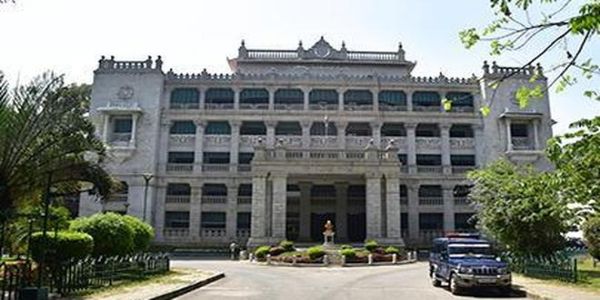
ED raids KPSC office, 20 other locations over Karnatak veterinary recruitment scam
ED raids KPSC office, 20 other locations over Karnatak veterinary recruitment scam..