New Delhi, 27 October (H.S.): Union Minister for Environment, Forest and Climate Change Bhupender Yadav on Tuesday reaffirmed India’s commitment to biodiversity conservation, emphasising that the implementation of global biodiversity targets must take into account the national priorities, circumstances and laws of individual countries. He also called on developed nations to provide developing countries with adequate and predictable financial assistance, capacity-building support and technology transfer.
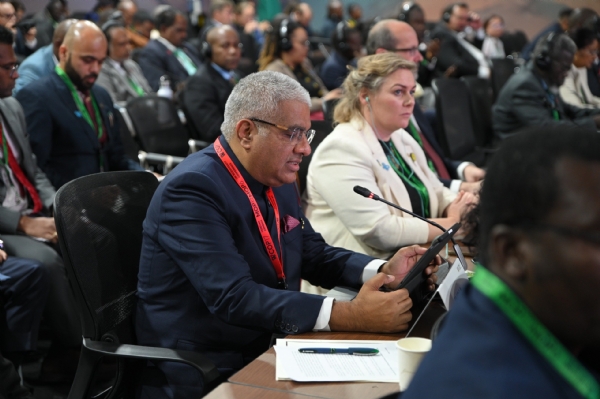
Bhupender Yadav delivered India’s national statement at the high-level segment of the 17th Conference of the Parties to the Convention on Biological Diversity (CBD COP-17) in Yerevan, the capital of Armenia. He commended the Armenian government for hosting the conference and called for stronger collective efforts to promote harmony with nature.
The Minister said the implementation of the Kunming-Montreal Global Biodiversity Framework must reflect the national circumstances and priorities of individual countries. He stressed that achieving the framework’s objectives would require not only financial resources but also technological cooperation and stronger institutional capacities.
He noted that India had updated its National Biodiversity Strategy and Action Plan in alignment with the global framework. The revised plan sets out 23 national biodiversity targets and 142 indicators to measure progress towards their achievement.
Bhupender Yadav also expressed support for a multilateral mechanism to ensure the fair sharing of benefits arising from digital sequence information (DSI) on genetic resources, including through the Cali Fund. On synthetic biology and biosafety, he advocated a science-based, risk-proportionate and precautionary approach.
Highlighting the country’s conservation initiatives, the Minister said India had 1,134 protected areas, 103 Ramsar sites, 57 Biodiversity Heritage Sites and 18 biosphere reserves. Of these, 13 biosphere reserves are part of UNESCO’s World Network of Biosphere Reserves under its Man and the Biosphere Programme.
He said the International Big Cat Alliance, launched under the leadership of Prime Minister Narendra Modi, was advancing international cooperation to conserve the world’s seven major big cat species and their natural habitats.
Initiatives such as Mission LiFE and the ‘Ek Ped Maa Ke Naam’ campaign, he added, were encouraging public participation in environmental protection and conservation.
The Minister also highlighted India’s efforts to restore mangrove forests through the MISHTI initiative, conserve wetlands under the Amrit Dharohar initiative and maintain soil health through the Soil Health Card Scheme.
He said India had aligned its legal framework with the objectives of the Convention on Biological Diversity and established committees at the village level to promote decentralised access to biological resources and the fair sharing of benefits arising from their use.
These measures, he noted, were intended to strengthen local communities’ participation in biodiversity conservation and ensure that they benefited from the sustainable use of biological resources.
Bhupender Yadav reiterated that India would continue to work with all parties to advance the implementation of the Global Biodiversity Framework. He also reaffirmed the country’s commitment to strengthening international cooperation in the spirit of ‘One Earth, One Family, One Future’.
The conference in Yerevan is bringing together representatives of governments and other stakeholders to review progress towards the implementation of the Kunming-Montreal Global Biodiversity Framework and strengthen collective efforts to halt and reverse biodiversity loss.
---------------
Hindusthan Samachar / Jun Sarkar

18 Aug 2026