




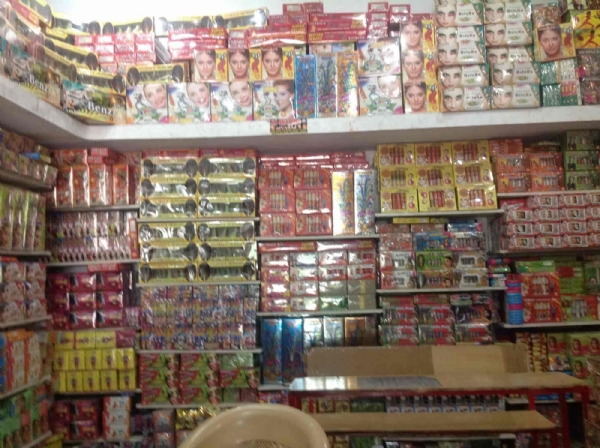
Sivakasi, 26 Oct (H.S.): With Deepavali approaching, India's firecracker capital Sivakasi in Tamil Nadu is witnessing a surge in business activity as manufacturers and traders prepare to supply festive markets across the country. For Sivakasi and the surrounding villages of Virudhunagar district, the festival represents the most important commercial season of the year, generating thousands of crores of rupees and sustaining families dependent on fireworks manufacturing.
Industry estimates place Sivakasi's annual fireworks business at approximately ₹5,100 crore, with Deepavali accounting for nearly 80 per cent of sales, or more than ₹4,000 crore. The concentration of business around the festival makes these weeks crucial for manufacturers, wholesalers, retailers and workers whose earnings depend on the seasonal demand.
Estimates differ depending on the geographical coverage and stage of trade being measured. Manufacturers put sales during the 2025 Deepavali season at around ₹6,000 crore, broadly matching the previous year. A consolidated figure for the ongoing 2026 season is yet to emerge, and current expectations should not be confused with completed sales.
The previous season demonstrated the enormous quantities passing through the distribution network. Traders estimated that nearly 90 per cent of available stocks were sold, while around 15,000 licensed retail outlets operated across Tamil Nadu. Fancy fireworks attracted strong demand, although rain disrupted business in Chennai and parts of the delta region.
Sivakasi's product range stretches from sparklers, flowerpots and ground wheels to elaborate aerial fireworks and multi-shot displays. Its factories supply markets across India, making the town's fortunes closely linked to consumer spending, weather conditions and restrictions governing fireworks sales and use.
However, the festive demand has not translated into uniform growth across factories. Some manufacturers have reported labour shortages and reduced production. At one unit, the workforce reportedly declined from around 100-120 employees to 70-75, contributing to an estimated 25 per cent fall in output compared with the previous year. Such experiences underline the uneven conditions within the industry.
For workers, the Deepavali season influences wages, bonuses, household purchases and children's educational expenses. In several surrounding villages, fireworks manufacture remains the principal source of employment. Limited alternative opportunities leave families vulnerable both to production shutdowns and to the dangers associated with handling explosive materials.
Recent fatal accidents have again exposed the human cost behind the festive trade.
In July, an explosion at an illegal makeshift fireworks shed near Sengamalapatti claimed four lives. Chief Minister Vijay announced assistance of ₹4 lakh each to the victims' families. Police subsequently conducted checks in the surrounding area and arrested 11 people during a crackdown on illegal fireworks manufacture.
On August 13, two men died in another explosion at a factory near Sivakasi. Police said a newly procured chemical-mixing machine was being installed and tested when the blast occurred. Investigators suspected friction involving the chemical mixture and registered a case to determine the circumstances.
Further explosions on September 3 at Anuppankulam and Vilzhuppanur in Virudhunagar district killed two workers. The government announced ₹4 lakh each for their families, ₹1 lakh for a seriously injured worker and ₹50,000 each for four others who sustained lesser injuries. Authorities were also directed to provide special medical care.
The state government has intensified inspections following successive accidents. Industries Minister S. Keerthana said in August that violations had been identified in 177 fireworks units. The inspections triggered complaints that production during the crucial Deepavali manufacturing period was being disrupted.
The government maintained that safety monitoring was essential and said the immediate issues affecting operations had been resolved. The dispute highlighted the challenge of protecting employment while ensuring that production takes place under safe conditions.
Longer-term modernisation plans include a common facility centre offering testing, certification, research, automation and worker training. As Sivakasi looks towards another high-value festive season, the central challenge remains ensuring that commercial prosperity brings safer workplaces and greater security to the families whose labour lights up Deepavali.
---------------
Hindusthan Samachar / Arun Lakshman