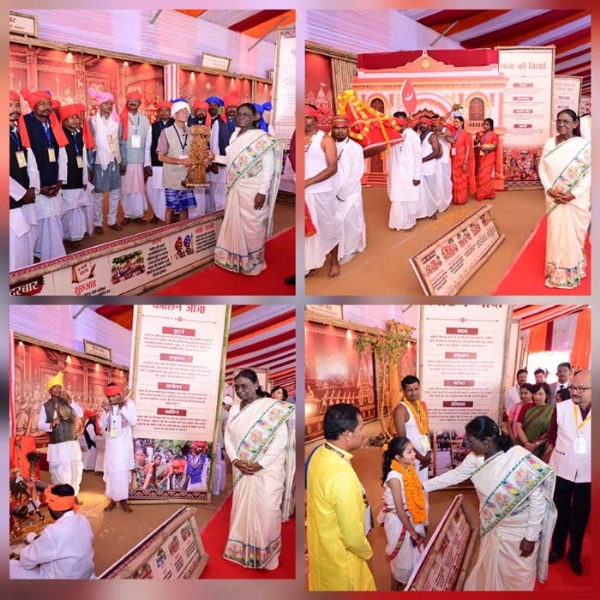
Jagdalpur, 23 October (H.S.): President Droupadi Murmu on Friday visited an exhibition at Lalbagh Ground in Jagdalpur, organised as part of the world-famous Bastar Dussehra celebrations, showcasing the region’s rich cultural heritage, indigenous traditions and centuries-old religious beliefs.
The exhibition presented various aspects of Bastar Dussehra through illustrative displays and detailed descriptions, highlighting traditional worship rituals, the distinctive techniques involved in chariot construction, the veneration of deities, the participation of tribal communities and the historical customs associated with the festival.
During her visit, President Murmu said the exhibition was significant in bringing the country’s rich tribal cultural heritage to national attention. It offered a comprehensive insight into Bastar’s centuries-old traditions, the unwavering faith of its people in their deities, the distinctive role of tribal communities and the region’s historical and cultural identity.
The President examined the displays with keen interest and praised Bastar’s unique folk culture, social harmony and remarkable synthesis of nature and faith.
Bastar Dussehra is not merely a religious festival but also a distinctive expression of collective faith, cultural unity, traditional knowledge and community participation among the region’s diverse tribal societies. Spanning approximately 75 days, the festival stands apart from Dussehra celebrations elsewhere in the country. Its central focus is the worship of the revered Goddess Maa Danteshwari and other regional deities, alongside the observance of indigenous customs and rituals.
## Exhibition showcases the festival’s distinctive rituals
The exhibition presented the principal ceremonies performed throughout Bastar Dussehra, from its commencement to its conclusion, in chronological order. These included Pat Jatra, Derri Gadai, Barsi Utarani, Naar Fodani, chariot construction, Kachhin Gadi, Kalash Sthapana, Jogi Bithai, Phool Rath Parikrama, Bel Nivta, Nisha Jatra, Mavli Parghav, Bhitar Raini, Bahar Raini, Muria Darbar and Kutumb Jatra.
The displays explained that Bastar Dussehra begins on Shravan Amavasya, also known as Hariyali Amavasya, with the ritual of Pat Jatra. During this ceremony, a large log of wood brought from the forest for constructing the festival’s chariot is worshipped according to established customs. Known locally in the Halbi language as *Thurlu Khotla*, the timber forms an essential part of the traditional chariot-making process.
The ceremony includes customary offerings and a ritual sacrifice, following which the construction of the chariot begins. The ritual is intended to invoke the blessings of the deities and seek their protection for the smooth and uninterrupted conduct of the festival.
## Tribal communities play distinct roles in the celebrations
A key theme highlighted by the exhibition was the traditional division of responsibilities among the various tribal and local communities involved in organising Bastar Dussehra.
Different communities undertake specific tasks: some construct the chariot, others supply the timber, while others prepare the ropes required for the procession. Several communities are also responsible for arranging ritual materials, welcoming the deities, performing aarti and carrying out other religious ceremonies.
This collective participation demonstrates that Bastar Dussehra extends far beyond religious worship. It reflects a remarkable combination of traditional forest-resource management, indigenous craftsmanship, social organisation, women's participation, community interaction, cultural preservation and collective labour.
Through its displays, the exhibition offered visitors an insight into how these interwoven traditions have sustained Bastar Dussehra across generations, preserving the region’s distinctive cultural identity while strengthening the bonds among its communities.
---------------
Hindusthan Samachar / Jun Sarkar

18 Aug 2026