New Delhi, 23 October (H.S.):
Delhi Environment Minister Manjinder Singh Sirsa on Friday directed officials to identify pollution hotspots across southwest and west Delhi and take time-bound corrective measures to address the sources of pollution. He emphasised the need to tackle traffic congestion, road dust, encroachments, open waste burning and pollution caused by construction activities.
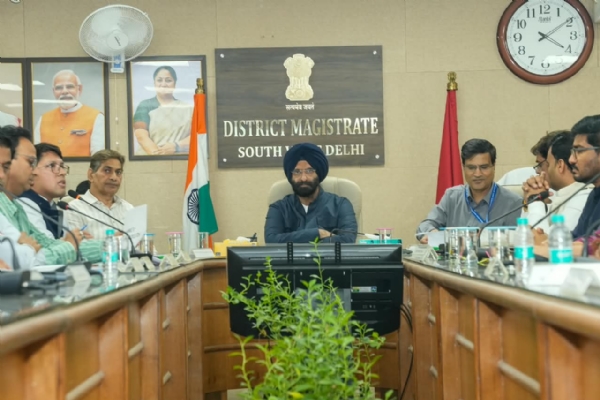
Manjinder Singh Sirsa issued the directions during a review meeting held at the District Magistrate’s office in Kapashera. He instructed the departments concerned to coordinate their efforts, identify the sources of pollution and prepare clear action plans for every hotspot identified.
Officials from the district administration, police, Municipal Corporation of Delhi (MCD), Public Works Department (PWD), metro authorities, Railways, traffic police and other relevant departments attended the meeting.
The minister said pollution hotspots should be identified using data from air quality monitoring stations, including Air Quality Index (AQI) readings, along with on-ground inspections. He directed officials to assess the potential sources of pollution at each location, identify the agency responsible for addressing them and establish specific deadlines for corrective action.
He also called for monitoring levels of particulate matter, particularly PM10 and PM2.5, at vulnerable locations. Targeted inspections should be conducted in areas experiencing elevated pollution levels, followed by prompt remedial measures, he said. Manjinder Singh Sirsa further instructed officials to ensure effective implementation of pollution-control measures prescribed under Stage I of the Graded Response Action Plan (GRAP).
Emphasising dust control at construction sites and debris collection points, the minister directed the relevant agencies to enforce prescribed standards and take action against violations in accordance with applicable rules. He also called for stricter enforcement of the prohibition on open burning of garbage, organic waste, plastic and rubber, alongside proper arrangements for waste collection, segregation, transportation and disposal.
Manjinder Singh Sirsa noted that traffic congestion and slow-moving vehicles contribute to higher emissions. He asked the traffic police and relevant agencies to coordinate efforts to ensure smoother movement of heavy vehicles, prevent unnecessary congestion during peak hours and take action against illegal parking.
He also stressed the need to regulate the movement of heavy vehicles entering Delhi from neighbouring areas and improve the management of heavy-vehicle traffic within the capital.
The minister directed officials to remove illegal encroachments from roads, repair potholes and treat exposed soil along road edges. He called for regular water sprinkling to control road dust and enhanced monitoring at pollution-sensitive locations. Where technically feasible, he also advocated paving roads and adjoining areas to minimise dust generation.
Appealing to Delhi residents to support pollution-control efforts, Manjinder Singh Sirsa urged people not to burn waste or litter roads and to ensure that their vehicles undergo regular pollution checks. He advised motorists not to drive without a valid Pollution Under Control (PUC) certificate and encouraged the use of public transport and carpooling wherever feasible as alternatives to private vehicles.
The minister said tackling pollution at its source required coordinated efforts by both the government and the public. He emphasised that the issue was directly linked to the health and future of Delhi’s children.
Manjinder Singh Sirsa instructed the departments concerned to regularly monitor action taken against identified sources of pollution. All departments have been asked to submit detailed action-taken reports outlining the status of measures implemented, pending work and deadlines for completion. The reports will be reviewed at the next meeting to assess progress and ensure accountability.
---------------
Hindusthan Samachar / Jun Sarkar
18 Aug 2026
ED raids KPSC office, 20 other locations over Karnatak veterinary recruitment scam
ED raids KPSC office, 20 other locations over Karnatak veterinary recruitment scam..