New Delhi, 22 October (H.S.): Delhi Legislative Assembly Speaker Vijender Gupta on Thursday released a special commemorative edition of the Assembly’s quarterly magazine, ‘Vidhan Chetna’, titled ‘Veer Vitthalbhai Patel Smarananjali Ank’, on the occasion of the 93rd death anniversary of Veer Vitthalbhai Patel, the first elected Indian President of the Central Legislative Assembly.
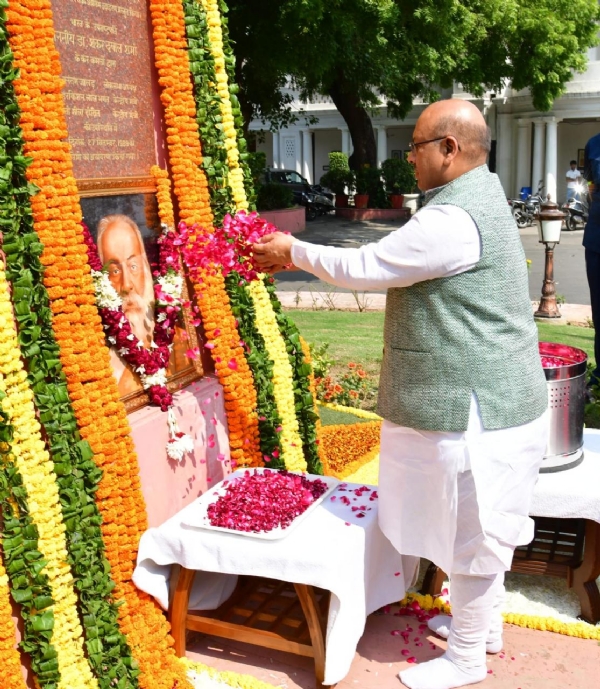
The commemorative event was held at the historic Old Secretariat, where floral tributes were also paid to Patel’s statue. Delhi Assembly Deputy Speaker Mohan Singh Bisht, senior Assembly officials, distinguished guests and school students visiting under the Assembly’s Youth Outreach Programme were present on the occasion.
Addressing the gathering, Gupta said that the assertion of India’s parliamentary independence had begun long before the country attained freedom. He observed that Vitthalbhai Patel had demonstrated that even under colonial rule, the legislature’s authority could not be subordinated to the government’s wishes and that the dignity of the presiding office had to remain beyond political pressure.
Describing Patel as one of the principal architects of India’s parliamentary traditions, the Speaker said his fearless leadership established enduring conventions of impartiality, procedural discipline and institutional independence that continue to guide democratic legislatures. He added that Patel’s command of parliamentary procedures compelled the British administration to answer to the legislature and reinforced the principle that governments must remain accountable to elected representatives of the people.
Recalling Patel’s extraordinary public life, Gupta said his journey from serving as Mayor of the Bombay Municipal Corporation to becoming President of the Central Legislative Assembly reflected the emergence of democratic consciousness in colonial India. Born on September 27, 1873, Patel passed away in Geneva on October 22, 1933, leaving behind an enduring legacy of public service, constitutional commitment and dedication to India’s freedom struggle.
Highlighting the deep historical connection between Vitthalbhai Patel and the Assembly building, Gupta said the Old Secretariat, constructed in 1912, had served as a centre of India’s early central legislature. He recalled that Patel joined the Imperial Legislative Council in 1918 and was elected to the Central Legislative Assembly in 1924 and again in 1926. He served as its President from 1925 to 1930. Notably, the very building in which the Delhi Legislative Assembly functions today was the venue of his historic tenure as its presiding officer.
Gupta said the historic House had witnessed a decisive phase in India’s parliamentary evolution, when Indian representatives challenged colonial authority through constitutional debate and legislative proceedings. He further emphasised that the principles of presiding-officer independence, deliberative debate and procedural discipline established during Patel’s tenure remained essential to maintaining institutional accountability and public trust.
The occasion also highlighted the Delhi Assembly’s efforts to familiarise younger generations with India’s democratic heritage. The special edition of ‘Vidhan Chetna’ was released in the presence
---------------
Hindusthan Samachar / Jun Sarkar
18 Aug 2026
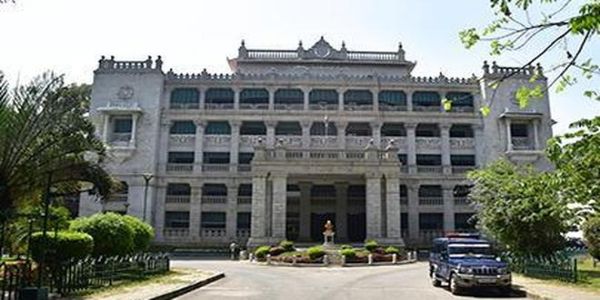
ED raids KPSC office, 20 other locations over Karnatak veterinary recruitment scam
ED raids KPSC office, 20 other locations over Karnatak veterinary recruitment scam..