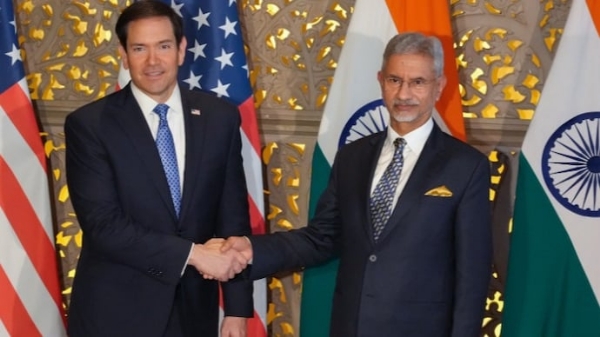
Mumbai, 21 October (H.S.): India and the United States have reaffirmed their commitment to strengthening their strategic partnership, with trade, energy security, defence, emerging technologies and counterterrorism emerging as key areas of focus during US Secretary of State Marco Rubio’s visit to India. Following wide-ranging discussions with External Affairs Minister S. Jaishankar in Mumbai on Tuesday, both sides welcomed progress in negotiations on the proposed bilateral trade agreement, while Rubio expressed optimism that the deal could be finalised soon.
Rubio arrived in Mumbai on Tuesday for his second visit to India in less than five months. He is scheduled to travel to Jamnagar in Gujarat on Wednesday to visit Reliance Industries Ltd’s refinery complex and discuss opportunities to expand energy cooperation, including the potential for India to refine more Venezuelan crude oil.
During his meeting with Jaishankar, Rubio discussed energy security and defence cooperation, reaffirming the importance of advancing the India-US strategic partnership. US Ambassador to India Sergio Gor also described the discussions as productive, highlighting opportunities to deepen cooperation in defence, energy, emerging technologies and trade.
The talks come amid continuing strains in bilateral relations over US trade policies, tariffs, immigration restrictions and differences surrounding India’s purchases of Russian oil. Nevertheless, both governments have signalled their willingness to pursue greater economic and strategic cooperation.
Trade Agreement Nearing Finalisation
Rubio said the proposed India-US trade agreement was close to completion, with only a limited number of issues remaining to be resolved. He expressed hope that the outstanding matters would be addressed shortly, paving the way for an announcement and the eventual signing of the agreement by the two countries’ leaders.
“We are about as close as you can be without having an executed agreement,” Rubio said, adding that only a small number of items remained to be finalised.
US President Donald Trump also said on Tuesday that the two countries were close to reaching a trade agreement, describing the proposed pact as a different kind of deal from those Washington had concluded previously.
The negotiations have continued following the announcement of a framework for the first phase of the bilateral trade agreement in February. Subsequent changes in US tariff policies and differences over trade and energy have complicated the process.
Energy Security and Venezuelan Crude in Focus
Energy cooperation has emerged as a central theme of Rubio’s visit, particularly as Washington encourages New Delhi to diversify its energy supplies.
Describing India as a crude oil refining “superpower”, Rubio said the country had the capacity to process heavy crude oil, including Venezuelan supplies. He indicated that the US delegation would discuss with Reliance Industries the possibility of increasing the volume of Venezuelan crude processed at its refineries and exploring opportunities for greater oil production in Venezuela.
Rubio noted that Indian companies already hold oil concessions in Venezuela and could potentially increase production. He also acknowledged that sanctions-related restrictions could present challenges that would need to be addressed through discussions.
The US Secretary of State said India had made substantial progress in diversifying its energy sources and that Washington was willing to supply some of the country’s energy requirements. He described diversification as a practical approach to strengthening energy security and reducing dependence on individual suppliers.
Rubio’s planned visit to Reliance Industries’ Jamnagar refinery is expected to provide an opportunity to discuss these possibilities with company representatives, including Chairman Mukesh Ambani.
The proposed cooperation comes amid broader international concerns over energy supplies and market stability, with both sides seeking ways to strengthen supply chains and expand commercial engagement.
Defence, Technology and ‘Superintelligence’
Beyond trade and energy, the two countries have identified defence, critical minerals and advanced technologies as important pillars of their strategic partnership.
Speaking at the Freedom 250 reception in Mumbai, organised to mark the 250th anniversary of American independence, Rubio described the strategic alignment between India and the United States on core national interests as “extraordinary”.
He acknowledged that the two countries might not agree on every issue but said their shared interests offered an opportunity to shape global developments in geopolitics, economics, trade and commerce over the coming decades.
Rubio also highlighted cooperation in artificial intelligence, referring to the concept of “superintelligence” used by the Trump administration. He said the two countries were aligned in seeking to ensure that advanced AI technologies benefit humanity while minimising the potential harm they could cause.
The US Secretary of State emphasised the importance of collaboration among engineers, researchers, innovators and businesses in both countries. He also underlined the need to maintain open sea lanes and a free and secure Indo-Pacific to support international trade.
US Ambassador Sergio Gor said Washington and New Delhi were aiming to increase bilateral trade to more than USD 500 billion over the next three years. He identified semiconductors, critical minerals, energy, defence and advanced AI as areas offering significant opportunities for cooperation.
Jaishankar Calls for Zero Tolerance Towards Terrorism
Counterterrorism also featured prominently during Rubio’s engagements in Mumbai. The US Secretary of State visited the 26/11 memorial at the Taj Mahal Palace Hotel and laid a wreath in tribute to the victims of the November 2008 Mumbai terror attacks, which claimed 166 lives, including six American citizens.
Jaishankar thanked Rubio for the gesture, saying it was appreciated by Mumbai and India. He also welcomed the US administration’s decision to extradite Tahawwur Hussain Rana, an accused in the Mumbai attacks.
Reiterating India’s position on counterterrorism, Jaishankar said the country was clear about its right to defend itself against terrorism and expected international partners to adopt a policy of zero tolerance towards the threat.
He stressed that India and the United States must continue working together to combat terrorism in all its forms and manifestations.
The External Affairs Minister also said the international order was undergoing a period of transition, making it important for countries to pursue their national interests while identifying areas of common ground. He highlighted opportunities to expand cooperation in trade, investment, technology and energy, alongside a shared interest in peace and stability in the Indo-Pacific.
Trilateral Engagement with the UAE
During his Mumbai visit, Rubio also participated in a trilateral meeting with Jaishankar and UAE Deputy Prime Minister and Foreign Minister Sheikh Abdullah bin Zayed Al Nahyan.
The discussions covered energy security, connectivity and current regional developments, reflecting the three countries’ shared interest in strengthening economic links and maintaining stable energy supplies.
The meeting added a regional dimension to Rubio’s engagements, as India, the United States and the UAE seek to deepen cooperation on issues affecting trade, connectivity and energy security.
Next Stop: Jamnagar
Rubio’s scheduled visit to Jamnagar on Wednesday is expected to place further emphasis on energy cooperation and commercial engagement with India’s private sector.
His discussions with Reliance Industries are likely to focus on the potential for processing additional Venezuelan crude, opportunities related to oil production and the broader role of Indian refining capacity in international energy markets.
While the proposed trade agreement remains a major priority, the visit has also highlighted the wider strategic agenda shared by New Delhi and Washington, encompassing defence, technology, critical minerals, counterterrorism and regional security.
Both sides have expressed optimism about the future of their partnership. However, the finalisation of the trade agreement and the resolution of outstanding differences over tariffs, immigration and energy policy will remain important tests of their ability to translate diplomatic engagement into concrete outcomes.
---------------
Hindusthan Samachar / Jun Sarkar
18 Aug 2026