




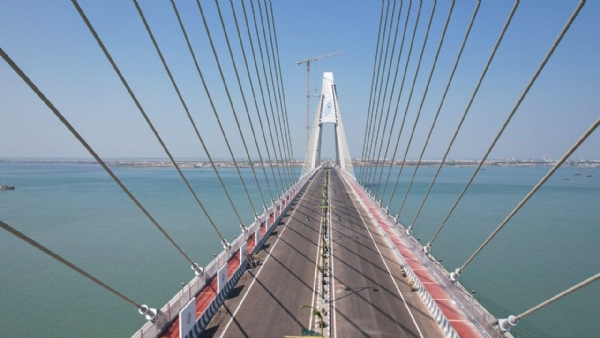
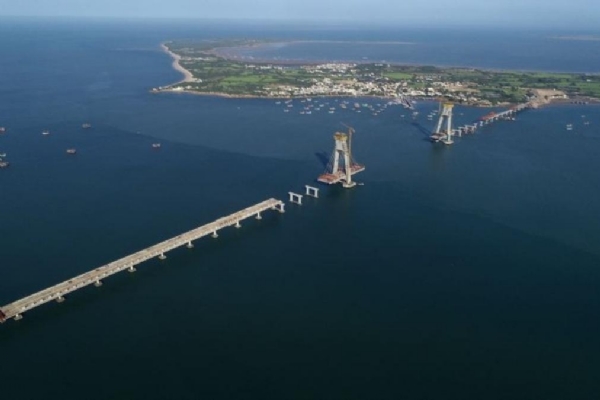
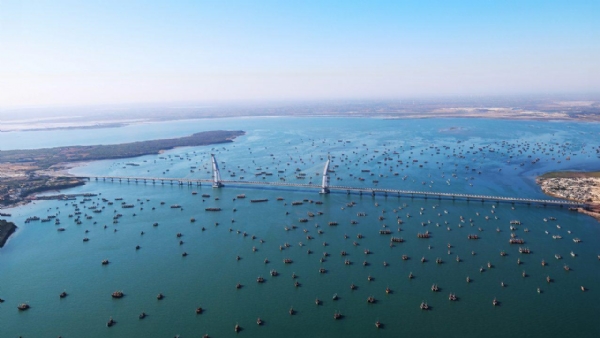
Dwarka, Gujarat, 21 October (H.S.): India's effort to connect its civilisational heritage with modern infrastructure is gaining a new dimension in Gujarat, where a proposed development corridor for Bet Dwarka aims to expand pilgrimage facilities and tourism. Plans reported on October 16 include improved visitor amenities, heritage-themed streets and new attractions. The proposal builds on Sudarshan Setu, inaugurated in February 2024, which established a direct road connection between Okha on the mainland and Bet Dwarka, an island associated with Lord Krishna.
The initiative brings together three areas of national significance: religious heritage, tourism infrastructure and archaeological research. Bet Dwarka attracts pilgrims because of its cultural and spiritual associations, while underwater investigations in the surrounding region are examining submerged archaeological remains. If implemented with appropriate safeguards, the proposed development could connect the island's heritage with public education, scientific research and opportunities for local businesses.
The scale and impact of the new corridor will depend on its implementation. Proposed attractions must be distinguished from completed projects, and the economic benefits will need to be assessed through evidence rather than projections.
Connectivity Changes the Equation
For generations, pilgrims travelling to Bet Dwarka relied on ferry services to cross from the mainland. The inauguration of Sudarshan Setu on February 25, 2024, changed that arrangement by providing a direct road connection between Okha and the island.
According to the Press Information Bureau, the bridge is approximately 2.32 kilometres long and was built at a cost of around ₹980 crore. Its opening improved access to an important pilgrimage destination and strengthened the island's connection with the wider regional transport network.
Improved connectivity can make journeys more convenient, facilitate the movement of goods and support access to essential services. It can also create opportunities for transport operators, accommodation providers, guides, food businesses and local producers to serve visitors.
The proposed corridor seeks to build on these advantages through additional visitor facilities and tourism infrastructure. Its success, however, will depend on whether development generates sustained economic benefits for residents. Changes in local employment, visitor numbers, business activity and household income will help establish whether the investment is translating into wider prosperity.
Underwater Research and India's Maritime Past
Bet Dwarka's significance extends beyond its religious associations. Its location along Gujarat's coast has made the wider Dwarka region a focus of underwater archaeological investigation, offering researchers an opportunity to examine submerged remains and study the area's historical relationship with the sea.
In a written reply in the Rajya Sabha on July 30, 2026, the Ministry of Culture confirmed that underwater research and exploration were continuing at Dwarka and Bet Dwarka through the Archaeological Survey of India's Underwater Archaeology Wing. The government also confirmed that the Marine Archaeology Centre of the National Institute of Oceanography had been granted permission for underwater exploration at Bet Dwarka and other locations along Gujarat's coast.
The stated objectives of such investigations include locating, documenting and studying submerged archaeological remains and establishing their antiquity through scientific analysis. The work is relevant to understanding historical settlement patterns and maritime activity along India's western coast.
Dwarka occupies a central place in Hindu tradition as the city associated with Lord Krishna. Its religious significance and the scientific investigation of submerged remains are related aspects of public interest, but they are not interchangeable forms of evidence. Archaeological conclusions about the age and character of particular remains must rest on scientific examination and reliable dating.
The proposed tourism development could offer opportunities to explain this research to a wider audience through exhibitions, interpretation centres and educational programmes. Such facilities would help visitors understand the difference between traditional accounts, archaeological evidence and questions that researchers are still investigating.
An International Dimension to Heritage Conservation
The management of underwater heritage is an international concern. Governments and research institutions face the challenge of making historically significant sites accessible while protecting archaeological remains and marine environments.
UNESCO's work on underwater cultural heritage emphasises scientific investigation, conservation, responsible public access and international cooperation. These principles are relevant to Bet Dwarka as Gujarat considers expanding its tourism infrastructure.
Any proposal for underwater viewing experiences would require careful assessment of the archaeological evidence, marine conditions, visitor safety and ecological impact. Authorities would need to establish whether direct access to particular sites is appropriate or whether museums, digital reconstructions and other interpretive facilities would offer a more responsible alternative.
International research partnerships could also help strengthen documentation, conservation methods and specialist training. Collaboration with universities and archaeological institutions would be most valuable if it advances scientific understanding and ensures that the region's heritage is protected for future generations.
The international significance of the project will depend not simply on the scale of its attractions but on the quality of its research, conservation and public interpretation.
Local Livelihoods and Sustainable Development
For residents, the most tangible measure of success will be the opportunities created by development. Tourism can support small businesses, accommodation providers, transport operators, guides and local producers. Better infrastructure may also improve access to services and supplies.
These benefits require planning. Tourism can be seasonal, while a sharp rise in visitor numbers can place pressure on waste management, public facilities, land use and coastal ecosystems. The needs of fishing communities and other residents whose livelihoods depend on local resources must also be considered.
Clear monitoring would help determine whether the project is delivering lasting benefits. Visitor numbers, local employment, business participation and household income could provide indicators of economic impact. Regular assessments of marine conditions, waste management and the protection of archaeological sites would be equally important.
Transparent information on project approvals, funding, implementation timelines and environmental safeguards would allow the public to assess progress against stated objectives.
Preserving the Past While Planning for the Future
Bet Dwarka now has a direct road connection to the mainland, while ongoing archaeological research is examining the region's submerged heritage. The proposed corridor presents an opportunity to bring pilgrimage infrastructure, cultural interpretation and tourism development together.
For India, the wider significance lies in demonstrating that heritage can contribute to education, research and economic activity without being reduced to a tourism attraction. The country's long coastline and maritime history offer considerable scope for further archaeological investigation and international scholarly cooperation.
The lasting value of Bet Dwarka's development will be measured by what it preserves, what scientific research establishes and what opportunities it creates for local communities. With credible archaeological interpretation, responsible tourism planning and effective environmental safeguards, the island could become a significant example of India's effort to connect cultural heritage with modern infrastructure.
---------------
Hindusthan Samachar / Jun Sarkar