




Kanpur/Mirzapur/Lucknow, 20 Oct (HS): The tradition of
burning Ravana is being followed across the country on Vijayadashami. On
Dussehra today, Ravana will be burned across Uttar Pradesh, from a 90-foot
monster in Kanpur to a one-headed effigy in Varanasi. The demon king, however,
is never burned at Vindhyachal or Mirzapur. When Lord Ram's arrow strikes him,
townspeople rush in to steal the effigy, as has been customary for ages. Vijayadashami,
which commemorates the triumph of good over evil, is often marked by the
burning of an effigy after sunset Ramlila. Vindhyachal alters that ending. The
final ritual act is the arrow, which is completed by the audience. Whatever
piece of the effigy a person gets to take home with them is believed by locals
to bring wealth and tranquility.
Acharya Pt Anupam Maharaj, a Vindhyadham scholar, stated
that the occurrence takes at about 10 p.m. on Vijayadashami near the Amravati
crossing in the Vindhya area. Lord Ram appears, discharges his arrow at the
effigy, and within minutes, villagers take it away. According to Maharaj, the
tradition dates back hundreds of years and is based on academic view that
Ravana was a Brahmin. Therefore, burning an effigy is deemed improper. Looting
originated as a tactic to humiliate and dishonor him.
Meanwhile, Kanpur organizers claim the 90-foot Ravana at
Parade Ground is the highest in the state. Effigies will also blaze at
Motijheel, Armapur, Shastri Nagar, and Railbazar. The Dashanan temple in
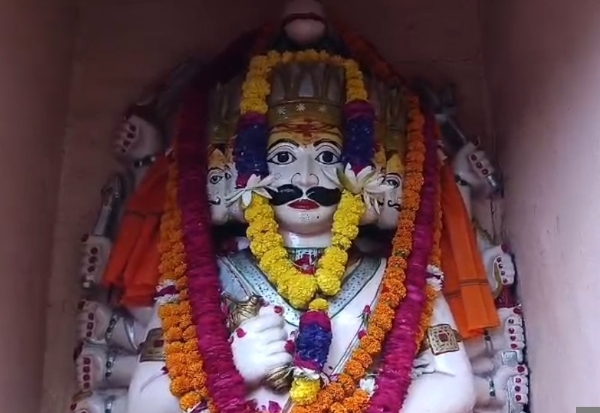
Shivala performs a ritual for Ravana. A crowd of devotees gathered to worship
Ravana at the Dashanan temple located in Shivala, Kanpur. In this temple, which
opens only once a year on Dussehra, worship was performed with due rituals in
the morning. Devotees anointed the idol of Ravana with milk, curd and ghee, lit
oil lamps and prayed for their wishes. In the evening, the temple's doors will
be closed for a year.
Located in the Shivala area, this temple is known for its
unique tradition. While effigies of Ravana are burned across the country on
Vijayadashami, here he is worshipped as a symbol of power and a great scholar.
It is believed that Ravana was not only a great devotee of Lord Shiva but also
a profound scholar of the scriptures. For this reason, devotees pray to him and
pray for strength, wisdom, and knowledge.
According to tradition, the temple doors were opened on
Dussehra morning and the Ravana idol was decorated. This was followed by puja
and aarti. Devotees lit mustard oil lamps and offered yellow flowers. The
temple first worships Goddess Chinnamasta, followed by an aarti for Dashanana.
In the evening, the temple doors will be closed, and devotees will have to wait
until the next Vijayadashami to have darshan.
Temple priest Ram Bajpai said on Tuesday that in 1868, the
then king built the temple of Maa Chinnamasta. A five-foot-tall statue of
Ravana was also installed alongside it. It is believed to be installed as the
goddess's guardian. According to religious belief, Ravana also worshipped the
goddess and was a devout devotee of Lord Shiva. For this reason, a special
tradition of worshipping him on Dussehra has been established here.
Devotee Deepika explained that the Dashanan Temple tradition
is different from other places. Here, worship is performed to commemorate
Ravana's wisdom and knowledge. She said she came to the temple to pray for
happiness, prosperity, and positivity in her family's life.
Devotee Raju explained that he came here to visit because of
the beliefs associated with Ravana's scholarship and knowledge. According to
him, worshipping at this temple on Dussehra is a unique experience. Devotees
here seek inspiration from Ravana's scholarship and pray for strength, wisdom,
and knowledge.
A high-tech Ravana will stroll onto the field at the
Aishbagh Ramlila grounds in Lucknow, moving its arms and legs and waving a
sword. Fireworks will last around 45 minutes after the dahan. The Ramlila will
employ AI-generated sceneries, while the Ram Barat will have a computerized
elephant. According to the committee, Goswami Tulsidas founded the Ramlila here
around 500 years ago.
Hindusthan Samachar / Abhishek Awasthi