




Keralam, 19 October (H.S.): Beneath the glow of a traditional oil lamp, an actor’s eyes trace an invisible landscape. A trembling eyebrow suggests anguish; a measured gesture summons a mountain. In Koodiyattam, Kerala’s ancient Sanskrit theatre, the smallest movement can open an entire dramatic universe.
UNESCO proclaimed Koodiyattam a Masterpiece of the Oral and Intangible Heritage of Humanity in 2001. In 2008, it was incorporated into the Representative List of the Intangible Cultural Heritage of Humanity. This recognition concerns a living cultural tradition, rather than certification of an individual performer or institution.
Described by UNESCO as originating more than 2,000 years ago, Koodiyattam combines Sanskrit theatrical traditions with Kerala’s distinctive performance practices. Its expressive vocabulary places exceptional emphasis on eye movements, facial muscles and hand gestures. Actors traditionally undergo ten to fifteen years of rigorous training.
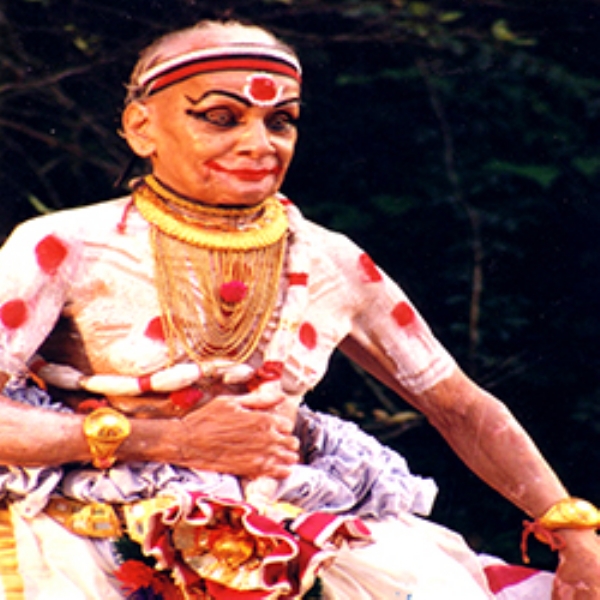
Time unfolds differently on this stage. A passing thought may become an extended sequence; a single dramatic episode can occupy several evenings. Percussion, particularly the resonant mizhavu, intensifies the emotional atmosphere, while elaborate costumes and makeup give mythological characters a commanding visual presence.
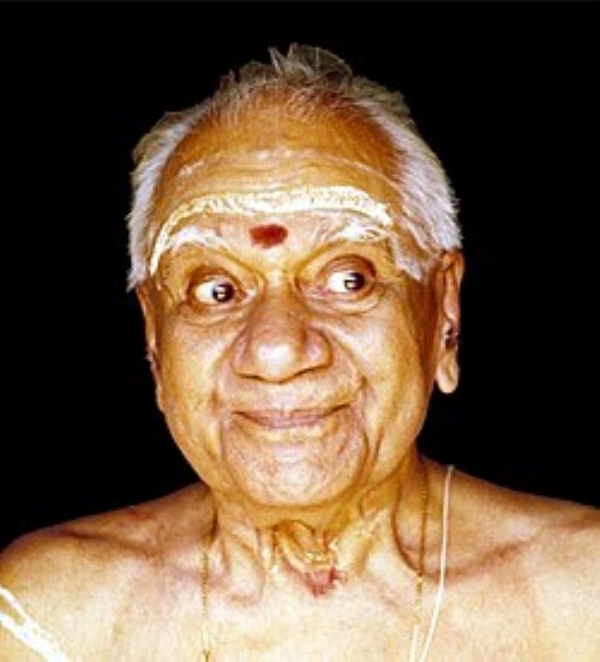
Mani Madhava Chakyar was among the transformative figures who widened the art’s audience. Celebrated for his mastery of netrabhinaya, or expression through the eyes, he demonstrated how an actor could evoke landscapes, shifting identities and complex emotional states with astonishing precision.
His pioneering presentations beyond temple precincts and outside Kerala helped introduce Koodiyattam to audiences unfamiliar with its ritual setting. Performances and demonstrations across India established that its highly specialised theatrical language could communicate beyond regional boundaries. His teaching also influenced leading Kathakali performers.
A separate but equally important lineage centres on Ammannur Madhava Chakyar, the legendary guru under whom Venuji and Kapila trained. Distinguishing Ammannur from Mani Madhava Chakyar is essential to understanding the different masters whose contributions shaped Koodiyattam’s modern history.
Venuji’s contribution extends across performance, research, documentation and teaching. Associated with Natanakairali in Irinjalakuda, he helped strengthen training through the Ammannur Chachu Chakyar Smaraka Gurukulam. His Navarasa Sadhana explores the nine emotional states, bringing traditional acting knowledge into dialogue with contemporary performers.
He also helped organise landmark international appearances. In 1982, Ammannur’s troupe travelled to France and Britain, performing Balivadham at Paris’s Mandapa and London’s Riverside Studios. Venu participated in demonstrations, including an encounter with theatre director Peter Brook and his artistes during their preparations for The Mahabharata.
International recognition gained another symbolic setting when Ammannur performed at UNESCO headquarters in Paris in 2001. During the 1990s, Venu participated in the World Theatre Project associated with Swedish director Peter Oskarson, extending exchanges between Kerala’s acting traditions and theatre practitioners from other cultures.
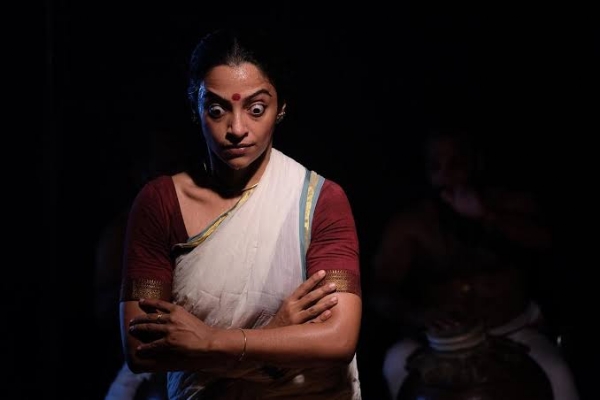
Kapila Venu, daughter of Venuji and Mohiniyattam exponent Nirmala Paniker, carries this inheritance into a new generation. Trained by Ammannur, her father and Usha Nangiar, she has spent more than two decades performing, teaching and conducting Koodiyattam workshops internationally, including engagements across Europe and Japan.
Her international work also includes collaborations with Japanese dancer Min Tanaka and participation in Akram Khan’s Gigenis. Such collaborations broaden her artistic conversations, while her Koodiyattam practice retains its grounding in disciplined training and the expressive resources of Kerala’s classical theatre.
For audiences encountering it abroad, the attraction often lies in discovering how much the human body can communicate. Without elaborate scenery, an accomplished performer can suggest distance, memory, conflict and tenderness, inviting spectators to watch with unusual patience and concentration.
UNESCO recognition has given this heritage global visibility, but its continuity depends on sustained teaching, viable livelihoods and opportunities to perform. The enduring achievement of its masters lies in making an exacting ancient language accessible to successive generations, allowing Kerala’s temple theatre to keep speaking to the world.
---------------
Hindusthan Samachar / Arun Lakshman