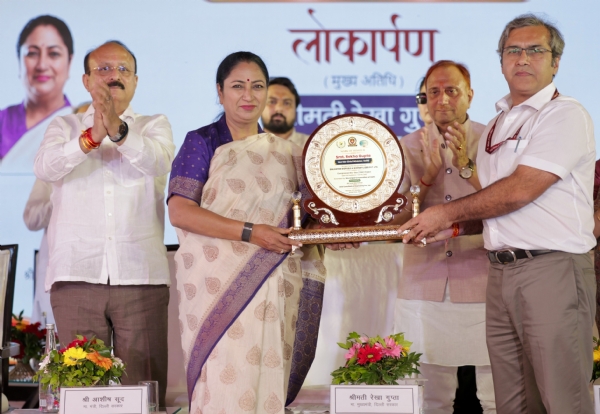
New Delhi, 19 October (H.S.): Delhi Chief Minister Rekha Gupta on Monday inaugurated a biogas plant with a processing capacity of 200 metric tonnes of cow dung per day at Goyla Dairy in the Najafgarh area. Established by the Municipal Corporation of Delhi (MCD) at a cost of Rs 16 crore, the facility is expected to play a significant role in the scientific processing of cow dung, production of clean fuel and environmental protection. The plant will help prevent cow dung from flowing into the Yamuna through drains, improve sanitation in the area and enhance the income of dairy farmers.
Delhi Energy Minister Ashish Sood, Mayor Parvesh Wahi, Deputy Mayor Dr Monika Pant, MLA Sandeep Sehrawat, representatives associated with the project and other dignitaries were present at the inauguration.
Chief Minister Rekha Gupta said that previous governments had failed to pay adequate attention to basic infrastructure in Delhi’s dairy colonies, including drains, drainage systems, water supply, waste collection and cow dung management. She said no biogas plant had been established in Delhi for years, leaving the problem of proper cow dung disposal unresolved.
The Chief Minister stated that the present government had initiated three biogas plants over the past 18 months, while work was underway to establish six more. She added that the Nangli Sakrawati plant had processed 55,000 tonnes of cow dung in one year, for which farmers had been paid Rs 3.5 crore.
CM Gupta also announced that Rs 50 crore had been allocated to construct drains and improve drainage systems in Delhi’s dairy colonies. She said Prime Minister Narendra Modi’s vision of ‘Waste to Wealth’ encourages the conversion of waste into resources, creating new opportunities for development and environmental protection.
The Goyla Dairy biogas plant, she said, represents an important step towards translating this vision into action. Instead of allowing cow dung to flow into drains, the facility will convert it into clean fuel and organic fertiliser. Such initiatives will promote clean energy, strengthen environmental conservation and support efforts to achieve greater energy self-reliance.
The Chief Minister emphasised that preventing pollution at its source was essential to restoring the Yamuna. Cleaning the river alone would not be sufficient; effective action must also be taken against the sources of pollutants before they enter the waterway, she said.
Approximately 200 metric tonnes of cow dung are generated every day in the Goyla Dairy area. In the absence of an effective disposal system, the waste can enter the Yamuna through drains, increasing the risk of pollution.
To address this problem, the newly inaugurated plant will process up to 200 metric tonnes of cow dung daily to produce biogas and compressed biogas. The facility is expected to generate approximately 14,000 cubic metres of raw biogas and around 5.6 tonnes of purified compressed biogas every day. The compressed biogas will be supplied to Indraprastha Gas Limited through a pipeline.
The biogas slurry left after processing will be used as organic fertiliser, helping improve soil fertility. The initiative is therefore expected to turn cow dung into a valuable resource while supporting clean energy production, agricultural benefits and efforts to prevent pollution of the Yamuna.
The project is also expected to provide economic benefits to local dairy farmers alongside its environmental advantages. Under the arrangement, the agency operating the project will collect cow dung from dairy owners at a rate of 67 paise per kilogram. This will help ease disposal-related difficulties and turn the waste into an economically useful resource.
Gupta urged dairy operators and local residents to cooperate with the designated collection system instead of allowing cow dung to flow into drains. She also called on the concerned officials and plant operators to ensure regular collection, safe processing and the smooth functioning of the facility.
Speaking on the occasion, Energy Minister Ashish Sood said previous governments had relocated dairies from upscale residential colonies to designated dairy farms but had failed to do enough to ensure the scientific disposal of cow dung and improve basic infrastructure. He added that additional financial assistance had been provided for municipal projects on the Chief Minister’s instructions.
“Delhi now wants concrete action and results instead of excuses and delays,” Sood said, describing the plant as more than just a newly inaugurated facility. He said it symbolised a new approach to development and administrative accountability.
Mayor Parvesh Wahi said the Municipal Corporation of Delhi had taken another important step towards improving sanitation and protecting the environment. He noted that converting cow dung and dairy waste into clean energy would contribute to better waste management and help reduce pollution in the Yamuna.
The Mayor reiterated that the corporation remained committed to public service, sanitation and environmental protection.
---------------
Hindusthan Samachar / Jun Sarkar
18 Aug 2026
ED raids KPSC office, 20 other locations over Karnatak veterinary recruitment scam
ED raids KPSC office, 20 other locations over Karnatak veterinary recruitment scam..