Special Interview with Indian Boccia Player Sachin Chamaria
By Sunil Dubey
New Delhi,17 October (HS): At the age of 17, Sachin Chamaria sustained a severe spinal cord injury that left him paralysed in all four limbs. The accident transformed his life, but instead of giving up, he chose to recognise his abilities and explore a new path. After taking up boccia in 2021, he returned to competitive sport and established himself at the national and international levels through hard work and determination. Chamaria has won the national gold medal six consecutive times.
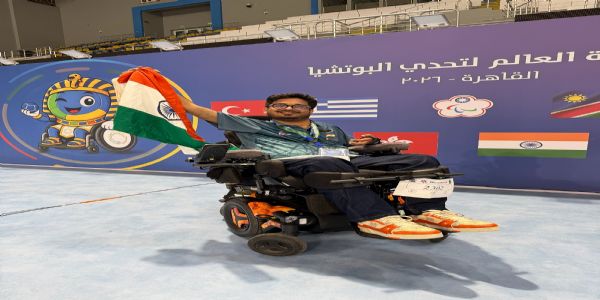
In 2024, he won a gold medal at the World Boccia Challenger in Bahrain, becoming the first Indian male BC3 player to win an international gold medal. In 2026, at the World Boccia Challenger in Cairo, he won silver in the BC3 pairs event alongside Sarita Dwivedi and bronze in the individual event. Ranked 19th in the world, Chamaria is the highest-ranked Indian boccia player.
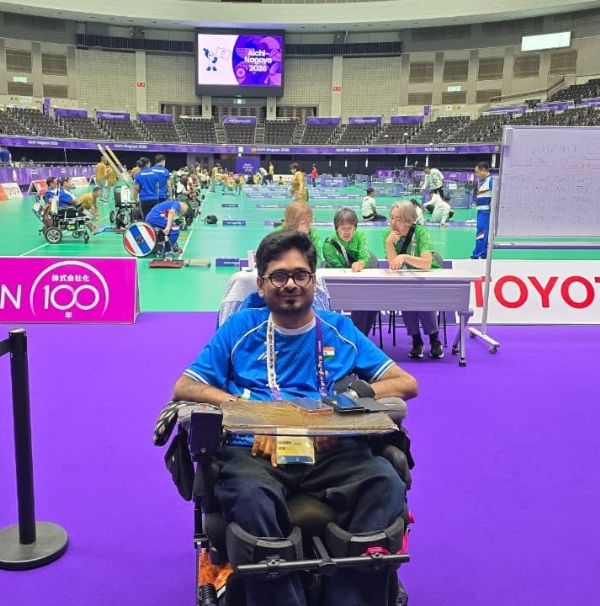
Sachin will now represent India at the Aichi-Nagoya 2026 Para Asian Games, beginning on October 18. He will compete in the BC3 individual and pairs events. Alongside his sporting achievements, he is also working to promote the inclusion of persons with disabilities and ensure equal opportunities for them.
Presented below are the key excerpts from Hindusthan Samachar’s conversation with Indian boccia player Sachin Chamaria.
Question: Your life changed completely after you sustained a severe spinal cord injury at the age of 17. How would you describe your journey from that difficult period to representing India on the international stage?
Sachin: My life underwent many changes after I sustained the spinal cord injury. I had to adapt to my circumstances and find new ways to move forward. Taking up boccia became an opportunity to do just that, allowing me to recognise my abilities and find a new direction through sport. After discovering the game in 2021, I gradually began focusing on my preparation. Representing India today and winning medals at the international level is a matter of great pride for me. My journey has taught me that the right opportunities, consistent practice and commitment to a goal can help a person move forward.
Question: You decided to take up boccia in 2021. What aspects of the sport attracted you? Did you dream of winning an international medal when you first started?
Sachin:Boccia gave me an opportunity to use my abilities in a new way. The sport requires not only physical skill but also precision, strategy, concentration and the ability to make sound decisions under pressure. These are the aspects that attracted me to it. When I started, my focus was on understanding the game, improving my technique and becoming a better player. Winning medals for India at the international level is a significant achievement. Winning gold at the World Boccia Challenger in Bahrain in 2024 and securing two medals in Cairo in 2026 have been important milestones in my journey.
Question: How special was it for you to win silver and bronze at the 2026 World Boccia Challenger in Cairo? What lessons did you take away from those competitions?
Sachin:Winning two medals in Cairo was extremely special for me. I won silver in the BC3 pairs event alongside Sarita Dwivedi and bronze in the BC3 individual event. These achievements gave me an opportunity to assess my preparation and performance against international competition. In boccia, success depends on much more than a single shot. It is important to maintain the right strategy throughout a match, understand an opponent’s moves and remain focused under pressure. These competitions taught me the importance of playing every point with patience and precision. The two medals were not only achievements in themselves but also a source of motivation to perform even better in the future.
Question: What does representing India at the Aichi-Nagoya 2026 Para Asian Games mean to you? What are your medal expectations?
Sachin:Representing India at the Para Asian Games is both a matter of pride and a responsibility. I want to deliver my best performance in both the BC3 individual and pairs events. The medals I won in Cairo gave me valuable experience of competing at the international level, and I hope to draw on that experience at these Games. My goal is to execute my strategy in every match, play accurate shots and keep India in a strong position in the medal race. The level of competition in Asia is challenging, with several experienced players participating. Rather than concentrating on any one opponent, it is more important to focus on my preparation, concentration and decision-making during matches.
Question: Boccia is still not a widely popular sport in India. What do you think is the biggest reason for this?
Sachin:In my view, the biggest challenges to the growth of boccia in India are limited awareness of the sport and a lack of accessible training facilities for players. Many people are still unfamiliar with the game and the specific requirements of categories such as BC3. In addition, specialised equipment such as ramps, trained sport assistants, expert coaches and financial assistance to participate in international competitions are essential. Meeting these requirements involves considerable expenditure, making the role of sponsors and institutional support particularly important. If boccia is introduced to more people through schools, sports institutions and organisations working with persons with disabilities, and players receive regular training, the sport could establish a stronger foundation in India.
Question: BC3 players require ramps, specialised equipment and sport assistants. Are adequate facilities available in India to prepare for international-level competitions?
Sachin:For BC3 athletes, access to ramps suited to their individual needs, appropriate sporting equipment and trained sport assistants is extremely important. However, having the equipment alone is not enough to compete at the international level. Players also need opportunities to use it regularly, develop their techniques and practise under different match conditions. Boccia in India still needs a stronger training system. In my view, priorities should include ensuring access to specialised equipment, training sport assistants and expert coaches, organising regular training camps, and providing exposure to international competitions. When players receive training and resources suited to their individual needs, they can perform closer to their full potential.
Question: Are there sufficient opportunities in India for athletes with disabilities to pursue sport as a professional career and become financially independent? What are your expectations of the government and sports federations?
Sachin: Opportunities for athletes with disabilities to pursue professional sporting careers are developing in India, but they need to be strengthened further. Participating in competitions alone is not enough. Athletes also need regular training, equipment, financial assistance for travel and competition-related expenses, and clear pathways for career progression. I expect the government and sports federations to provide consistent support to athletes, from the grassroots level to international competition. Private companies and sponsors should also be encouraged to establish long-term partnerships with athletes with disabilities. If players receive performance-based incentives, employment opportunities and financial security, they will be able to focus more fully on their sport and move towards greater independence.
Question: You qualified for the 2026 World Boccia Championships on merit. What did you consider your greatest strength and weakness when competing against the world’s leading players?
Sachin: Qualifying for the World Boccia Championships on merit has been an important milestone in my career. It is personally significant to me and important for Indian boccia as well, because it demonstrates that our players can earn places in world-level competitions through their performances. Competing against the world’s leading players requires precision, strategic thinking and the ability to maintain concentration under pressure. I consider my understanding of the game, my ability to develop strategies according to the circumstances and my willingness to learn from every match among my strengths. Competing at the highest level also helps me identify technical aspects and match situations that require further improvement. These experiences help me work on my shortcomings and prepare more effectively for upcoming competitions.
Question: How challenging is it to maintain physical readiness, mental concentration and consistent performance while participating in major international tournaments one after another?
Sachin:Competing in major international tournaments regularly requires not only physical preparation but also mental concentration and consistency. In boccia, it is important to remain focused for extended periods, develop the right strategy for every shot and stay calm under pressure. Between competitions, it is necessary to analyse previous performances and work on areas that need improvement. My preparation focuses on technique, strategy and concentration. Maintaining a balance between practice and adequate rest is equally important so that I can prepare effectively for the next competition. I believe consistency does not come from a single good performance; it results from continuous preparation and learning.
Question: How have you experienced society’s attitudes towards disability during your journey? How would you like society to perceive athletes with disabilities?**
Sachin:In my view, disability should not be considered a person’s entire identity. An athlete should be recognised for their hard work, skills, discipline and performance. As awareness grows, it is equally important to understand that athletes with disabilities need equal opportunities, accessible facilities and the support required to progress. I want people to look beyond disability and recognise the talent and achievements of athletes. Boccia has given me the opportunity to develop my abilities and represent India internationally. I hope my achievements will encourage more people to learn about the sport and recognise athletes with disabilities for their talent and accomplishments.
Question: What message would you give to a young person with a disability who wants to pursue sport but lacks the confidence to do so because of limited resources?**
Sachin: I would tell such young people that although a lack of resources is a genuine challenge, they should not give up on recognising their potential and looking for available opportunities. Pursuing sport requires proper guidance, practice and support. Reaching out to local sports organisations, coaches and institutions that work with persons with disabilities can be a good starting point. My dream is to see boccia gain wider recognition in India and to create opportunities for more athletes with disabilities to progress in the sport. I want us to have stronger training facilities, expert coaches, better equipment and sufficient opportunities to compete internationally so that Indian players can represent the country regularly at the world level.
Question: What is your biggest dream for the future of boccia in India? How would you like to see the sport develop in the coming years?
Sachin: My dream is for boccia to gain widespread recognition in India and for more athletes with disabilities to have opportunities to progress in the sport. I want players to have access to better training facilities, expert coaches, suitable equipment and sufficient opportunities to participate in international competitions. Domestic competitions also play an important role in developing Indian boccia. Events such as the Federation Cup allow players to gain competitive experience, assess their techniques and learn from other athletes. However, reaching the international level also requires regular training, expert guidance and opportunities to compete against international players. If structured training camps and clear performance-based pathways are established, more Indian athletes will be prepared to compete at the world level.
Question: What message would you like your performance at the Aichi-Nagoya Para Asian Games to convey about the future of Indian boccia?
Sachin: Having won two medals in Cairo and qualified for the World Boccia Championships on merit, I want to deliver my best performance at the Para Asian Games as well. I will represent India in both the BC3 individual and pairs events, and my goal is to keep the country in a strong position in the medal race. To achieve this, I will need to maintain precision, strategy and concentration in every match. For me, this competition is not merely an opportunity to perform individually; it is also a chance to bring greater recognition to Indian boccia. I want our achievements to inspire more young people with disabilities to take up sport and demonstrate that, with appropriate training, resources and opportunities, Indian athletes can establish themselves on the international stage.
---------------
Hindusthan Samachar / Jun Sarkar
18 Aug 2026
Cincinnati Open: Williams Sisters Fall in First Round, Kostyuk-Stearns Duo Edges Them Out in Super Tiebreak
18 Aug 2026