New Delhi, 14 October (H.S.):
The Central Government will strengthen the role of Gram Panchayats in safeguarding rural drinking water sources and ensuring the long-term sustainability of water supply systems under Jal Jeevan Mission 2.0. To achieve this, the mission will be integrated with the Viksit Gram Employment and Livelihood Guarantee Programme (VB-G RAM G). Coordination between the Centre and the states will help prioritise groundwater recharge, rainwater harvesting and the protection of drinking water sources through scientifically planned interventions.
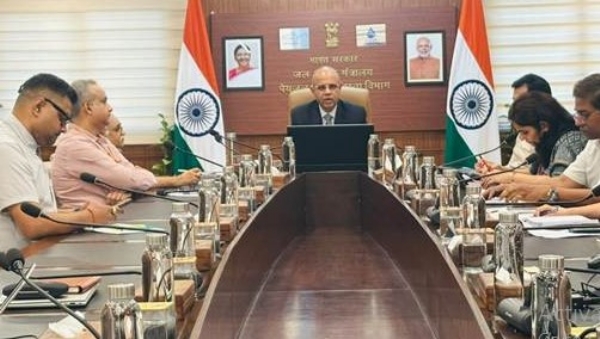
The Department of Drinking Water and Sanitation under the Union Ministry of Jal Shakti held its third virtual conference with states and Union Territories on Wednesday, following the Departmental Summit on Water 2026. The conference focused on the sustainability of drinking water sources, water security and the preparation of plans led by Gram Panchayats.
Ashok K. K. Meena, Secretary of the Department of Drinking Water and Sanitation, said Jal Jeevan Mission had significantly expanded rural drinking water infrastructure. However, he emphasised that the next phase must focus on ensuring the long-term functionality, reliability and maintenance of these assets.
Meena said the protection and replenishment of water sources, along with regular maintenance, were essential to making drinking water services sustainable. He noted that the Viksit Gram Employment and Livelihood Guarantee Programme could support activities related to water conservation, groundwater recharge and the maintenance of drinking water sources.
He urged states to integrate village action plans and source sustainability plans under Jal Jeevan Mission with plans developed under the Viksit Gram Employment and Livelihood Guarantee Programme and the Gram Panchayat Development Plan.
He further emphasised that water security interventions should be determined through scientific assessments of local water resources. Implementing these plans with the approval of the Gram Sabha would strengthen community participation and accountability. Gram Panchayats, Village Water and Sanitation Committees and other local institutions possess valuable knowledge of water sources, seasonal variations and local requirements. Their active involvement in planning, implementation and monitoring is therefore essential.
## Programme Provides for 128 Types of Water Security Works
Diksha S. Bisht, Assistant Commissioner in the Ministry of Rural Development, said the Viksit Gram Employment and Livelihood Guarantee Programme provides for 128 types of works related to water security.
These include groundwater recharge, rainwater harvesting, watershed treatment, the rejuvenation of water bodies, the protection of drinking water sources and the maintenance of water-related assets. She highlighted the need to prioritise interventions in water-stressed areas based on groundwater conditions and local requirements.
Odisha shared its experiences in groundwater recharge, domestic wastewater management, watershed treatment, source protection and climate-resilient water infrastructure.
Madhya Pradesh outlined the role of Gram Panchayats in maintaining rural water supply schemes and shared details of its rainwater harvesting initiatives. Rajasthan presented a framework for coordinating the Viksit Gram Employment and Livelihood Guarantee Programme with preventive, corrective and emergency maintenance of rural water supply infrastructure.
## Data-Driven Planning to Identify Vulnerable Water Sources
Sumit Priyadarshi, Deputy Adviser at the National Jal Jeevan Mission, delivered a presentation on the use of a decision support system. He explained that the system helps identify drinking water sources facing risks related to water quality and availability.
States were urged to use data to identify vulnerable villages and habitations, verify the identified risks through field inspections and monitor the outcomes of corrective interventions.
Kamal Kishore Son, Additional Secretary and Mission Director of the National Jal Jeevan Mission, said investments under the Viksit Gram Employment and Livelihood Guarantee Programme should focus on addressing drinking water challenges identified through the decision support system.
He stressed that expenditure on water-related works must translate into measurable improvements in water security, ensuring that investments deliver tangible and sustainable benefits to rural communities.
---------------
Hindusthan Samachar / Jun Sarkar
18 Aug 2026