New Delhi, 14 October (H.S.):
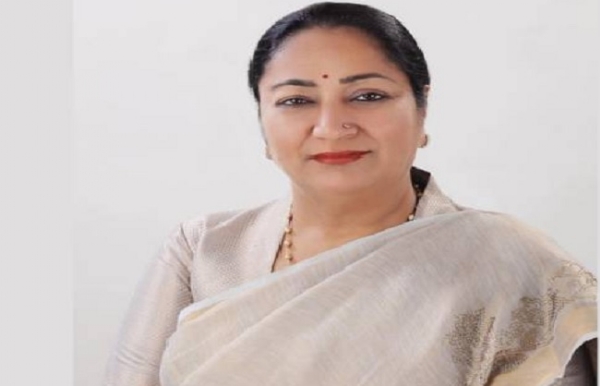
Delhi Chief Minister Rekha Gupta on Wednesday announced that the Delhi Cabinet had unanimously passed a congratulatory resolution marking Prime Minister Narendra Modi’s 25-year journey in public service, from serving the people to leading the nation. Expressing gratitude to the Prime Minister on behalf of Delhi’s 2.5 crore residents, she said that since the formation of the government in Delhi in February 2025, efforts had been underway to implement the Centre’s welfare schemes and accelerate the capital’s development.
Addressing a press conference at the Chief Minister’s Janseva Sadan, Gupta said that under Modi’s leadership, the country had achieved significant milestones across various sectors. She added that central government schemes, backed by financial and technical assistance, were supporting development initiatives in Delhi across healthcare, housing, education, transport, sanitation, environmental protection and infrastructure.
Healthcare Initiatives and Expanded Insurance Coverage
Gupta said eligible residents of Delhi were receiving health coverage of Rs.5 lakh under the Centre’s Ayushman Bharat scheme, supplemented by an additional Rs.5 lakh in coverage provided by the Delhi government. This brings the total available health cover to Rs.10 lakh per eligible beneficiary.
According to the Chief Minister, more than nine lakh people had registered under the scheme, and approximately ₹118 crore had been disbursed against around 85,000 claims.
She said nearly three lakh senior citizens aged 70 and above had registered in Delhi under the Ayushman Vay Vandana scheme. Affordable medicines were also being made available through the Pradhan Mantri Bhartiya Janaushadhi Pariyojana.
CM Gupta added that approximately 415 Ayushman Arogya Mandirs had been established in Delhi, with a target of increasing the number to around 1,100.
Housing, Welfare Schemes and Food Security
The Chief Minister said efforts were being made to provide housing to eligible families in Delhi under the Pradhan Mantri Awas Yojana. Under the “Jahan Jhuggi, Wahan Makan” initiative, steps were being taken to provide improved housing to eligible families living in slum settlements.
She said Delhi residents were also benefiting from several central government welfare initiatives, including the Pradhan Mantri Jan Dhan Yojana, Pradhan Mantri MUDRA Yojana, PM SVANidhi and the Pradhan Mantri Ujjwala Yojana.
According to CM Gupta, approximately three lakh LPG connections had been provided in Delhi under the Ujjwala scheme, while nearly 73 lakh families were receiving free monthly foodgrains under the Pradhan Mantri Garib Kalyan Anna Yojana.
Funding for Sanitation, Sewerage and Infrastructure
CM Gupta said Delhi had received approximately ₹1,200 crore under the Swachh Bharat Mission and around ₹830 crore under the Atal Mission for Rejuvenation and Urban Transformation (AMRUT).
She said the funds were supporting projects to expand sewerage networks, clean the Yamuna and construct decentralised sewage treatment plants.
Delhi had also received approximately Rs.1,650 crore under the Special Assistance to States for Capital Investment (SASCI) scheme, she said, adding that the funding was supporting around 30 projects.
Road Projects and Metro Expansion Strengthen Connectivity
Highlighting road infrastructure development, Gupta said projects worth more than Rs.1.25 lakh crore had been completed, were under implementation or were at various stages of planning in Delhi over the past 12 years.
These included the Pragati Maidan Integrated Transit Corridor, the Dhaula Kuan signal-free corridor, the Mahipalpur underpass, and major expressway projects connecting Delhi with Meerut, Dehradun and Mumbai.
According to the Chief Minister, these projects had improved connectivity within Delhi and between the capital and neighbouring regions.
She also highlighted the expansion of India’s metro network, which, she said, had grown from approximately 228 kilometres in 2014 to around 1,155 kilometres, extending metro services to 26 cities.
The Delhi-National Capital Region metro network was benefiting approximately 85 lakh passengers every day, CM Gupta said.
She added that nearly 5,300 electric buses were operating in Delhi. The expansion of clean public transport and charging infrastructure was helping strengthen efforts to curb pollution.
Regularisation of Unauthorised Colonies and Urban Development
Referring to the regularisation of unauthorised colonies, CM Gupta said the process of regularising 1,511 colonies under the “Jaisi Hai, Jahan Hai” approach had opened the way for approximately 45 lakh residents to benefit.
She also noted that major venues such as Bharat Mandapam and Yashobhoomi had enhanced Delhi’s capacity to host national and international events.
New Industrial Policies and Ease of Doing Business
The Chief Minister highlighted initiatives to promote industrial growth and commercial activity, including the proposed new industrial policy, a warehousing policy and measures to improve the ease of doing business.
She said efforts were being made to complete the approval process for green industries within approximately 20 days.
CM Gupta emphasised the need for stronger coordination among the states and agencies of the National Capital Region to address major challenges, including the cleaning of the Yamuna, air pollution and transportation.
Centre’s Support for Delhi’s Financial and Administrative Framework
Gupta also highlighted the Centre’s support in strengthening Delhi’s administrative and financial framework.
She said the Reserve Bank of India’s acceptance of arrangements for acting as Delhi’s banker, financial agent and debt manager had opened up opportunities for the capital to move towards maintaining a separate account and accessing market borrowings.
She also referred to the Centre’s support for establishing a separate cadre for the Public Works Department and for developing mechanisms to address Delhi’s administrative and civic challenges.
Concluding her remarks, the Chief Minister reiterated that cooperation between the Centre and the Delhi government was essential for accelerating development, improving public services and ensuring that welfare schemes reached their intended beneficiaries.
---------------
Hindusthan Samachar / Jun Sarkar
18 Aug 2026
ED raids KPSC office, 20 other locations over Karnatak veterinary recruitment scam
ED raids KPSC office, 20 other locations over Karnatak veterinary recruitment scam..