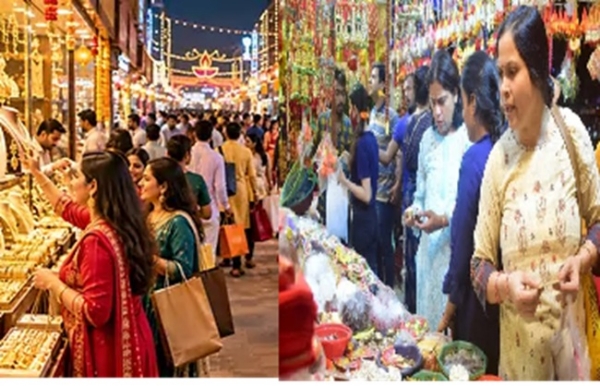
New Delhi, 14 October (H.S.): The Confederation of All India Traders (CAIT) on Wednesday projected that festive-season trade across India would exceed Rs 7 lakh crore between Navratri and Diwali this year, representing an estimated increase of 15–18 per cent over last year’s record business.
Following Navratri and Durga Puja, the country celebrates a series of major festivals, including Dussehra, Karwa Chauth, Dhanteras, Diwali, Govardhan Puja, Bhai Dooj, Chhath Puja, Guru Nanak Jayanti and Tulsi Vivah. These occasions collectively generate substantial commercial activity across markets nationwide.
Praveen Khandelwal, CAIT’s National General Secretary and a Bharatiya Janata Party (BJP) Member of Parliament from Chandni Chowk, said the preliminary projection was based on feedback received from leading trade associations and markets across various states. The assessment also took into account consumer demand, festive shopping trends, increased activity in rural and semi-urban markets, growing demand for locally made products and extensive economic activity across multiple sectors.
Praveen Khandelwal said India had recorded festive trade worth approximately Rs 6.05 lakh crore during last year’s Diwali season, comprising around Rs 5.40 lakh crore in goods trade and Rs 65,000 crore in services. Given the anticipated expansion in festive activity this year, he said total business could surpass Rs 7 lakh crore.
According to CAIT’s estimates, the projected festive trade is expected to be distributed across major sectors as follows:
- Groceries and fast-moving consumer goods (FMCG): 12 per cent
- Gold, silver and jewellery: 10 per cent
- Electronics and electrical goods: 8 per cent
- Consumer durables: 7 per cent
- Ready-made garments: 7 per cent
- Gift items: 7 per cent
- Home décor: 5 per cent
- Furniture and furnishings: 5 per cent
- Sweets and savouries: 5 per cent
- Textiles and fabrics: 4 per cent
- Puja items: 3 per cent
- Fruits and dry fruits: 3 per cent
- Bakery and confectionery products: 3 per cent
- Footwear: 2 per cent
- Other goods and related businesses: 19 per cent
Praveen Khandelwal said the services sector would play an increasingly important role in this year’s festive economy. From Navratri to Diwali, demand is expected to rise sharply across transportation, logistics, e-commerce deliveries, packaging, warehousing, hotels, restaurants, tourism, catering, tent and decoration services, lighting, event management, cab services and local transportation.
Compared with the approximately Rs 65,000 crore in services-related business recorded during last year’s festive season, CAIT has made a preliminary estimate of 20–25 per cent growth in the sector this year. On this basis, festive-period services trade could reach approximately Rs 80,000 crore to Rs 1 lakh crore.
He added that, as in previous years, the festive season would feature numerous religious, cultural, social and commercial events across the country. These would include market festivals, Ramlila performances, Durga Puja pandals, Garba and Dandiya celebrations, Diwali gatherings, fairs, exhibitions, local market events, residential society and community celebrations, corporate functions and family gatherings.
Praveen Khandelwal said the projected growth in festive trade reflected not merely an increase in consumer demand but also the growing acceptance of Prime Minister Narendra Modi’s vision of “Vocal for Local”, “Make in India” and “Atmanirbhar Bharat” (Self-Reliant India) among Indian consumers and businesses.
He observed that consumers were increasingly prioritising products made by local artisans, micro, small and medium enterprises (MSMEs), women entrepreneurs, startups, handicraft producers and Indian brands. This trend, he said, was providing smaller traders and local manufacturers with direct access to markets while ensuring that the benefits of festive demand reached different parts of the country.
Praveen Khandelwal emphasised that the anticipated festive trade of more than Rs 7 lakh crore between Navratri and Diwali represented more than a commercial milestone. According to him, it reflected India’s growing consumer purchasing power, the resilience of local markets and the transformation of the Prime Minister’s “Vocal for Local” initiative into a broader public movement.
He said there was a need to strengthen the principle of “Local to National and National to Global” during the festive season. Purchasing Indian-made products, he added, would benefit traders, artisans, MSMEs, women entrepreneurs, startups and local service providers alike.
“The message of this Diwali is clear: buy local, buy Indian, strengthen local businesses and ensure your participation in building a developed India,” Khandelwal said.
He expressed confidence that the 2026 festive season, spanning Navratri to Diwali, would mark a new milestone for trade, the services sector and the local economy across the country.
---------------
Hindusthan Samachar / Jun Sarkar