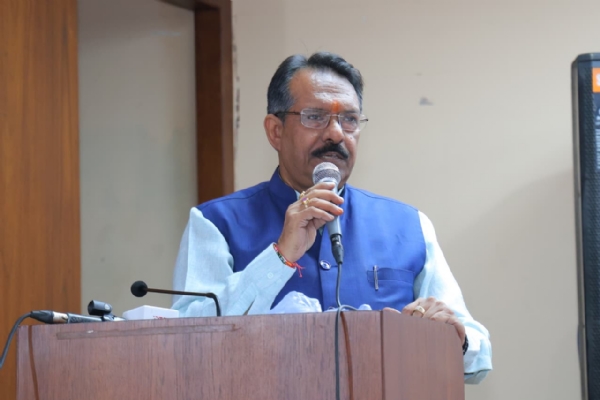
New Delhi, 13 October (H.S.): Bharatiya Janata Party (BJP) Delhi unit president Harsh Malhotra has defended the Delhi Police’s decision to remove Jantar Mantar from the list of designated protest venues, describing it as a step taken in the public interest. He said the decision had been made keeping in mind the inconvenience caused to Delhi residents and the changing circumstances of the national capital. He termed the opposition by the Congress, the Aam Aadmi Party (AAP) and the Cockroach Janta Party (CJP) politically motivated and ridiculous.
Malhotra said the Congress and the AAP had a history of intolerance towards protests. He alleged that during Congress governments, demonstrators were subjected to lathi-charges and gunfire during movements against cow slaughter, farmers’ agitations and the Ram Temple movement at Delhi’s Boat Club. He said the Boat Club had served as a major protest venue until 1993, after which the Congress imposed restrictions on demonstrations there.
Questioning the AAP’s objections, Malhotra said party convenor Arvind Kejriwal had, in August 2016, obtained an order from a Sub-Divisional Magistrate (SDM) to prevent protests near his residence. Citing this as an example of intolerance towards demonstrations, he described the opposition by such parties to the change in protest venues as absurd.
Referring to the situation in Punjab, the Delhi BJP chief alleged that various sections of society, including employees, students, traders and farmers, regularly staged protests over their grievances but faced police action. He said the AAP should reflect on its own record in government before questioning the rights of protesters.
Malhotra said that between 1993 and 2026, a period of approximately 33 years, Jantar Mantar had witnessed thousands of demonstrations. However, with Delhi’s continuous expansion and growing population, protests at the site now affected normal public life. Against this backdrop, he described the Delhi Police’s decision to designate three new protest venues as a measure taken in the public interest.
He emphasised that the right to dissent and demonstrate was an important aspect of democracy, but added that the convenience of ordinary citizens and the smooth functioning of the city’s public infrastructure also needed to be taken into consideration.
---------------
Hindusthan Samachar / Jun Sarkar
18 Aug 2026
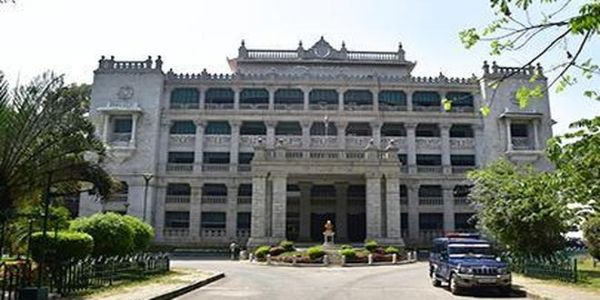
ED raids KPSC office, 20 other locations over Karnatak veterinary recruitment scam
ED raids KPSC office, 20 other locations over Karnatak veterinary recruitment scam..