




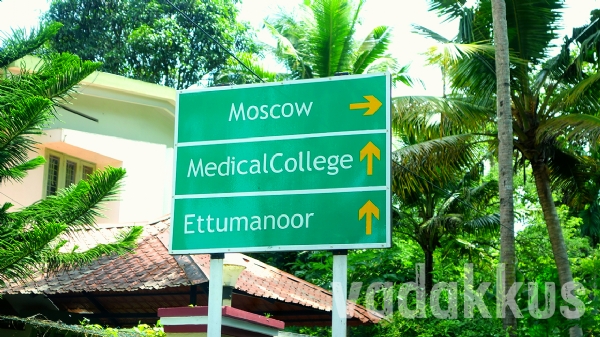
Thiruvananthapuram, 12 Oct (H.S.): In Kerala, Moscow can be a neighbourhood destination, Lenin a familiar acquaintance and Gagarin a farmer from Kannur. Thousands of kilometres from Russia, the country’s influence lives on in local place names, cultural institutions and the names Malayali parents chose for their children.
These Russian corners reflect a relationship nurtured by communist politics, affordable books, literary admiration and the excitement of space exploration. Over generations, names associated with distant revolutions, rivers and writers became part of Kerala’s social landscape, acquiring a distinctly local identity.
Near Changanassery in Kottayam district, a locality known as Moscow preserves the memory of its communist associations. The name brought the Soviet capital into Kerala’s everyday geography, allowing residents to speak of going to Moscow without ever leaving their home district.
The locality also hosted a gathering of Malayalis bearing Russian names, bringing together people whose identities carried echoes of Soviet history. Here, the connection between geography and family memory became unusually literal: Kerala’s Lenins and Stalins could meet in Kerala’s own Moscow.
The fascination extended to youth clubs named Sputnik and establishments called Volga. Sputnik recalled the satellite that opened the space age, while Volga carried the name of Russia’s celebrated river. Such choices turned symbols of international achievement and distant landscapes into familiar neighbourhood references.
In Thiruvananthapuram, Russian House stands as a lasting cultural landmark. Established as Gorky Bhavan in 1975, it drew writers, readers and people curious about Soviet society. Named after Maxim Gorky, the institution strengthened a relationship that had already taken root through Malayalam translations of Russian literature.
After a period of closure, it reopened as the Russian Cultural Centre. Language classes, gymnastics training and the Alekhine chess club have widened its cultural role. At Vanross Junction, a bust of Yuri Gagarin recalls the achievements that once captured the imagination of Malayali families.
That enthusiasm resurfaced in April this year when Malayalis named Gagarin gathered in the capital to celebrate the 65th anniversary of the cosmonaut’s historic spaceflight. Floral tributes, a seminar and an exhibition linked their personal identities with one of humanity’s defining scientific milestones.
Among them was Yuri Gagarin, a farmer from Kannur, whose father selected the name after reading about the cosmonaut in a Russian publication. Gagarin Babu, a businessman from Ernakulam, has carried the association further: his family adopted Gagarin as a surname, preserving it for another generation.
Other families found inspiration in revolutionary leaders and literary figures. A gathering in Thiruvananthapuram in 2017 included three Stalins, six Lenins and two Pushkins among more than 30 participants. The names reflected parental convictions, reading habits and aspirations that reached beyond Kerala’s borders.
V G Pushkin, a bank manager, received his name from his father, a teacher and committed communist who admired poet Alexander Pushkin. A police constable named Pravada carried a name inspired by the Soviet newspaper, while her daughter’s name, Volga, continued the family’s Russian connection.
Distinctive names also brought everyday complications. Khrushchev proved difficult to pronounce, while Pushkin sometimes became Pushpan or Pushkaran. For many bearers, however, the repeated explanations became opportunities to recount family history. An unusual name offered recognition, opened conversations and created an identity difficult to forget.
Beyond politics, books carried Russia into Malayali homes. Illustrated children’s stories, folk tales and classics introduced readers to unfamiliar seasons, landscapes and characters. Translators including “Moscow” Gopalakrishnan and Omana gave those worlds a Malayalam voice, while publishers and booksellers helped them reach successive generations.
Ivan, Masha, Nikita and Vasilisa became familiar companions through reading. The affection these stories generated helps explain why Russian names travelled beyond ideological households and entered Kerala’s broader cultural imagination.
Today, these names form a scattered archive of friendship and fascination. Moscow survives in local geography, Pushkin in a family’s literary memory and Gagarin in a surname passed forward. Together, they show how distant events became intimate parts of Malayali life.
---------------
Hindusthan Samachar / Arun Lakshman