New Delhi, 11 October (H.S.):
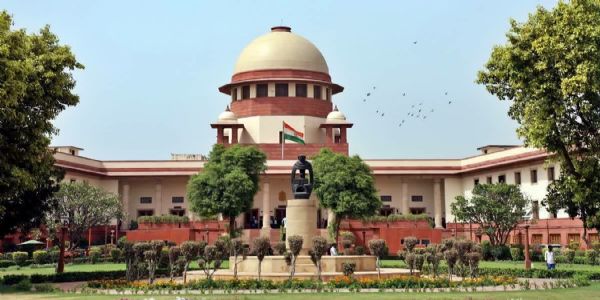
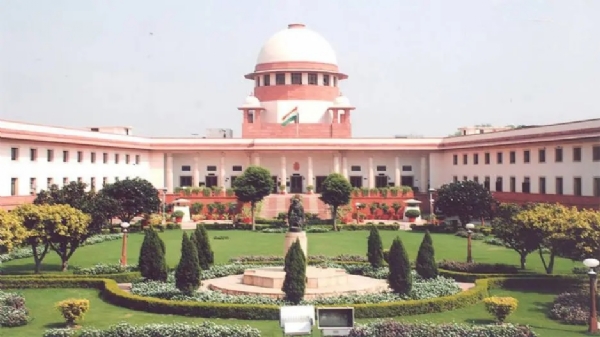
The Supreme Court on Sunday held a special hearing on a contempt petition alleging violations of its October 9 order concerning police action against protesters in Delhi on October 10, the detention of demonstrators, and the closure or disruption of metro, railway and internet services. The Court issued show-cause notices to the authorities concerned, asking why contempt proceedings should not be initiated against them. It directed them to file affidavits explaining their position within two days. The next hearing in the matter is scheduled for Tuesday.
The Supreme Court issued notices to the Ministry of Home Affairs, Delhi Police and the concerned officials of the Delhi Metro Rail Corporation (DMRC) over allegations of non-compliance with its directions. The authorities were asked to explain why contempt proceedings should not be initiated against them. Solicitor General Tushar Mehta objected to the issuance of the notices, but the Court observed that all parties concerned must be given an opportunity to present their submissions.
A bench headed by Justice Joymalya Bagchi said that metro and railway services in Delhi must continue to operate normally, observing that public transport services could not be shut down entirely. Justice Bagchi asked the DMRC to submit a map identifying the stations where entry and exit had been closed or restricted. The Court questioned why restrictions had ultimately been imposed at 45 stations when the earlier proposal had reportedly involved closing 57 stations. It sought details of the stations where restrictions had been imposed and those that had remained open to assess the inconvenience caused to commuters.
The Court observed that necessary restrictions could be imposed in accordance with the law if there was a risk of public disorder. It reiterated that people must be allowed to move across the city in accordance with traffic regulations and that unnecessary obstructions to public movement should be avoided. The authorities were directed to immediately review the need for barricades, taking into account law-and-order concerns and prevailing traffic conditions.
The Court further directed that internet services should continue without disruption, subject to restrictions lawfully imposed under the applicable legal provisions. It made clear that no person should be unlawfully detained without following the procedure established by law, particularly in areas outside those covered by prohibitory orders. Peaceful assemblies must be permitted in accordance with the law, especially in areas where restrictions under Section 163 of the Bharatiya Nagarik Suraksha Sanhita (BNSS) are not in force.
The Court also ordered the removal of a board outside the Supreme Court premises stating that Section 163 was in force and prohibiting the assembly of five or more people. It reminded protesters that demonstrations must remain peaceful and must not provoke others or incite unrest.
Apart from the contempt petition filed by Shalabh Mani Tripathi, Trinamool Congress MP and senior advocate Menaka Guruswamy had also approached the Supreme Court. Her petition challenged the preventive detention of Opposition leaders, including four former chief ministers, and other individuals during the protests. The plea raised concerns regarding personal liberty and the constitutional right to peaceful protest and assembly.
In a separate petition filed by Aman Prasad, Delhi Police Commissioner Anurag Kumar was accused of contempt of court over the police action against demonstrators. The petition alleged that the police had used excessive force, assaulted and detained unarmed individuals, and deployed personnel without identification badges. It further alleged that male police officers had misbehaved with women protesters.
On October 8, the Supreme Court had directed that Delhi Metro stations should not be shut down entirely ahead of the protests scheduled for October 10. A bench headed by Chief Justice of India Surya Kant had asked the Union Government to ensure that railway services to Delhi were not completely suspended and that Delhi Metro stations remained operational ahead of the demonstrations.
The Court had directed the government to allow railway and metro services to continue in a regulated manner to prevent unnecessary inconvenience to the general public. The special hearing on Sunday was held following allegations that these directions had not been fully complied with.
---------------
Hindusthan Samachar / Jun Sarkar
18 Aug 2026