




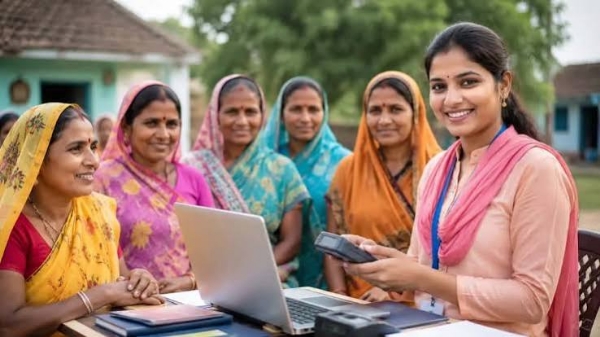
Lucknow, 11 Oct (HS): The BC Sakhi Scheme in Uttar Pradesh
functions under the One Gram Panchayat, One BC Sakhi approach to
provide banking services at home to rural populations. The program
has been instrumental in empowering rural women to become self-sufficient. BC Sakhis have become reliable
individuals in their communities, acting
as the main connection between villagers and financial institutions. The project is regarded as a powerful
example of women's empowerment while guaranteeing
efficient banking services at the
grassroots level in Uttar Pradesh.
For villagers, obtaining
banking services often requires traveling to a bank location
in a neighboring town. TheBC Sakhi programme of the Uttar
Pradesh government seeks to close this gap by providing basic banking services to rural homes and
generating job opportunities for women. Executed by the Uttar Pradesh State Rural
Livelihood Mission (UPSRLM), Department of Rural Development, the initiative adheres to the One Gram
Panchayat, One BC Sakhi model. In May 2020, it was
initially intended to launch 58,000 BC Sakhis throughout
the Gram Panchayats of the state.
BC Sakhi represents Banking Correspondent Sakhi. Through the initiative,
women, especially those in Self-Help
Groups (SHGs), receive training and certification
to serve as banking correspondents. They
utilize digital banking tools to enable transactions and offer banking
services at home, simplifying access to essential
financial services for rural individuals, particularly in regions with few physical bank branches.
The initiative seeks
to create a banking correspondent at
the Gram Panchayat level, enabling local
residents to utilize banking services in
their communities. Chosen women receive training in banking correspondence and are
required to attain certification from the Indian Institute of Banking & Finance
(IIBF). As per UPSRLM, training is provided via Rural Self Employment Training Institutes
(RSETIs) and other specified centers.
The RSETI initiative offers a
six-day training program for banking correspondents. The government orders from UPSRLM also establish
guidelines for the selection, training,
certification, and deployment of BC Sakhis throughout the state.
WHAT FINANCIAL ASSISTANCE DO BC SAKHIS GET? The initiative offers
4,000 each month for the initial six months to assist
BC Sakhis in setting up their banking functions.
Once in operation, they have the ability to
earn commissions from the transactions
they help facilitate. As per UPSRLM, commission fees typically vary between
0.20% and 0.32% of the transaction total, based on the relevant
agreements. The state has also released a government directive allocating 75,000 per BC Sakhi for equipment and overdraft assistance.
WHAT IS THE SIZE OF
THE PROGRAM? The program has grown considerably since its initiation in 2020. As per the Uttar Pradesh government's budget document for 2026–27, in the fiscal year 2025–26, 39,880 BC Sakhis in 58,000
Gram Panchayats enabled financial transactions exceeding Rs. 39,000 crore and generated around Rs. 107
crore in profit. The BC Sakhi
portal of UPSRLM shows that 50,125 BCs have
been certified by IIBF and that there are
39,890 BCs currently operational. It additionally
logs over 16.9
crore banking transactions, with a total
transaction value surpassing 4.58 lakh
crore. The numbers indicate
various indicators of the program's impact: the count
of certified women, the count operational, and the total transactions enabled.
CLOSING THE GAP
BETWEEN RURAL HOUSEHOLDS AND
BANKING: The BC Sakhi model aims
to diminish the barriers of distance and accessibility that may hinder rural inhabitants from utilizing formal banking services. The
initiative presents an option to visit a bank
branch for eligible transactions by granting
access via trained banking
correspondents in their local Gram Panchayats. It also allows
participating women to generate income
by offering banking
services in their
communities. Since its launch in 2020, the initiative has pursued two goals: increasing access to banking services
in rural Uttar Pradesh and generating livelihood opportunities for women via the banking correspondent model.
Hindusthan Samachar / Abhishek Awasthi