If entrepreneur strong, bank's money will also be safe -
Better coordination between banks, government and entrepreneurs needed
Prayagraj, 10 Oct (HS): Addressing a seminar on Role
of Banks in Self-Reliant India 2047 organized by Hindustan Yuva Utthan
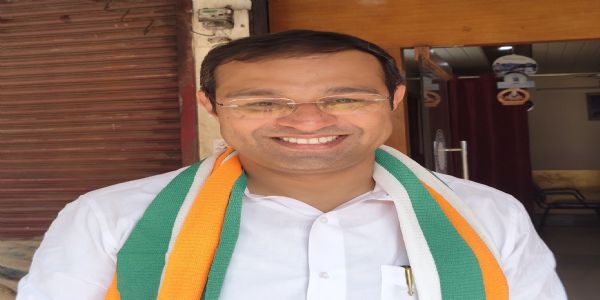
Samiti, Bharatiya Janata Party NGO Cell's State Co-ordinator Rajnikant
Srivastava said that Prime Minister Narendra Modi's resolution of Self-Reliant
India, Local for Vocal and Swadeshi has been made the basis for building a
developed and self-reliant India by the year 2047. Small entrepreneurs, MSMEs, artisans,
local producers and ODOP-related enterprises have an important role in
realizing this goal. The role of the banking system is equally important in
strengthening these enterprises.
He said that the central and state governments are striving
to provide financial assistance to youth, small entrepreneurs, artisans, and
local producers through the Pradhan Mantri Mudra Yojana, the Prime Minister's
Employment Generation Programme (PMEGP), credit guarantee schemes, ODOP, and
other MSME-focused schemes. The true objective of the schemes should not be
merely disbursing loans, but rather creating successful, sustainable, and
employment-generating enterprises.
'Consider the entrepreneur as the future employer, not a
loan account': Shrivastava said that situations often arise at the ground level
where loan recovery pressure increases even before the business is fully
established, production begins, the market develops, and sufficient cash flow
is generated. This puts new entrepreneurs under financial pressure and poses
challenges to continuing their business. Banks should recover loans only after
the entrepreneur's business is operational and inaugurated. They should not
exert pressure for recovery before the business has even begun. How will
entrepreneurs set up businesses in Uttar Pradesh if bank employees and
officials conspire to defame the government? Similar incidents have been
reported in Indian Bank and other banks. The concerned officials and employees
will be informed. Those who defame the Modi and Yogi governments and harass
entrepreneurs are being identified. Citizens are also urged to bring such
incidents to their attention.
He said that while it's important to keep the bank's money
safe, it's equally important to keep the business of the entrepreneur taking
the loan safe. If a new venture doesn't get enough opportunity to establish
itself in the market, how will it be able to repay the bank loan on time? He
clarified that instead of pitting banks and entrepreneurs against each other,
they need to be considered partners and complement each other. Bank funds will
only be safe if the entrepreneur's business thrives, production increases,
employment is created, and the market develops.
Better coordination among bank officials is essential: Shrivastava
said that oftentimes, lack of adequate coordination between branch managers,
regional/zonal officials, and higher-level officials exacerbates entrepreneurs'
problems. Receiving different guidance from different levels on the same issue
leaves entrepreneurs confused, impacting both their time and business. He said
that coordination, communication, courtesy, and a solution-oriented approach
need to be strengthened in the banking system. Entrepreneurs should strictly
adhere to bank regulations, documents, and financial discipline, but bank
officials are also expected to understand the entrepreneur's actual situation
and seek solutions within the rules.
'The banking system should understand the challenge of
building a business while also providing loans': He said that in ODOP, MSME,
and indigenously manufactured enterprises, the initial period requires time to
establish machinery, buildings, raw materials, staff, marketing, and market
preparation. Therefore, the loan structure should be determined based on the
nature of the project and expected cash flow. Even after approving the loan,
the bank should develop a system to monitor the progress of the venture and
provide guidance as needed. This will reduce the bank's risk and increase the
entrepreneur's chances of success.
Key demands from the government and RBI: Rajnikant
Srivastava said that the Central Government and the State Government are
continuously providing financial assistance to the startups and MSMEs so that
the entrepreneurs and the banks can benefit. He urged the Central Government
and the Reserve Bank of India that—
1. For new enterprises related to ODOP, MSME and indigenous
production, practical moratorium and repayment arrangements should be
considered as per the nature of the project.
2. Clear and practical guidelines should be formulated to
reduce unnecessary recovery pressure on small entrepreneurs before they have
sufficient cash flow.
3. The process of restructuring/re-scheduling should be made
simple, transparent and time-bound for enterprises facing genuine difficulties
but having potential.
4. Special banking support or nodal arrangements should be
developed for MSME and ODOP entrepreneurs in each district/region.
5. Better coordination should be ensured between the branch,
regional office and zonal office.
6. An effective and timely grievance redressal mechanism
should be created for the complaints of entrepreneurs.
7. Entrepreneurs receiving loans under government schemes
should also be provided assistance in marketing, digital sales, training,
branding and market linkages.
8. It should be reviewed whether the benefits of Atmanirbhar
Bharat, ODOP, MSME and Self-Employment schemes are actually reaching the
entrepreneurs or are limited only to loan distribution figures.
Call for cooperation from social workers and volunteers: Shrivastava
said that building a self-reliant India is not just the responsibility of the
government or the banking system. The cooperation of NGOs, volunteers, social
workers, legal professionals, and entrepreneurs also plays an important role.
He said that there are many volunteers and social workers in
society who are providing guidance and problem-solving assistance to needy
entrepreneurs in banking, financial, and legal matters. All such NGO
volunteers, social workers, and legal colleagues are urged to come forward and
play their part in building a self-reliant India. “Any social worker, volunteer
or person associated with the legal field who is helping people in solving
problems related to banking and entrepreneurship, please send your name, mobile
number and the name of the person/entrepreneur to whom you are providing
assistance to mobile number 9415970989,” he added. He said that efforts will be
made to honour and encourage such associates in the upcoming programme, so that
more and more people in the society come forward to help needy entrepreneurs.
'If the trust between banks and entrepreneurs is strong,
then self-reliant India will be strong': Srivastava said the ultimate objective of the government's
schemes is to strengthen employment, production, the local economy, and
self-reliance. If a youth or small entrepreneur takes a loan from a bank to set
up a business, they should not be considered merely a loan account,
but a future employer and partner in economic development.
He said, The stronger the trust between the bank and
the entrepreneur, the safer the bank's money will be. Strengthening the banking
system is possible only by strengthening the entrepreneur.
He said that the dream of a developed and self-reliant India
by 2047 will be realized not only by large companies, but also by small
entrepreneurs, artisans, traders, and local producers in villages, towns, and
districts. Therefore, the banking system will also have to play a partner role
with these entrepreneurs. He said that the need is not for banks versus
entrepreneurs, but for trust, dialogue, and cooperation between banks and
entrepreneurs. If the government, banks, entrepreneurs, and philanthropists
work together, it will strengthen not only loan security but also employment,
local production, and economic self-reliance, and the resolve for a
self-reliant India by 2047 will be truly realized.
Hindusthan Samachar / Abhishek Awasthi

18 Aug 2026
ED raids KPSC office, 20 other locations over Karnatak veterinary recruitment scam
ED raids KPSC office, 20 other locations over Karnatak veterinary recruitment scam..