Tehran, 02 January (H.S.): Iranian security forces arrested 30 individuals overnight in the Malard district of western Tehran on charges of disturbing public order, capping a week of intensifying protests fueled by a crippling economic crisis and record inflation.
The coordinated sweep by intelligence and security agencies highlights the regime's mounting alarm as demonstrations, initially sparked by shopkeepers' strikes over soaring prices, have spiraled into broader clashes across multiple cities, claiming at least five lives.
Protests ignite over currency collapse and inflation surge
The unrest erupted on Sunday, December 28, when merchants at Tehran's Alaeddin Shopping Centre and Grand Bazaar shuttered their stalls in protest against the Iranian rial's plunge to a historic low of around 42,000 to the US dollar— a 40 percent depreciation since mid-2025 amid US sanctions and regional conflicts.
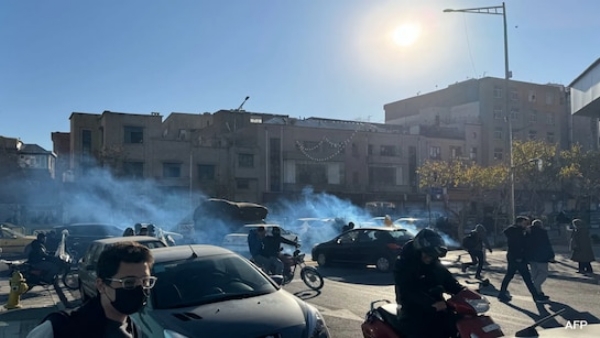
By Thursday's arrests, the demonstrations had entered their sixth day, spreading from Tehran to cities including Isfahan, Shiraz, Yazd, Lordegan and Qom, where protesters hurled stones at government buildings, banks and mosques before facing tear gas volleys from security forces.
Nationwide inflation hit 42.2 percent in December, with food prices skyrocketing 72 percent and medical goods up 50 percent year-on-year, eroding purchasing power and bankrupting small businesses in a nation of over 92 million.
Bloody clashes and a rising death toll
In Lordegan, some 650 kilometers southwest of the capital, protesters targeted the governor's office and Martyrs Foundation before advancing on local administration buildings, prompting a heavy-handed response that pushed the confirmed death toll to five amid reports of bloody clashes.
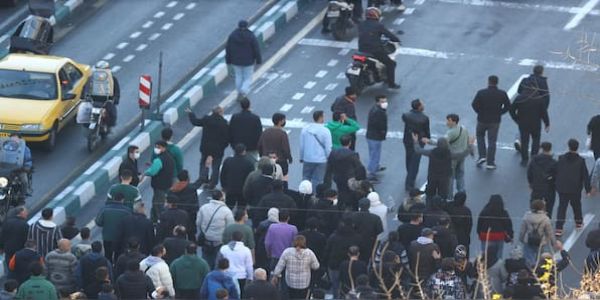
Videos circulating on social media captured anti-riot police deploying tear gas and motorcycle units in Tehran's Jomhouri district and Tehransar township, where crowds briefly seized control of streets before scattering.
One poignant image from Tehran showed a solitary protester defiantly seated on a highway as regime forces approached, evoking memories of the 1989 Tiananmen Square Tank Man.
Regime's response: Arrests and calls for dialogue
Tasnim news agency, affiliated with the Islamic Revolutionary Guard Corps, confirmed the Malard detentions as targeting those responsible for destabilization, though no official details emerged on the suspects' identities or affiliations.
Government spokesperson Fatemeh Mohajerani signaled openness to direct dialogue with unions and merchants, while President Masoud Pezeshkian urged the Interior Minister to address protesters' legitimate demands in a bid to de-escalate.
Critics, however, decry the moves as cosmetic amid a history of mass arrests during unrest, including over 700 in Gilan province alone in prior waves, often framing detainees as saboteurs with criminal records.
Deeper crisis: Sanctions, war and systemic woes
The protests echo the 2022-2023 Mahsa Amini uprising but stem directly from chronic mismanagement, corruption and external pressures, including US sanctions slashing oil revenues and fallout from Israeli-US strikes on Iranian nuclear sites in May 2025.
With GDP growth nearing zero and food inflation exceeding 65 percent in Tehran, the regime confronts its most severe domestic challenge in years, as slogans shift from economic grievances to outright demands for systemic overthrow.
Supreme Leader Ayatollah Ali Khamenei's clerical establishment, already strained, faces a precarious balancing act as upcoming tax hikes loom with the Persian New Year on March 21.
---------------
Hindusthan Samachar / Jun Sarkar
02 Jan 2026